
Baliati Palace
About Baliati Palace
Baliati Palace (Baliati Zamindar Bari) is the grandest surviving landlord’s palace near Dhaka: a walled compound of colonnaded mansions in the village of Baliati, in Saturia upazila of Manikganj district. Seven buildings stand side by side behind lion-topped gates, with about 200 rooms between them and a large pond at the back. It is one of the easiest and most rewarding day trips from the capital, and far quieter than anything in the city.
Who built Baliati Palace?
The family fortune began with Gobinda Ram Saha, a salt merchant in the middle of the 18th century. His descendants turned trade into land and became zamindars, the landlords who collected revenue for the British across large estates. The palace buildings were not built at once: different branches of the family added their own mansions from the middle of the 19th century into the early 20th century, which is why the blocks look alike but are not identical.
The family were known as patrons of education. Kishorilal Roy Chowdhury of Baliati renamed a Dhaka school after his father, Jagannath Roy Chowdhury, in 1872; it grew into Jagannath College and is today Jagannath University in Old Dhaka. After the partition of 1947 the family left for India, and the empty palace slowly decayed until the Department of Archaeology took it over. It has been a protected monument since 1987.
What you will see
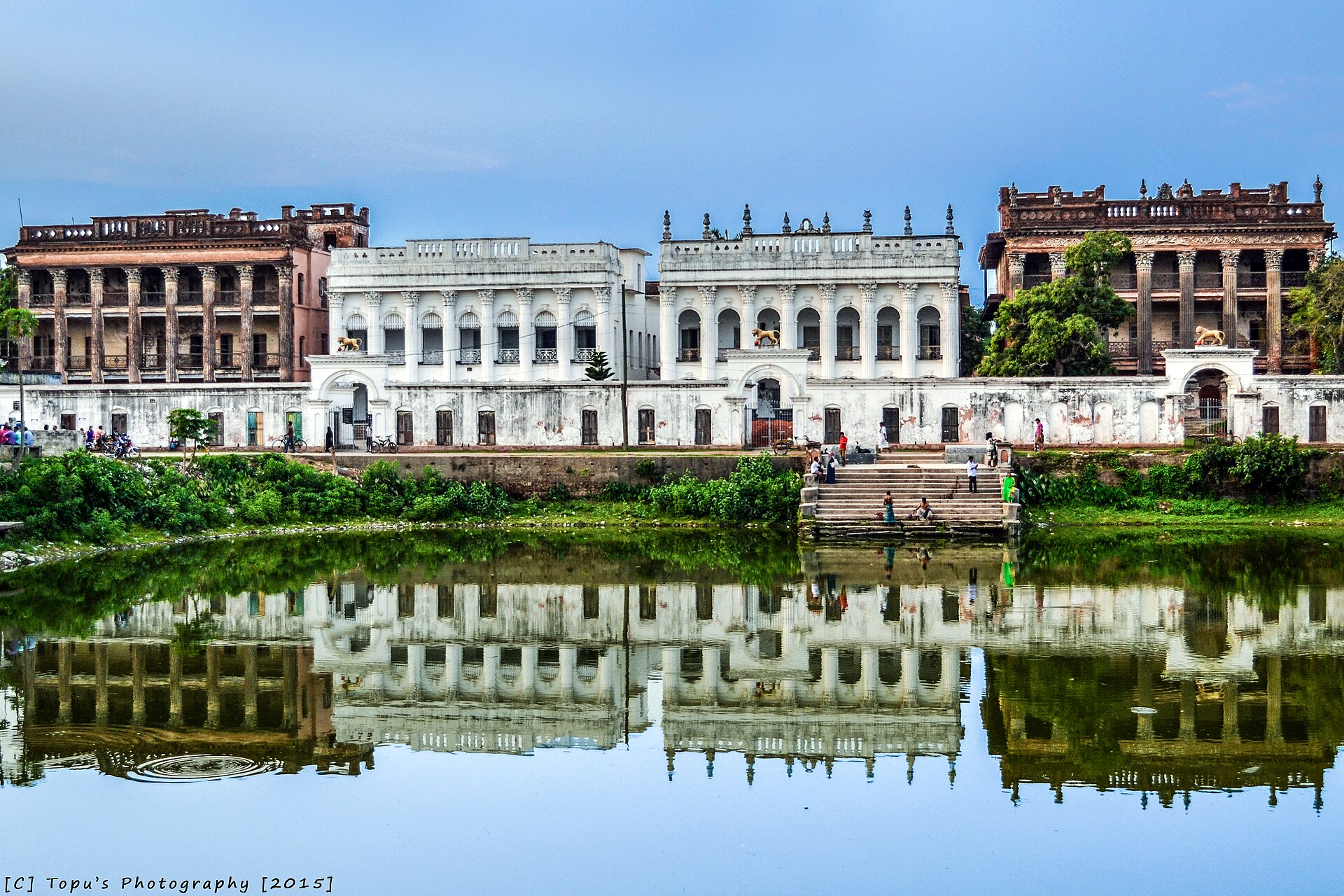
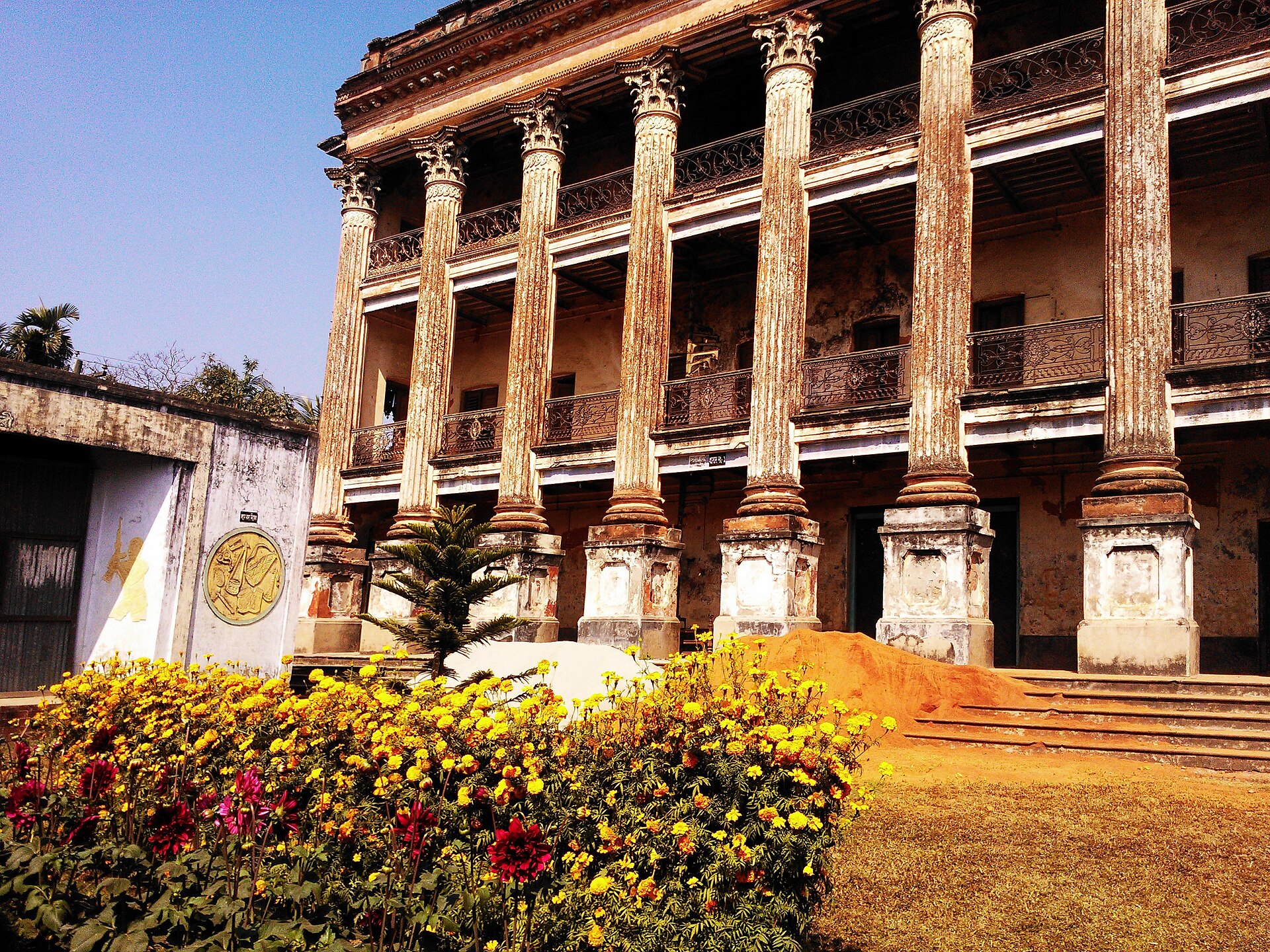
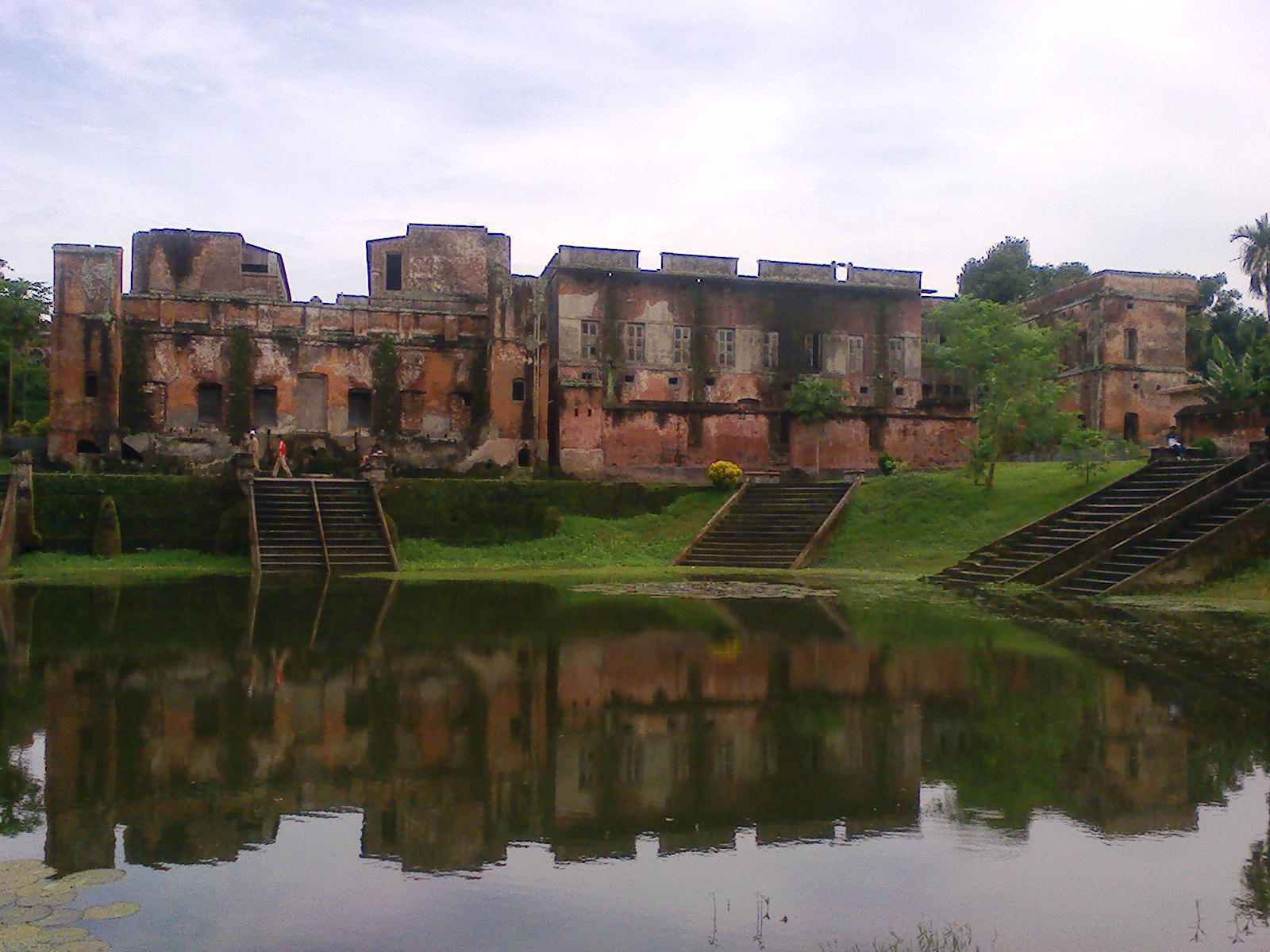
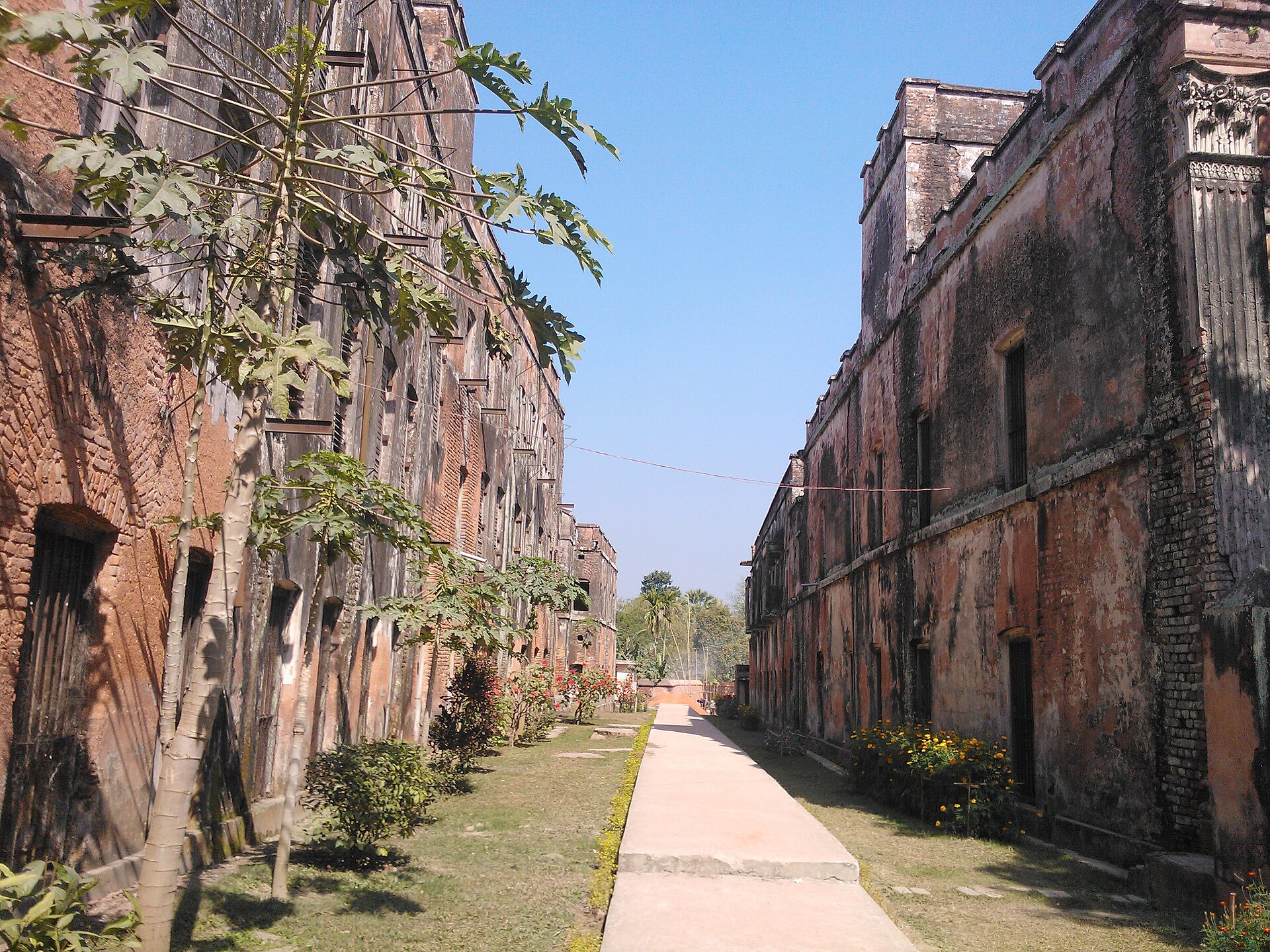
The four front blocks face south across a lawn. Their façades are the photographers’ favourite: tall Corinthian columns, deep verandas, arched windows and balustrades, a European style that Bengal’s wealthy families copied from Calcutta. These front buildings were the public face of the estate, used for business and receiving visitors. Behind them stand the andar mahal, the private family quarters, in weathered red brick, and further back a large pond with broad bathing ghats where the household once washed and bathed.
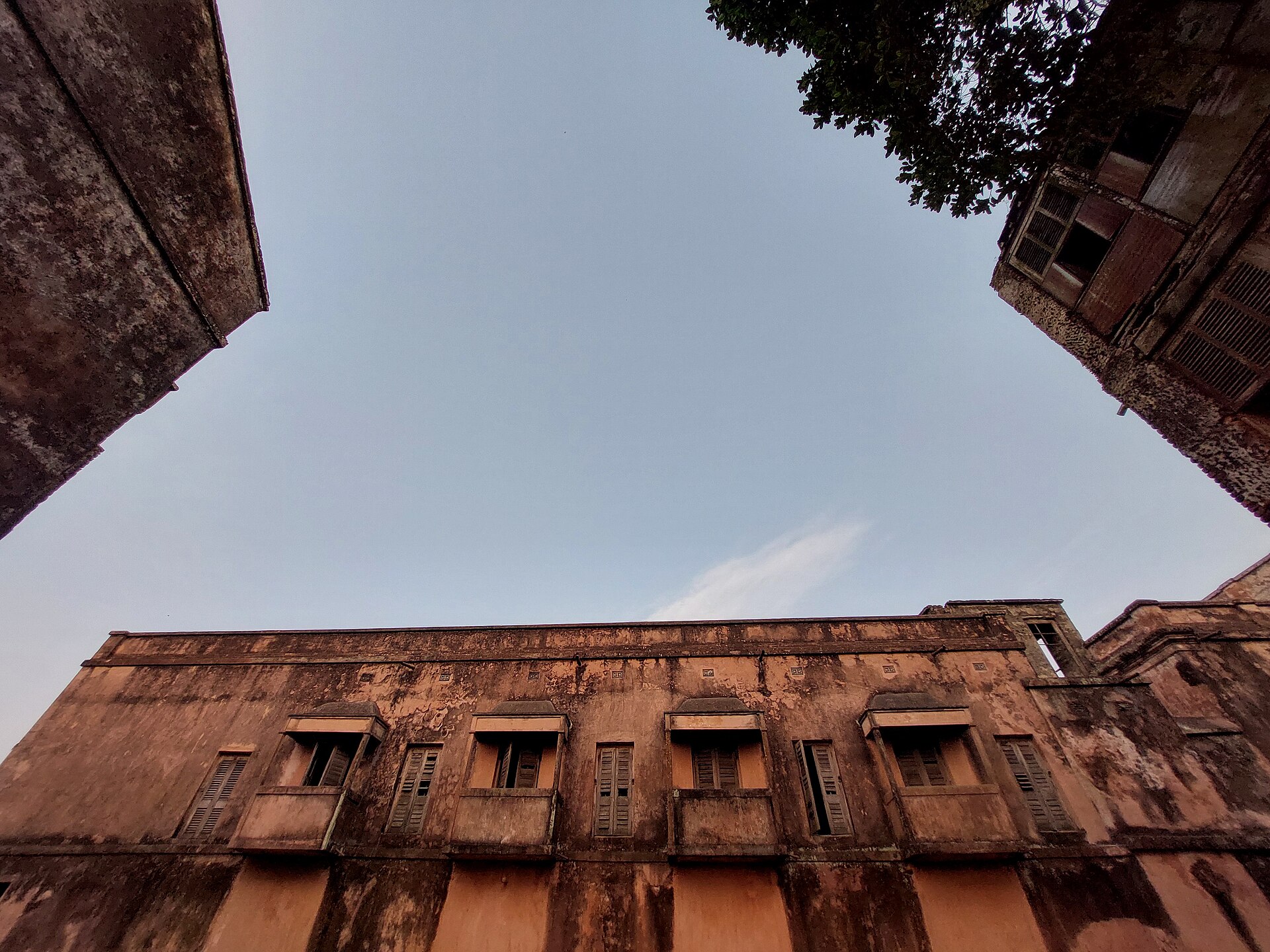
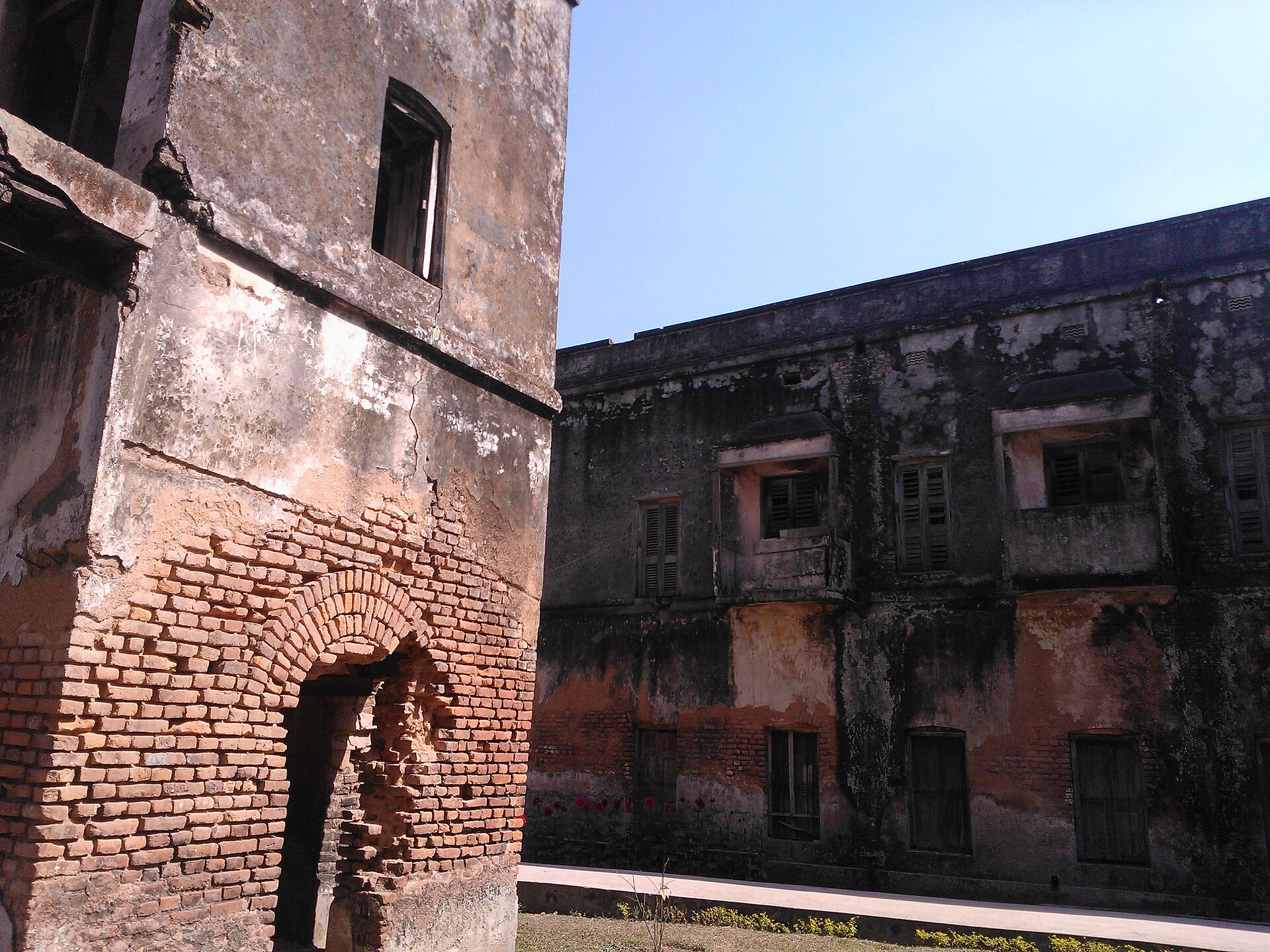
The central building, the Rang Mahal, has been restored and holds a small museum of the family’s furniture, chests, mirrors and household objects. Much of the rest is unrestored: peeling plaster, wooden beams and ferns growing from old brick. That mix of restored grandeur and decay is exactly what makes Baliati so atmospheric.
How Baliati compares with other palaces
If you have seen Ahsan Manzil in Old Dhaka, Baliati shows the other side of the same world: not a Nawab’s riverside residence in the city but a merchant family’s country seat. It is larger and more complete than most of the abandoned zamindar houses scattered across Bangladesh, and unlike Panam City in Sonargaon it is a single family compound you can walk around in an hour or two.
When to go
The dry months from November to March are the most comfortable, with clear light for photographs. Weekday mornings are quiet; Fridays and holidays bring day-trippers from Dhaka, and the grounds can be busy in the afternoon. The site follows the Department of Archaeology timetable, which means it is closed on Sundays and opens only in the afternoon on Mondays.
Baliati Palace opening hours and tickets
Baliati Palace follows the Department of Archaeology timetable: closed on Sundays and public holidays, and open only in the afternoon on Mondays. Foreign visitors pay a higher ticket price at the gate, and tickets are included on our guided tours.
- Closed
- Sundays and public holidays; Mondays open in the afternoon only (Department of Archaeology timetable, check before visiting)
- Entry fee
- Ticket at the gate, higher price for foreign visitors; included on our tours
Travelling with us? Entry tickets are included on all our guided tours, so you do not need to book them.
Where is Baliati Palace?
- Where
- Baliati, Saturia, Manikganj District, Dhaka Division, Bangladesh
- Nearest town
- Saturia, Manikganj district
- From Dhaka
- About 60 km, 2 to 3 hours by car
- Also known as
- Baliati Zamindar Bari, Baliati Jamidar Bari, Baliati Prasad
- Protected
- Protected monument of the Department of Archaeology (gazetted 1987)

Getting to Baliati Palace on your own is hard work. We can send a private car with driver and guide from Dhaka or anywhere in Bangladesh.
Things to do at Baliati Palace
-
Photograph the colonnaded façades
The four south-facing front blocks with their Corinthian columns and long verandas are best in the soft light of the morning or late afternoon.
-
Visit the Rang Mahal museum
The restored central building shows the family’s furniture, chests, mirrors and household objects, and gives a sense of how the zamindars lived.
-
Walk behind the palaces
Behind the front blocks are the unrestored family quarters, the andar mahal, with narrow lanes, red brick and old timber.
-
Sit by the palace pond
The large pond at the back has wide bathing ghats and reflects the palace walls on still days.
-
Find the lion gates
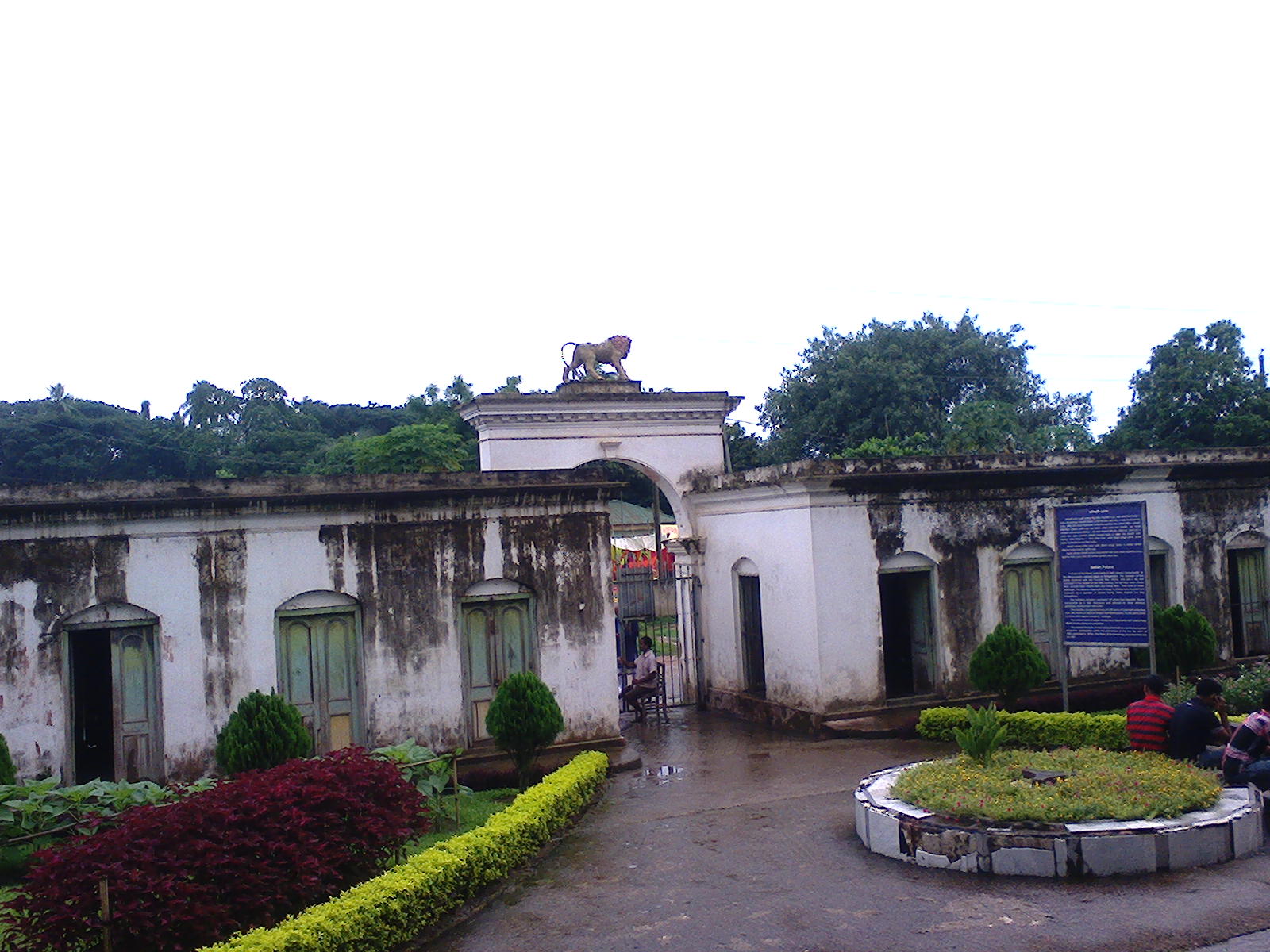
Look up at the gateways on the south side, crowned with lions, the family’s symbol of status.
-
Stop at Dhamrai on the way
Dhamrai, on the road from Dhaka, is known for its bell-metal workshops and its wooden Rath Yatra chariot.
How to get to Baliati Palace
Baliati Palace is in Saturia, Manikganj, roughly 60 km north-west of Dhaka: 2 to 3 hours by car on the Dhaka to Aricha highway through Savar and Dhamrai, or by bus from Gabtoli to Saturia and a CNG auto-rickshaw from there.
By car (recommended): Baliati is roughly 60 km north-west of central Dhaka. Take the Dhaka to Aricha highway through Savar and Dhamrai, then turn off towards Saturia. Allow 2 to 3 hours each way depending on traffic, and leave early to beat the Savar and Gabtoli jams. A private car with driver for the day is the simplest option, and on our day trips the car, guide and tickets are arranged for you.
By bus: buses for Manikganj and Saturia leave from Gabtoli in Dhaka. From Saturia bazar a CNG auto-rickshaw or rickshaw covers the last few kilometres to Baliati. It is cheap but slow, with little English spoken, so it suits experienced travellers.
Combine it with: the National Martyrs’ Memorial at Savar on the way out, and the bell-metal workshops and Rath Yatra temple town of Dhamrai, which is right on the route.
Where to stay near Baliati Palace
Most visitors see Baliati as a day trip from Dhaka and sleep in Gulshan, Banani or Dhanmondi, where the international hotels and restaurants are. Manikganj town has a few simple local hotels if you want to explore the district further, but standards are basic. Bring water and snacks: outside the palace gate there are only small tea stalls.
Tours that visit Baliati Palace
None of our set tours stop here yet, but we can add it to a tailor-made trip.
Questions about Baliati Palace
Where is Baliati Palace?
In Baliati village, Saturia upazila, Manikganj district, roughly 60 km north-west of central Dhaka. It is usually visited as a day trip from the capital.
What are the opening hours of Baliati Palace?
Baliati Palace follows the Department of Archaeology timetable: closed on Sundays, open only in the afternoon on Mondays, and on other days roughly 10:00 to 18:00 in summer and 09:00 to 17:00 in winter, with a midday break on Fridays. Hours can change, so check before you go or travel with a guide.
What is the weekly off day of Baliati Zamindar Bari?
Sunday. On Mondays it opens only in the afternoon, and it is also closed on public holidays.
How much is the ticket for Baliati Palace?
Tickets are sold at the gate, with a higher price for foreign visitors than for Bangladeshis. We are not aware of online sales. On our guided tours all entry tickets are included.
How long does it take to get from Dhaka to Baliati Palace?
About 2 to 3 hours by car each way, depending on traffic through Savar and Dhamrai. By bus from Gabtoli it takes longer, with a change at Saturia.
How much time do I need at Baliati Palace?
One to two hours is enough to walk around all seven buildings, the pond and the museum. Plan a full day for the round trip from Dhaka.
Who built Baliati Palace?
The Baliati zamindar family, whose fortune began with Gobinda Ram Saha, an 18th century salt merchant. His descendants added the mansions from the mid 19th to the early 20th century.
Can you go inside the buildings at Baliati?
The central Rang Mahal is open as a museum. Most other buildings can be seen from outside and from the grounds; some rooms are closed because they are fragile.
Is Baliati Palace worth visiting?
Yes, if you like architecture and photography. It is the largest and most complete zamindar palace within easy reach of Dhaka, and the mix of restored façades and crumbling brick is unlike anything in the city.
Is Baliati Palace a protected monument?
Yes. It is protected and managed by the Department of Archaeology of Bangladesh and has been on its list of protected monuments since 1987.
Can I take photos at Baliati Palace?
Yes, photography of the buildings and grounds is fine. Commercial shoots and drones need permission from the Department of Archaeology. Ask before photographing local visitors.
What else can I see near Baliati Palace?
The National Martyrs' Memorial at Savar and the bell-metal workshops of Dhamrai are on the way from Dhaka. In Manikganj district there are also the Teota zamindar house at Shibalaya and the Machain mosque at Harirampur.
Do you offer tours to Baliati Palace?
Yes. We run Baliati as a private day trip from Dhaka with a car, an English-speaking guide and entry tickets included, and can add Savar and Dhamrai on the way. Ask us when you plan your trip.