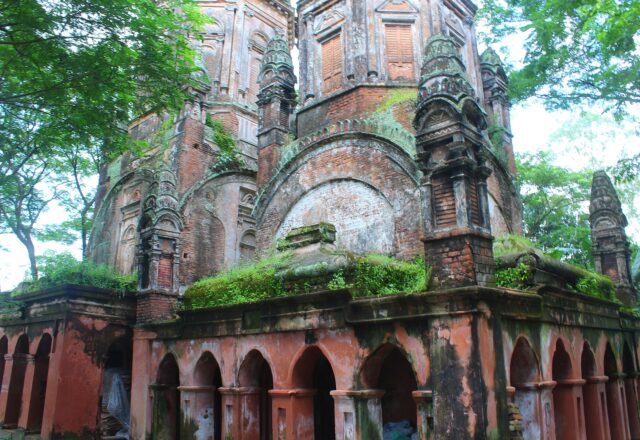

Idrakpur Fort
About Idrakpur Fort
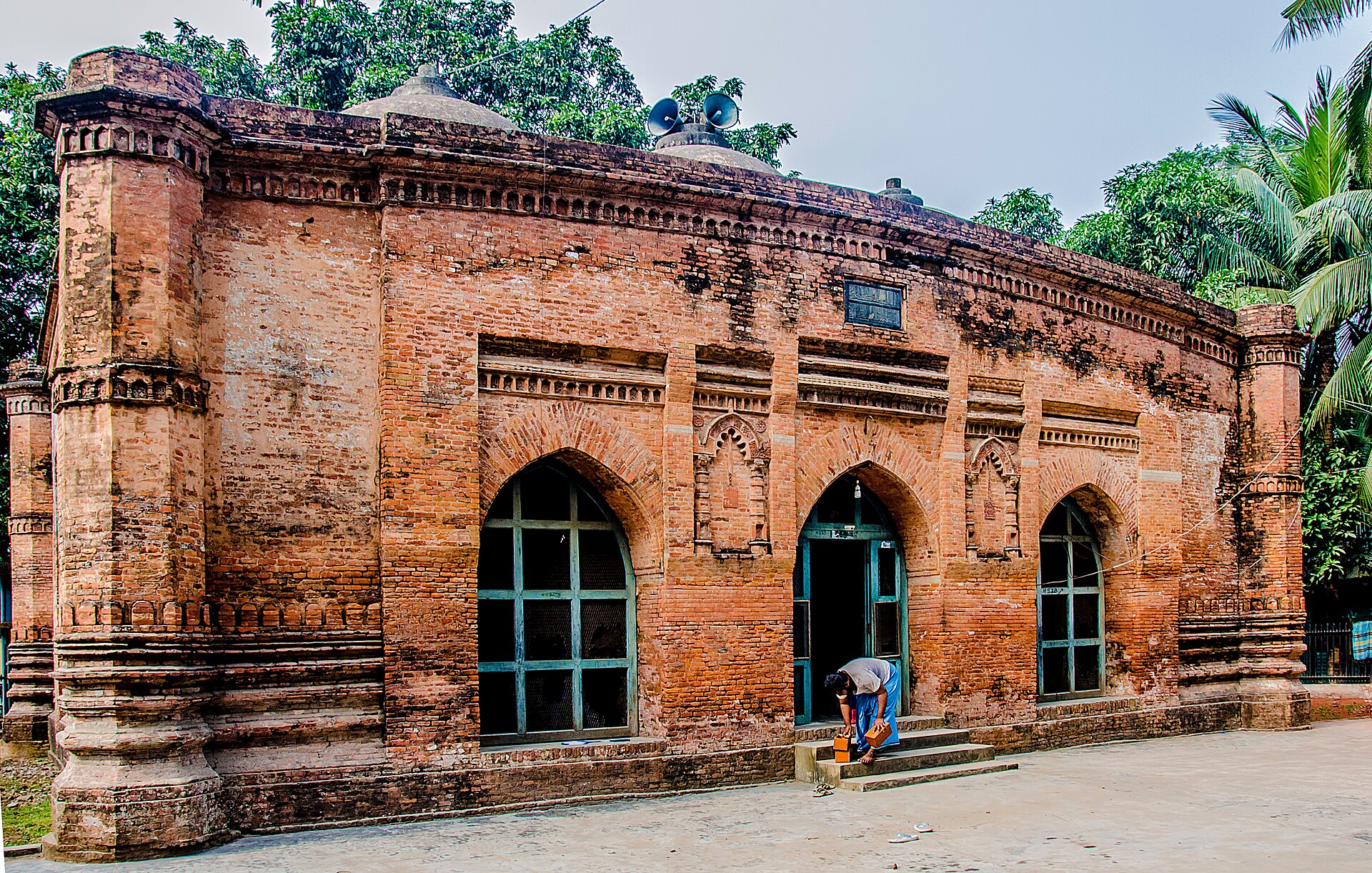
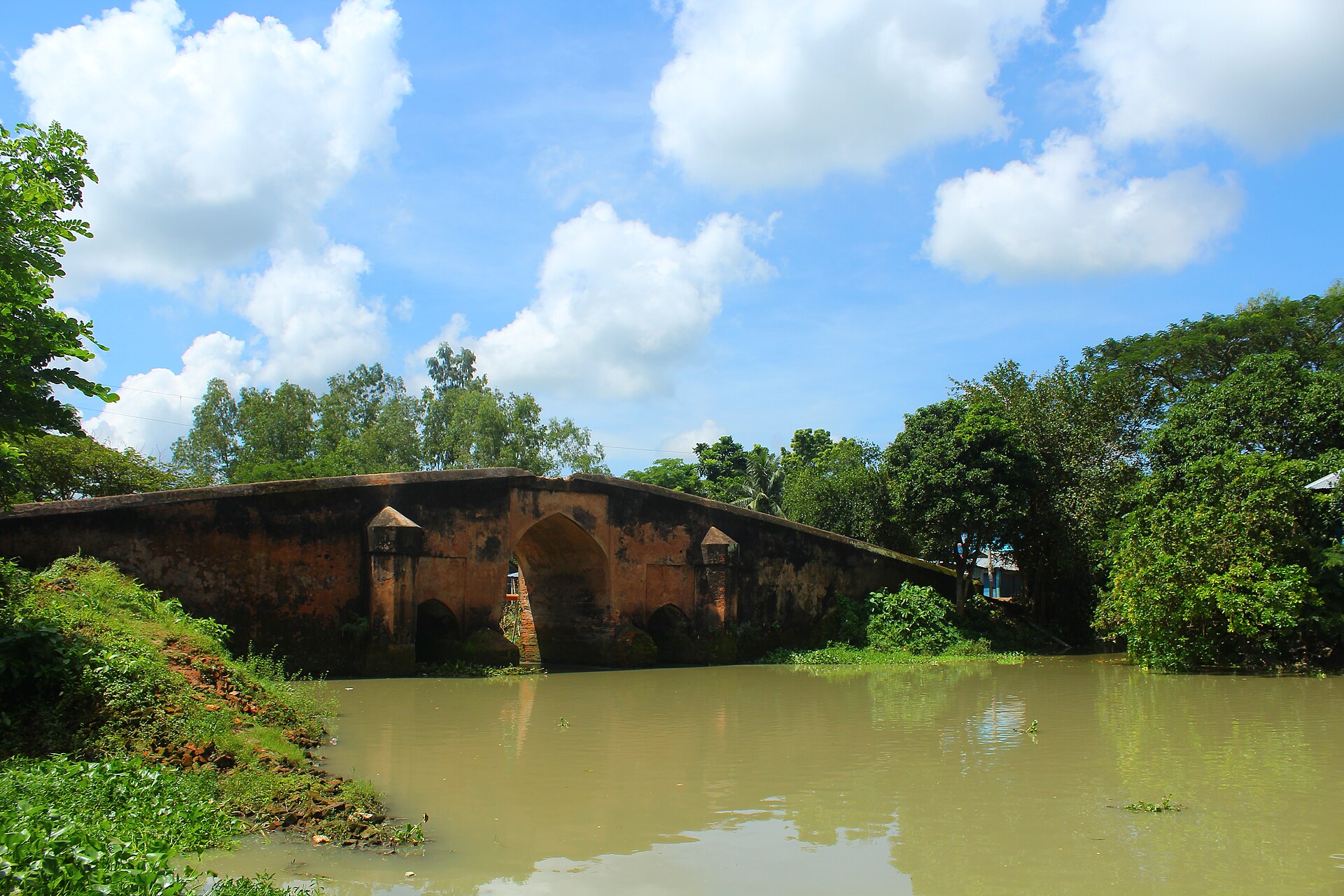
Idrakpur Fort is the best preserved of the Mughal river forts that once guarded the waterways to Dhaka. Built around 1660 in what is now Munshiganj town, it is a compact brick fortress with crenellated walls, round bastions and a huge circular gun platform rising above the trees. It is a quiet, rewarding day trip from Dhaka, and easy to combine with two other gems nearby: the 15th century Baba Adam’s Mosque and the Mughal bridge at Mirkadim.
Why the Mughals built river forts
In the 17th century Dhaka was the capital of Mughal Bengal, and the rivers that made it rich also made it vulnerable. Magh (Arakanese) and Portuguese pirates raided up the rivers from the Bay of Bengal, looting towns and carrying people off. The Mughals answered with a chain of water forts at the river junctions south of the capital. Idrakpur stood where the Ichhamati met the Meghna, a key point on the route to Dhaka; Hajiganj and Sonakanda guarded the Shitalakshya at Narayanganj.
Idrakpur Fort carries no inscription, but it is generally attributed to Mir Jumla, the governor of Bengal under the Emperor Aurangzeb, around 1660. The town of Munshiganj grew up later around it; the old name survives in a nearby village still called Idrakpur. The rivers have since moved away and the land around the fort has silted up, in places almost to the level of the parapet.
What you will see
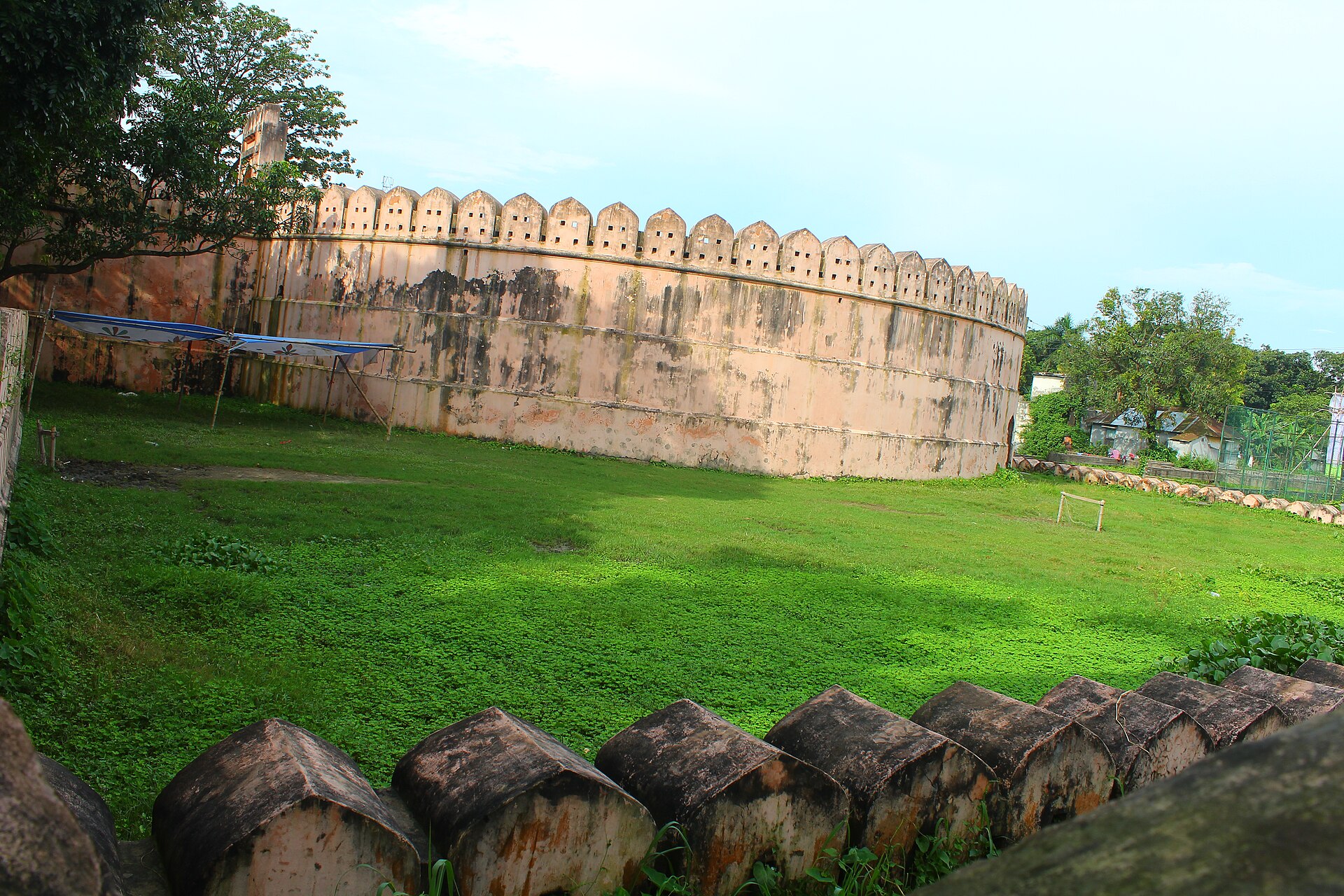
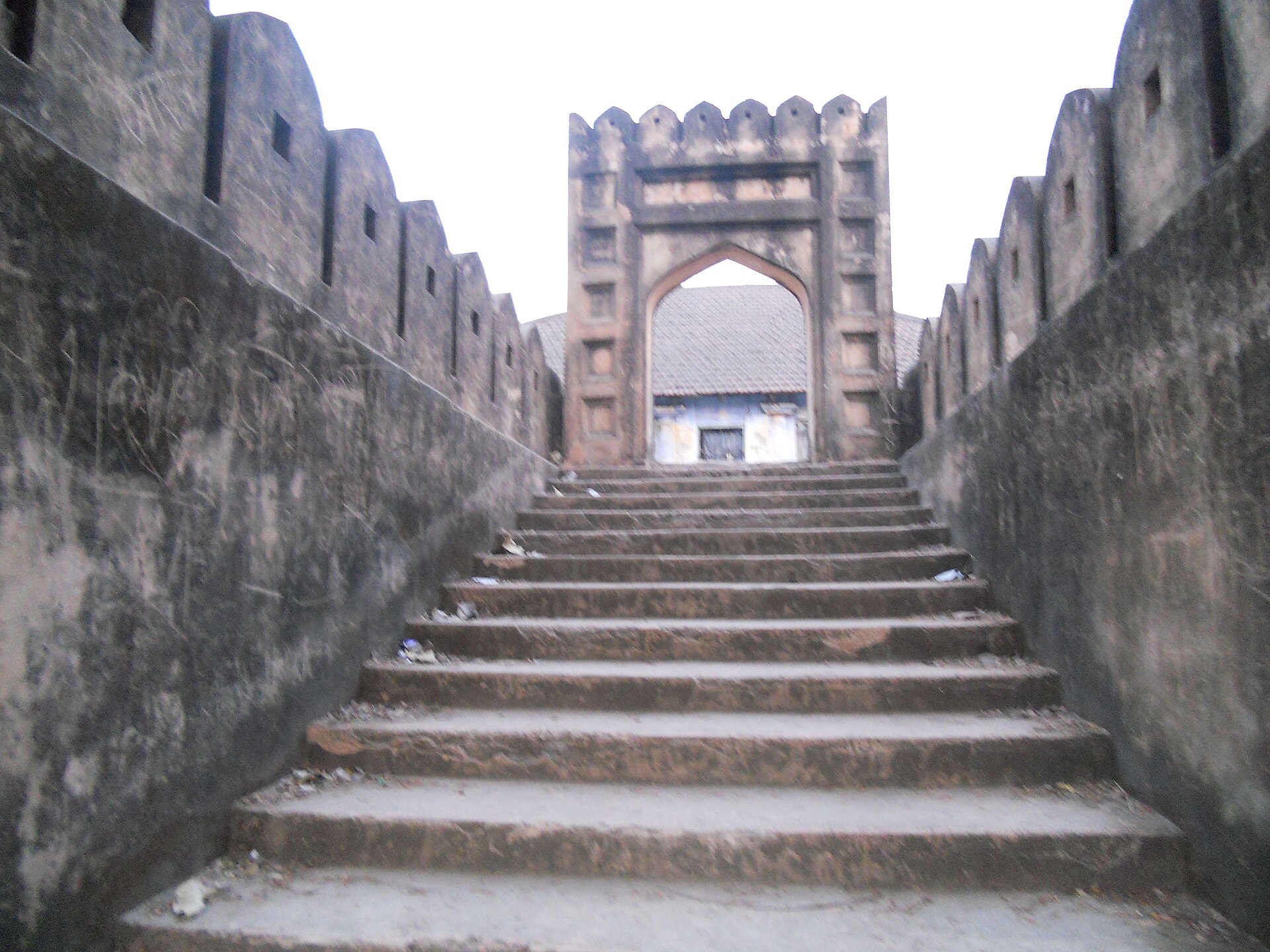
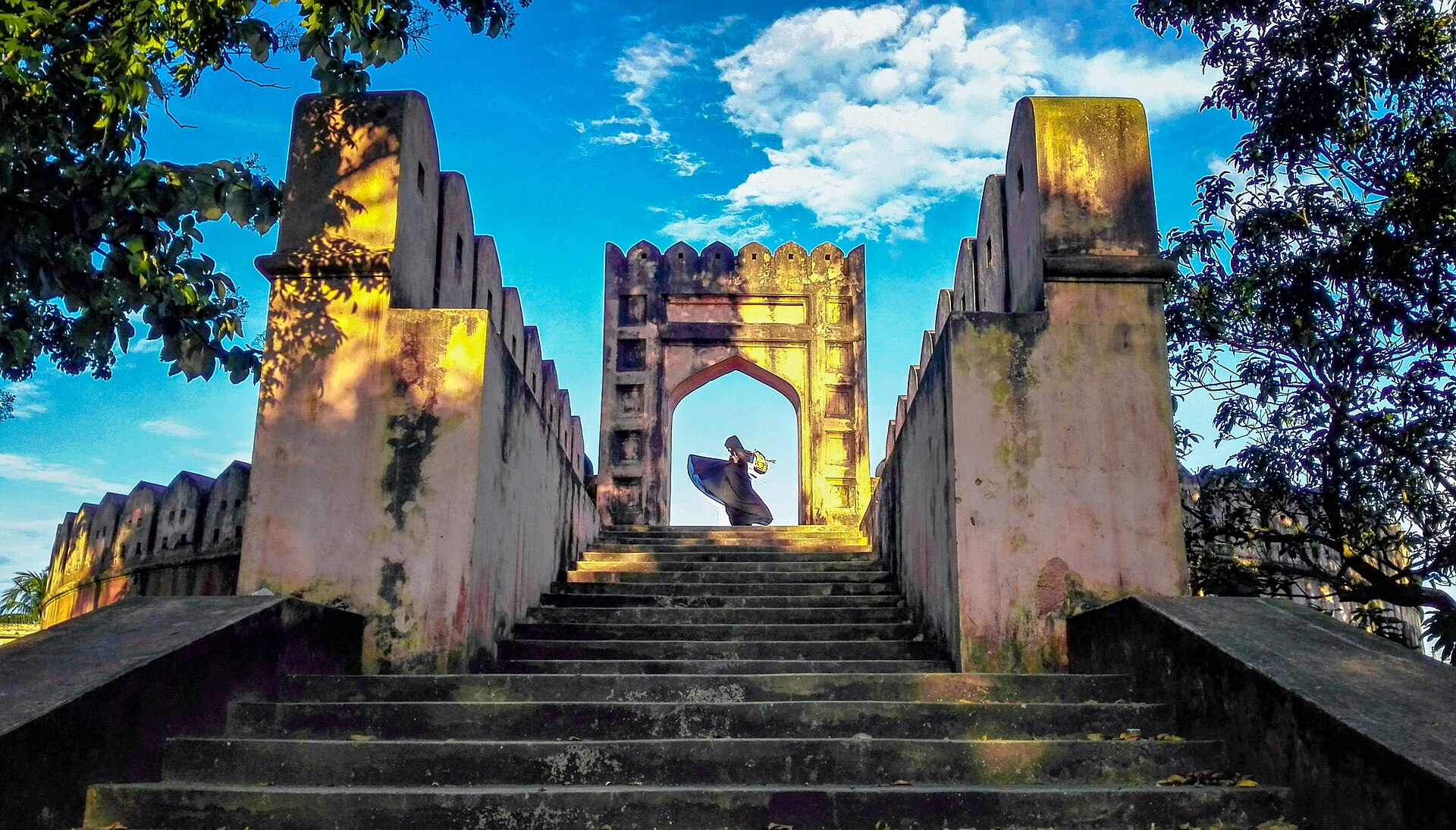
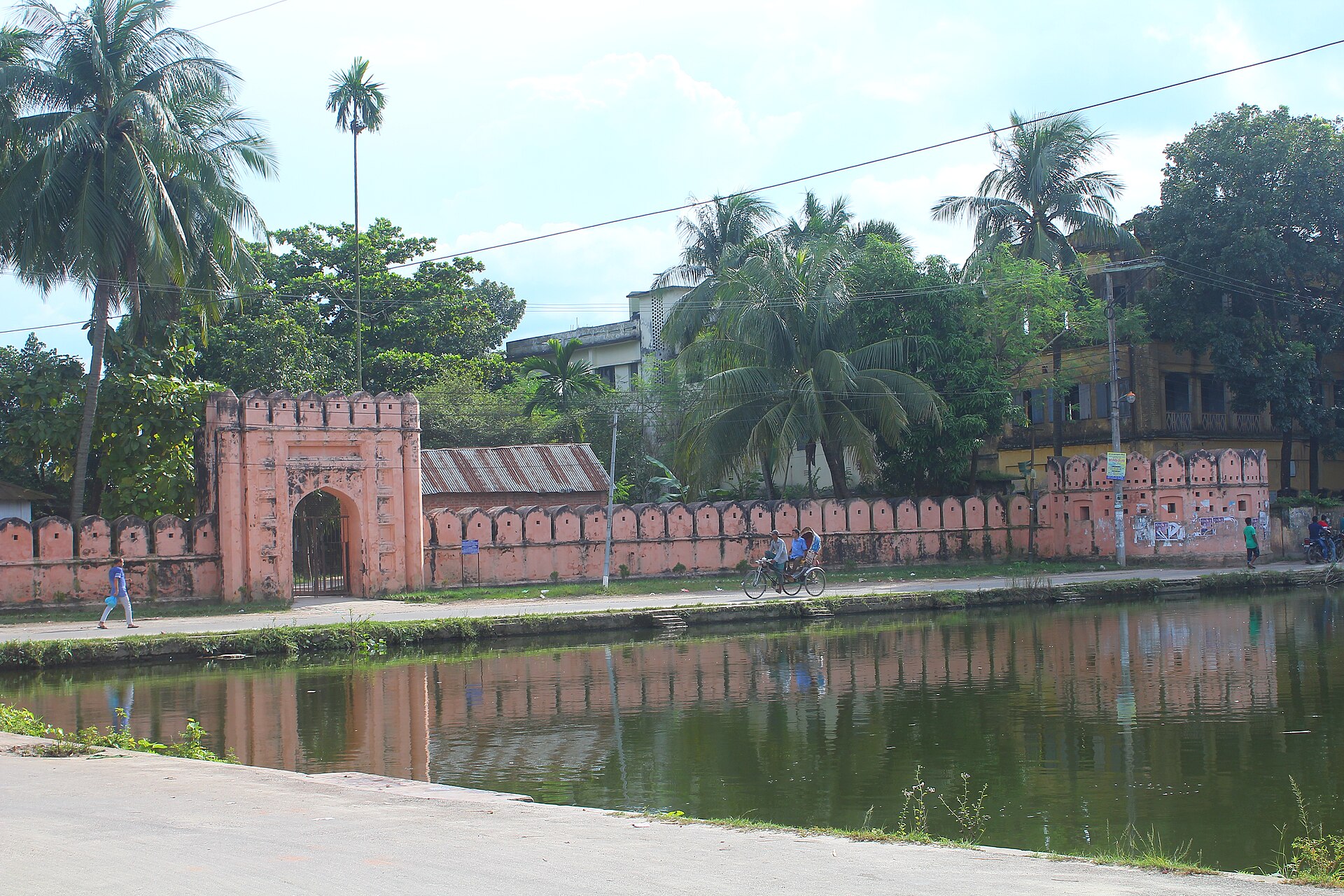
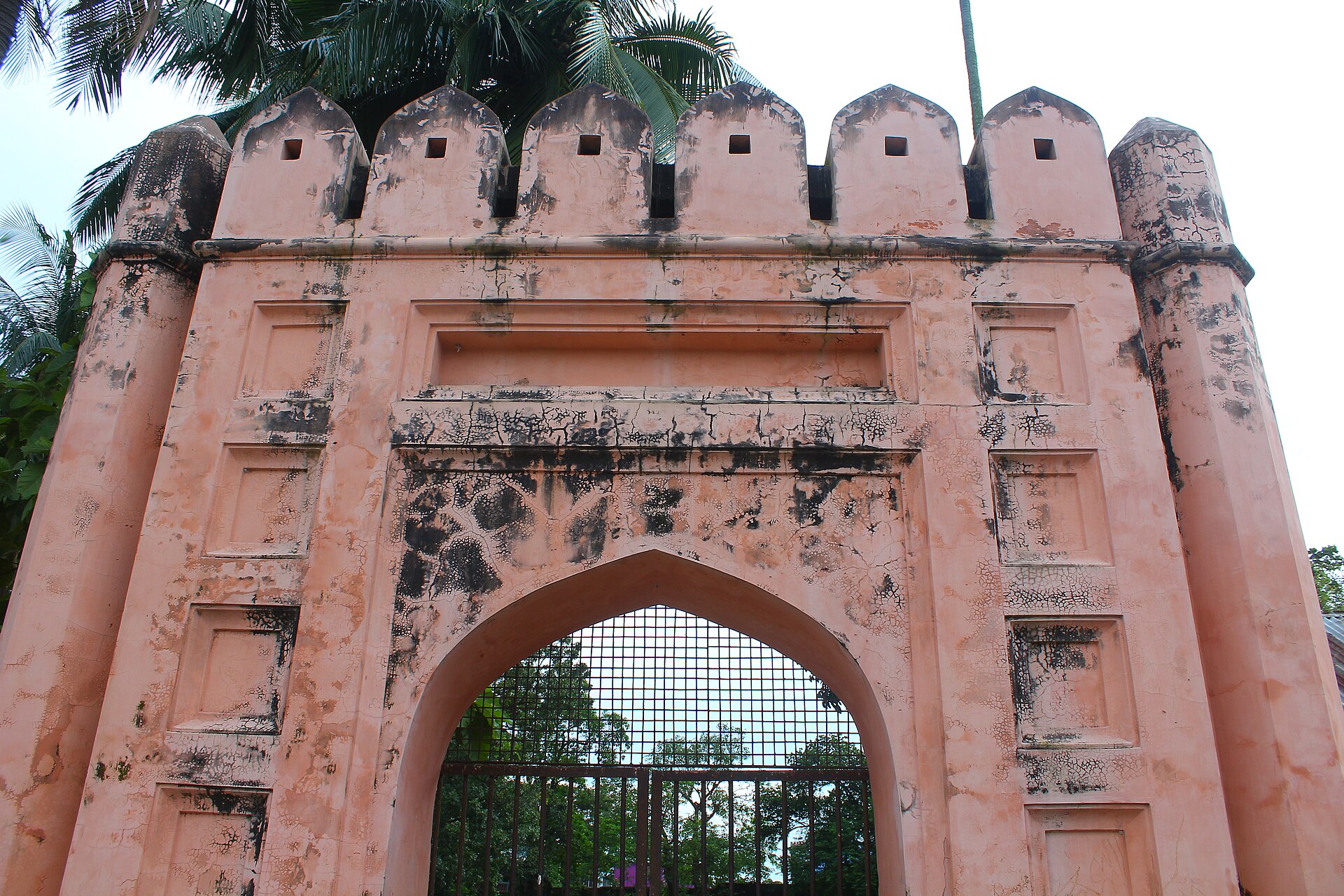
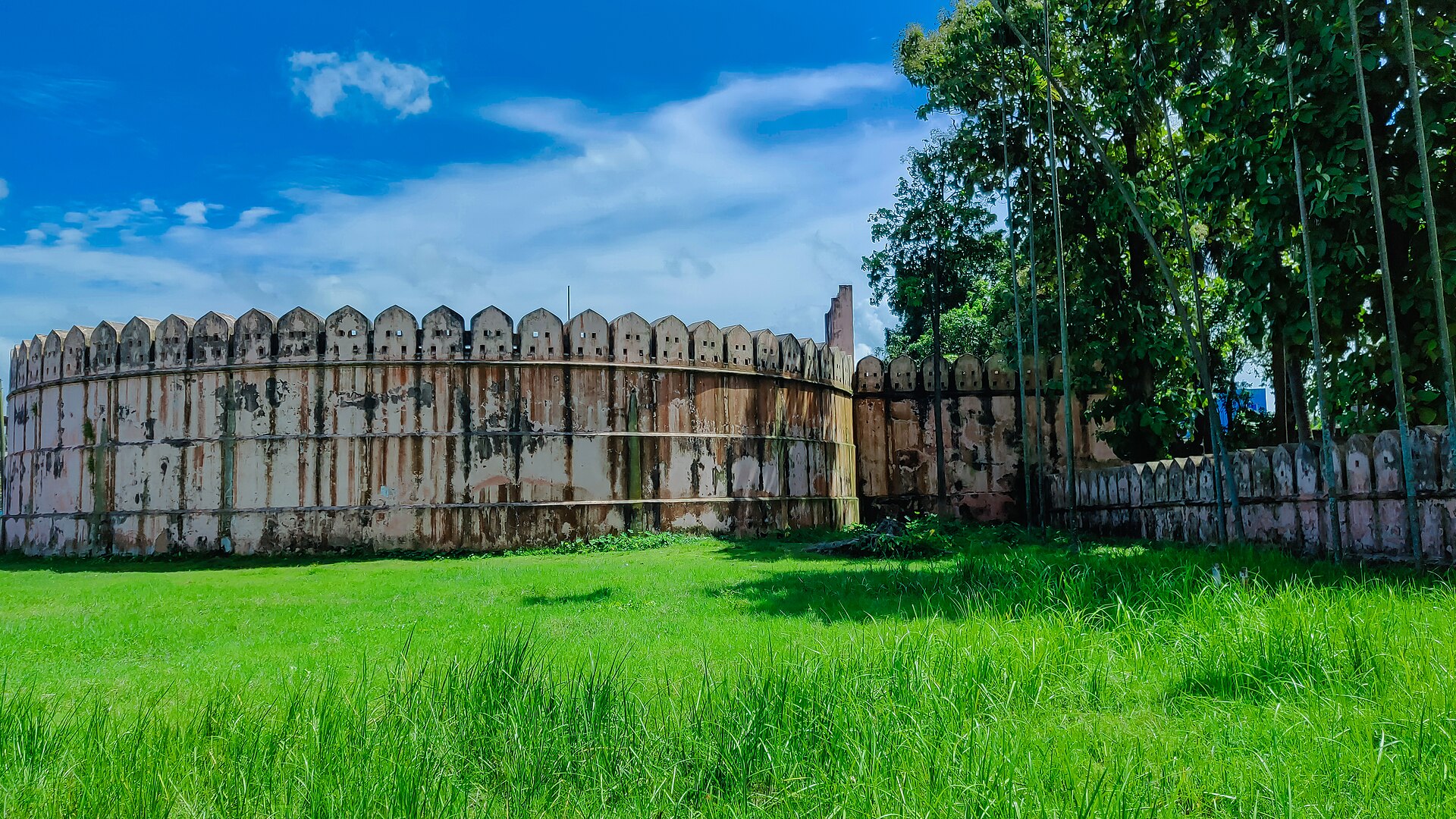
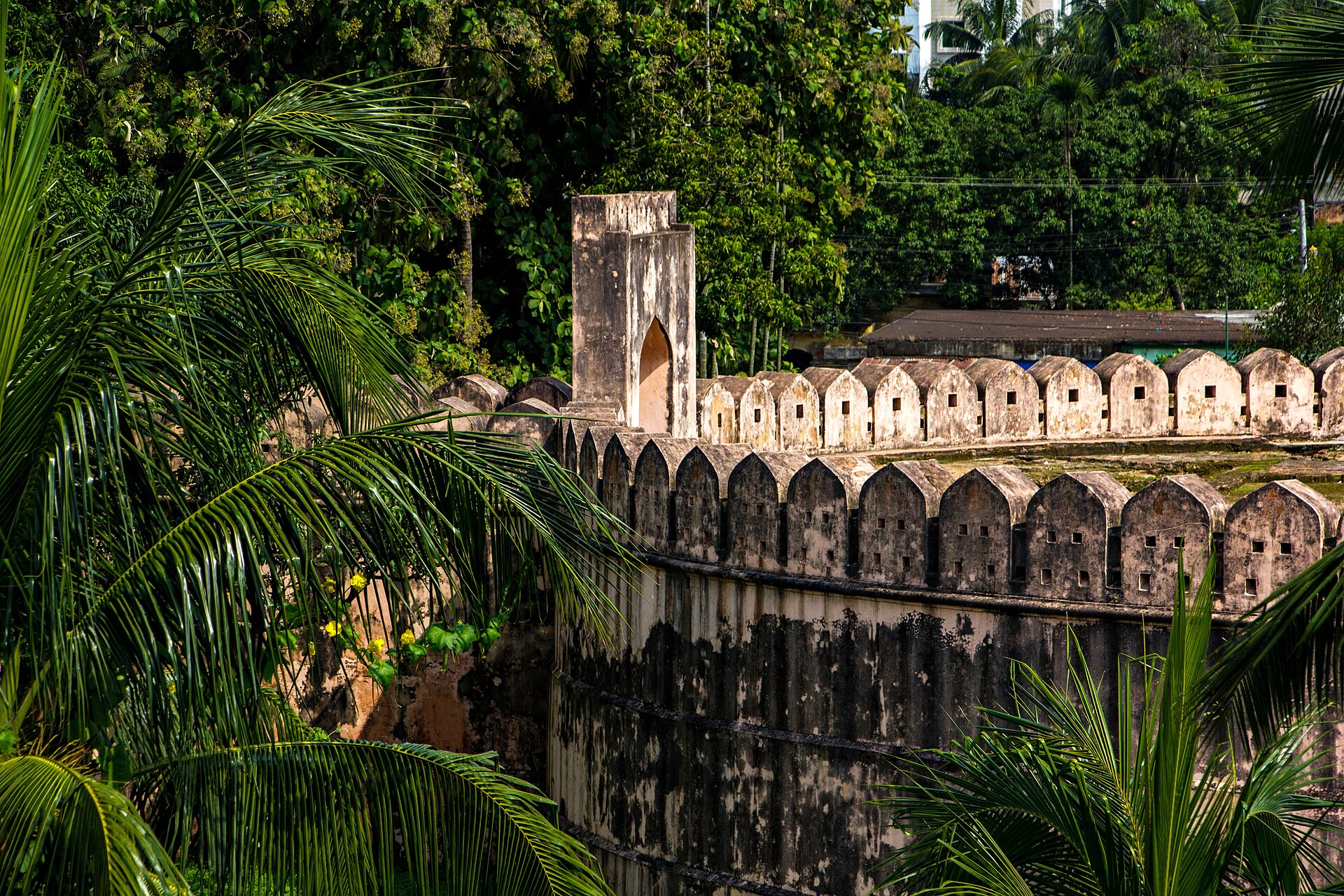
The fort is a rectangle of about 87 by 60 metres. A high gateway on the north side, topped with merlons, served as the guardroom and leads into a large courtyard surrounded by curtain walls. The walls and the round corner bastions are crowned with machicolated merlons and pierced with holes for muskets. On the eastern side rises the fort’s showpiece: a great round drum, about 32 metres across and over 9 metres high, which carried the cannon that commanded the river. A staircase between thick walls leads up through a small gateway onto the platform, where you can walk the circular parapet and look out over the town.
At the foot of the drum a staircase leads down to an underground room. Local tradition says it was the start of a secret tunnel for escape; historians think it was more likely the magazine, where arms and gunpowder were stored. In the 20th century the district’s Deputy Commissioner lived on the platform and the fort was used as a jail. Today it is protected by the Department of Archaeology, which has restored it and opened a small museum in the compound. The fort has been on the list of protected monuments since 1909.
When to go
November to March brings dry weather and clear skies, ideal for photographs of the red walls and the pond in front. The fort follows the Department of Archaeology timetable: it is closed on Sundays and opens only in the afternoon on Mondays. Weekday mornings are quiet; Fridays and holidays bring local families.
Idrakpur Fort opening hours and tickets
Idrakpur Fort follows the Department of Archaeology timetable: closed on Sundays and public holidays, and open only in the afternoon on Mondays. Foreign visitors pay a higher ticket price at the counter, and tickets are included on our guided tours.
- Closed
- Sundays and public holidays; Mondays open in the afternoon only (Department of Archaeology timetable, check before visiting)
- Entry fee
- Ticket at the counter, higher price for foreign visitors (BDT 300 for non-SAARC visitors, reported October 2024); included on our tours
Travelling with us? Entry tickets are included on all our guided tours, so you do not need to book them.
Where is Idrakpur Fort?
- Where
- Munshiganj Sadar, Munshiganj District, Dhaka Division, Bangladesh
- Nearest town
- Munshiganj town
- From Dhaka
- 1.5 to 2.5 hours by car
- Also known as
- Idrakpur Kella, Idrakpur Durgo, Munshiganj Fort
- Protected
- Protected monument of the Department of Archaeology (gazetted 1909)

Getting to Idrakpur Fort on your own is hard work. We can send a private car with driver and guide from Dhaka or anywhere in Bangladesh.
Things to do at Idrakpur Fort
-
Climb the gun platform
Walk up the narrow staircase and through the small gateway onto the great round drum, where cannon once commanded the river.
-
Walk the walls
Follow the curtain walls with their merlons and musket holes to the round corner bastions.
-
Visit the small museum
The Department of Archaeology’s museum in the compound explains the fort and the Mughal river defences.
-
Photograph the fort from the pond
The red walls and round platform reflect in the water in front of the fort, best in the soft light of the morning.
-
See Baba Adam's Mosque
At Rampal, about 20 to 30 minutes away, a six-domed brick mosque of 1483 with fine terracotta decoration.
-
Take a boat under Mirkadim Bridge
Glide under the arches of the Mughal brick bridge on a short boat ride on the creek.
How to get to Idrakpur Fort
Idrakpur Fort is in the centre of Munshiganj town, 1.5 to 2.5 hours by car south of central Dhaka, or by bus from Gulistan to Munshiganj and a rickshaw from the bus stand.
By car (recommended): Idrakpur Fort is in the centre of Munshiganj town, south of Dhaka across the Dhaleshwari. Allow 1.5 to 2.5 hours from central Dhaka depending on traffic (about 2.5 hours from the airport). A car with driver for the day lets you add Baba Adam’s Mosque and Mirkadim Bridge, both within about 30 minutes.
By bus: buses to Munshiganj leave from Gulistan in Dhaka. From the bus stand, a rickshaw or CNG auto-rickshaw takes you to the fort (ask for “Idrakpur Kella”).
Combine it with: Baba Adam’s Mosque at Rampal, built in 1483 in the Sultanate period; the Mughal brick bridge at Mirkadim, best seen from a small boat on the creek; the Sonarang twin temples at Tongibari; and the ancestral house of the scientist Jagadish Chandra Bose at Rarikhal, Sreenagar.
The other Mughal river forts: Hajiganj and Sonakanda forts face each other across the Shitalakshya at Narayanganj, about an hour’s drive away.
Where to stay near Idrakpur Fort
Munshiganj is an easy day trip from Dhaka, so most visitors stay in Gulshan, Banani or Dhanmondi. Munshiganj town has a few simple local hotels and plenty of small restaurants if you want to stay longer and explore the district.
More to see in Munshiganj
Tours that visit Idrakpur Fort
None of our set tours stop here yet, but we can add it to a tailor-made trip.
Questions about Idrakpur Fort
Where is Idrakpur Fort?
In the centre of Munshiganj town, about 1.5 to 2.5 hours by road south of central Dhaka. Locals call it Idrakpur Kella.
Who built Idrakpur Fort?
It is generally attributed to Mir Jumla, the Mughal governor of Bengal, around 1660. There is no inscription, so the date and builder are based on history and style.
Why was Idrakpur Fort built?
To defend the river route to Dhaka, the Mughal capital of Bengal, against Magh and Portuguese pirates. It stood at the junction of the Ichhamati and the Meghna and was one of a chain of river forts with Hajiganj and Sonakanda.
What are the opening hours of Idrakpur Fort?
It follows the Department of Archaeology timetable: closed on Sundays, open only in the afternoon on Mondays, and on other days roughly from morning to late afternoon, with a midday break on Fridays. Check before you go.
How much is the ticket for Idrakpur Fort?
Tickets are sold at the counter by the entrance, with different prices for Bangladeshis, SAARC visitors and other foreigners. The Daily Star reported in October 2024 that the highest price, for visitors from outside the SAARC region, was BDT 300. Our guided tours include entry tickets.
Is there a museum at Idrakpur Fort?
Yes, a small museum has been set up in the compound by the Department of Archaeology.
Is there really a secret tunnel at Idrakpur Fort?
A staircase at the foot of the gun platform leads to an underground room. Tradition says it began a tunnel for escape, but historians think it was the magazine where arms and gunpowder were stored.
How much time do I need at Idrakpur Fort?
About an hour for the fort and the museum. Plan a full day from Dhaka if you add Baba Adam's Mosque and Mirkadim Bridge.
How old is Idrakpur Fort?
About 365 years old: it dates from around 1660, in the reign of the Mughal emperor Aurangzeb.
Is Idrakpur Fort a protected monument?
Yes. It has been on the Department of Archaeology's list of protected monuments since 1909.
What else is there to see in Munshiganj?
Baba Adam's Mosque at Rampal (1483), the Mughal bridge at Mirkadim, the Sonarang twin temples at Tongibari and Jagadish Chandra Bose's ancestral house at Rarikhal.
Is Idrakpur Fort the same as Hajiganj and Sonakanda forts?
No, but they are related. All three are Mughal river forts that protected Dhaka. Hajiganj and Sonakanda face each other across the Shitalakshya in Narayanganj, about an hour's drive from Munshiganj.
Do you offer tours to Idrakpur Fort?
Yes. We can arrange a private day trip from Dhaka to Idrakpur Fort, Baba Adam's Mosque and Mirkadim Bridge with a car, an English-speaking guide and entry tickets included. Ask us when you plan your trip.