
Hajiganj and Sonakanda Forts
About Hajiganj and Sonakanda Forts
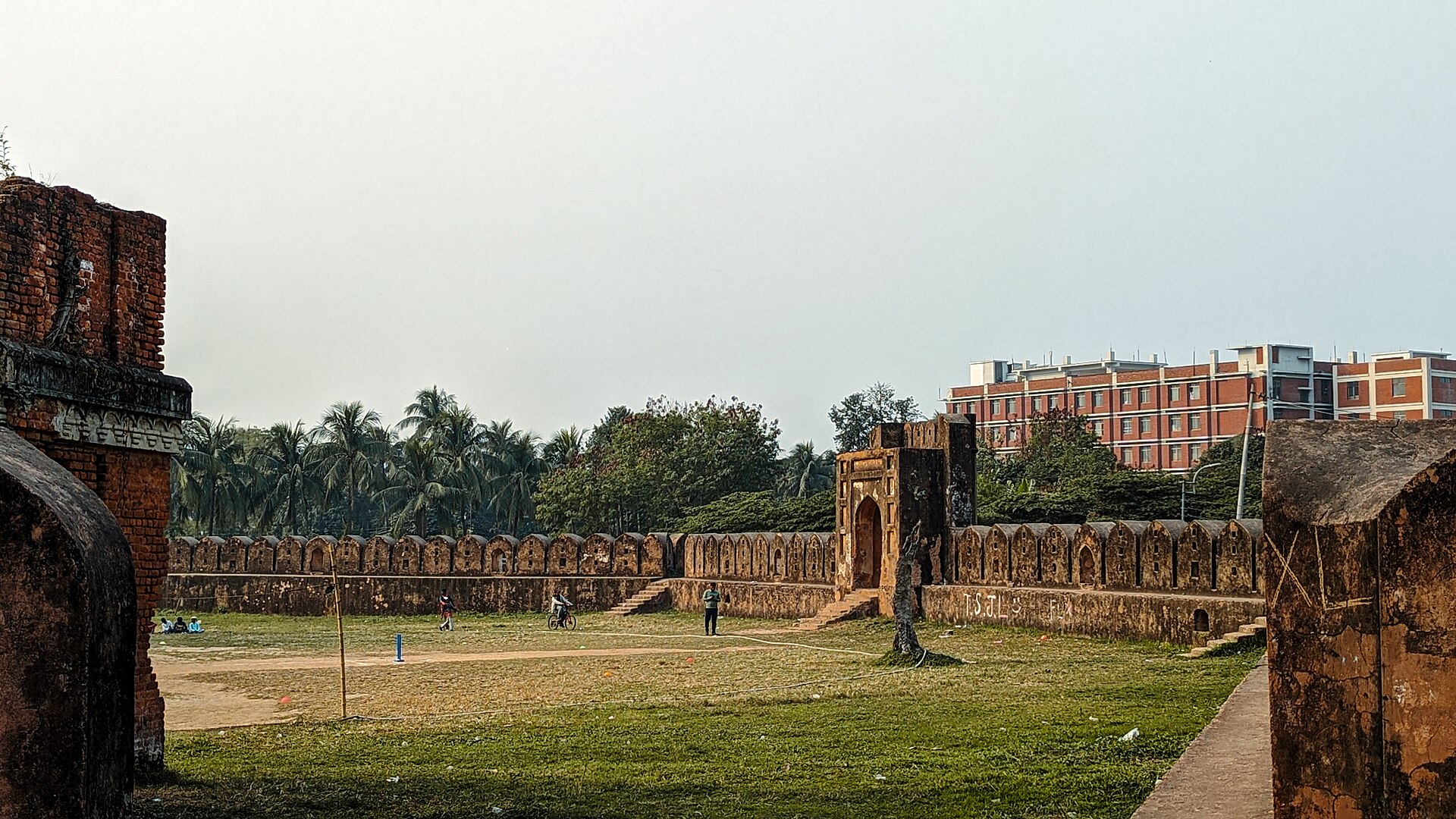
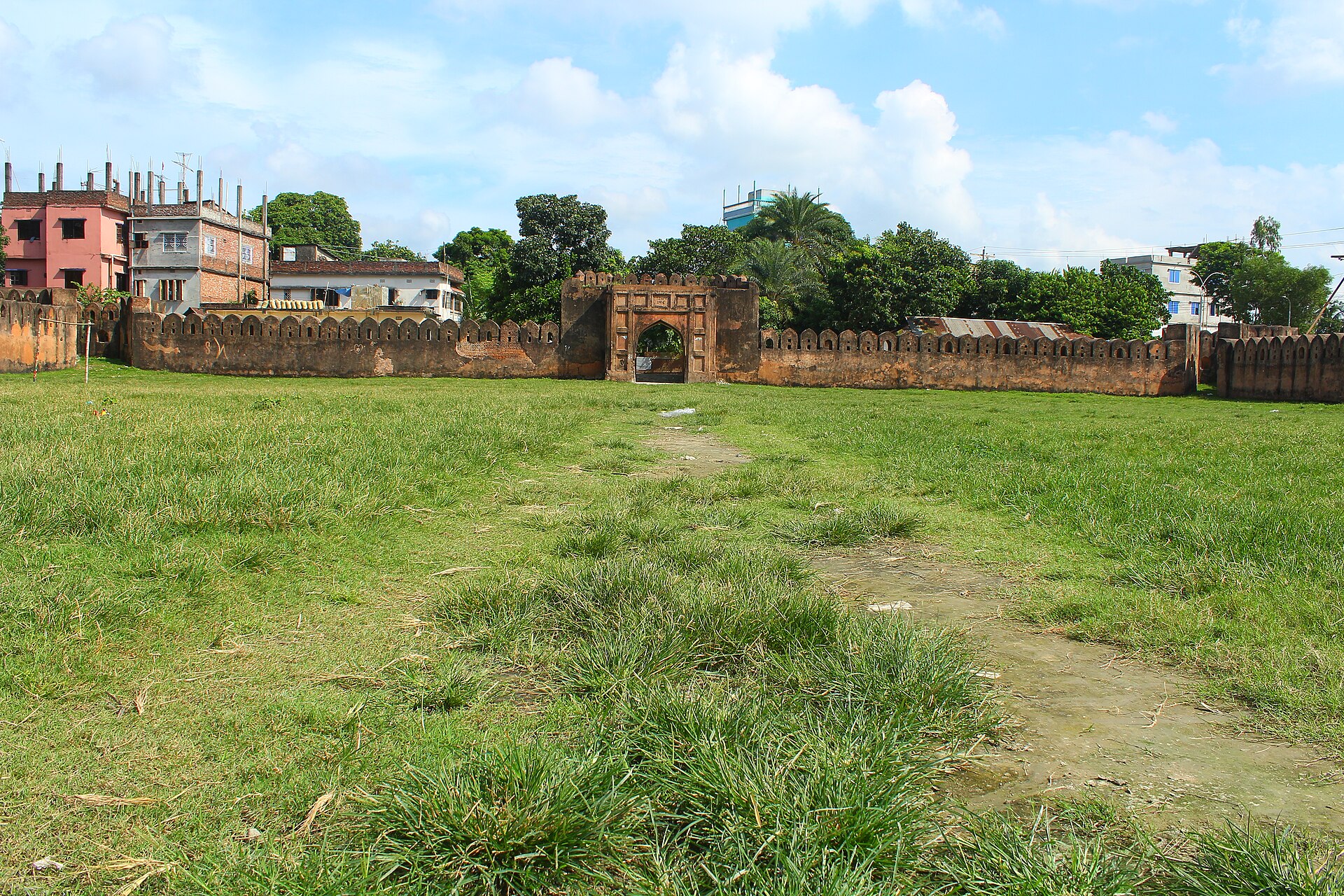
Hajiganj Fort and Sonakanda Fort face each other across the Shitalakshya river at Narayanganj, just south-east of Dhaka. They are two of the Mughal water forts built in the 17th century to stop pirates from sailing up the rivers to the capital. Both are open brick enclosures with crenellated walls, gun platforms and gateways, set in green lawns that make them popular picnic spots with local families. Together with Idrakpur Fort in Munshiganj, they are the best surviving examples of Mughal river defences in Bengal.
Guarding the river road to Dhaka
When the Mughals made Dhaka the capital of Bengal in the early 17th century, the rivers were its highways and its weak point. Magh (Arakanese) and Portuguese raiders came up from the Bay of Bengal in fast boats. The Mughals built small, strong forts at the river junctions where cannon and muskets could stop them. Neither fort carries an inscription, so their dates come from history and style.
Hajiganj Fort
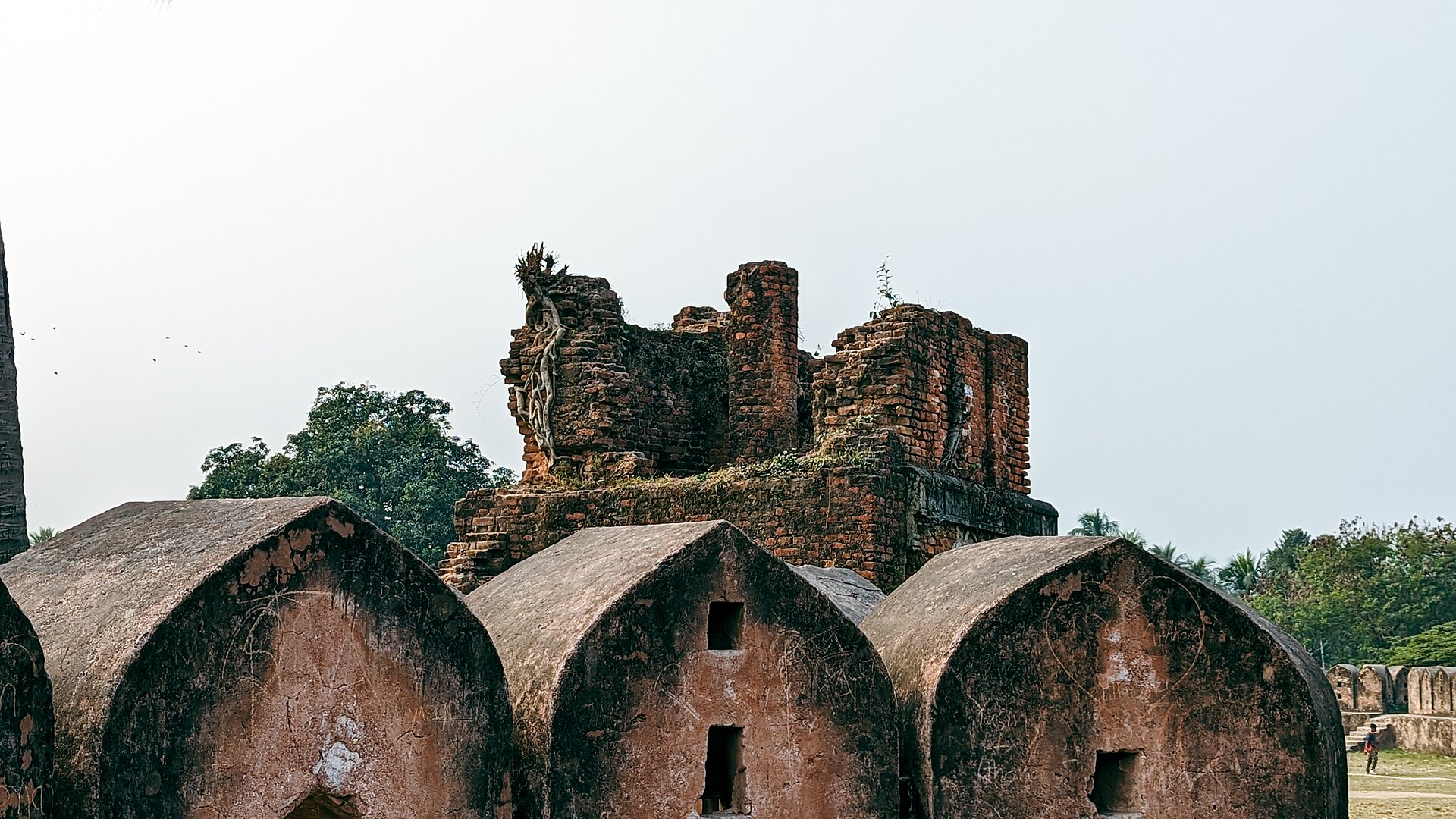
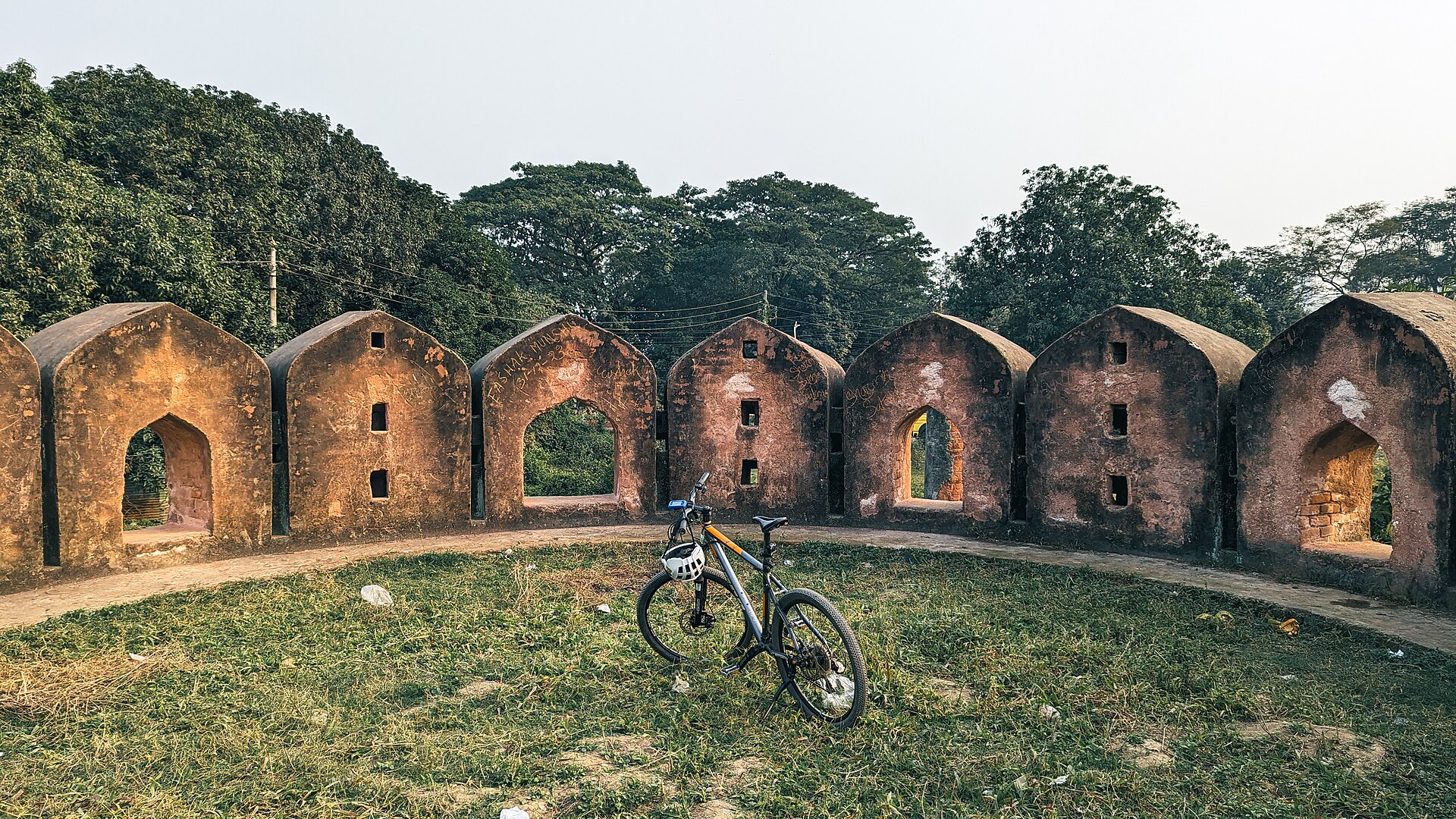
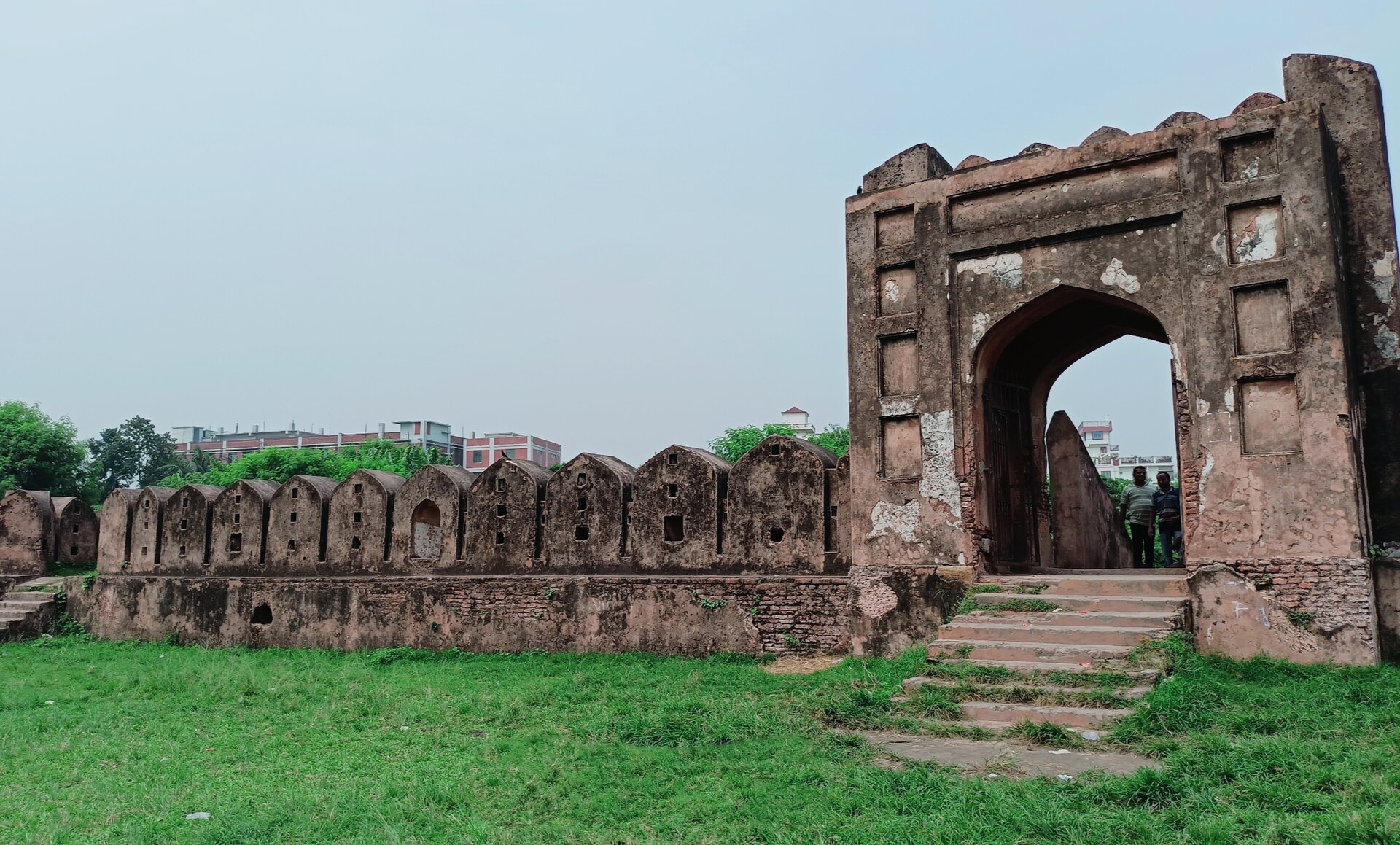
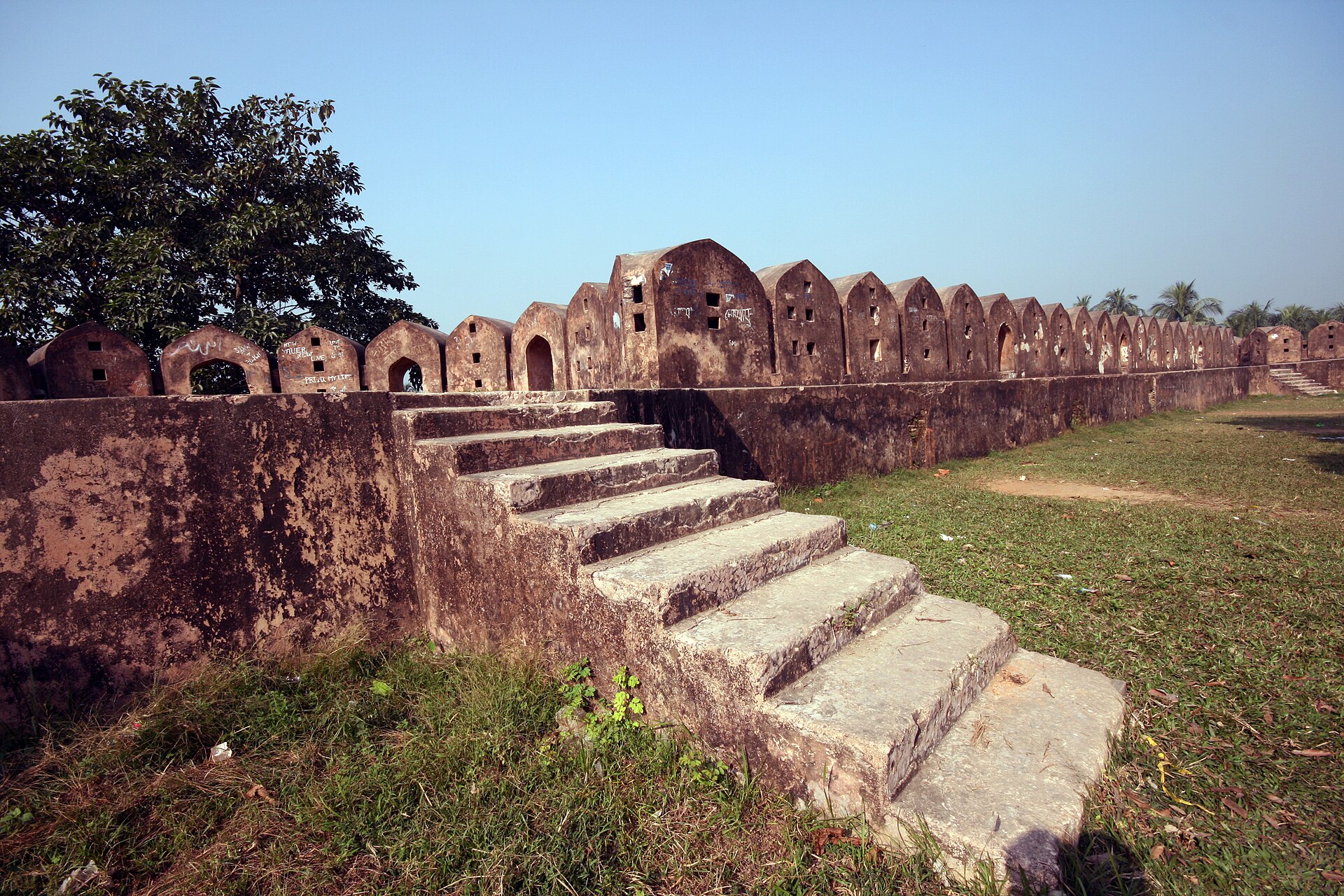
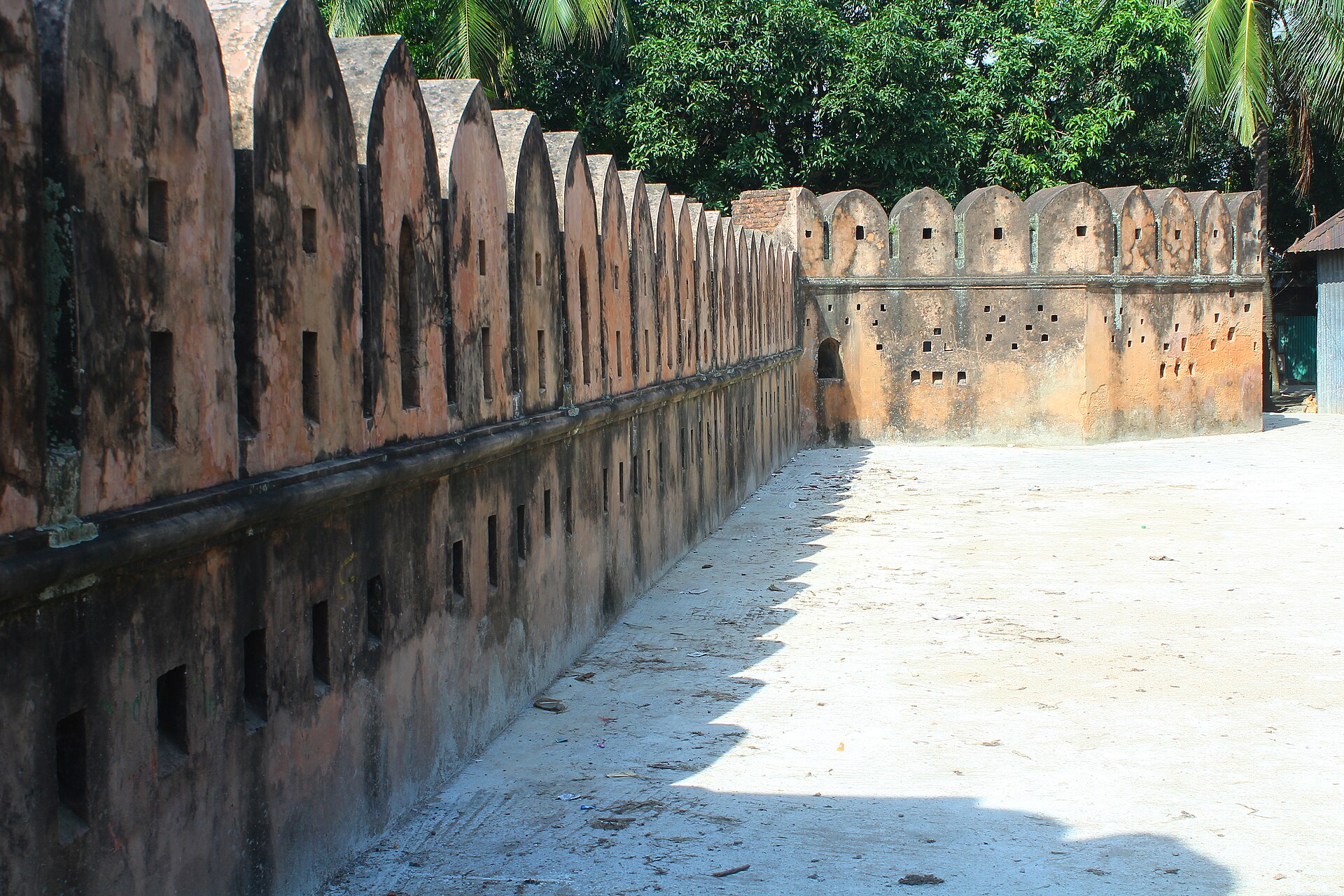
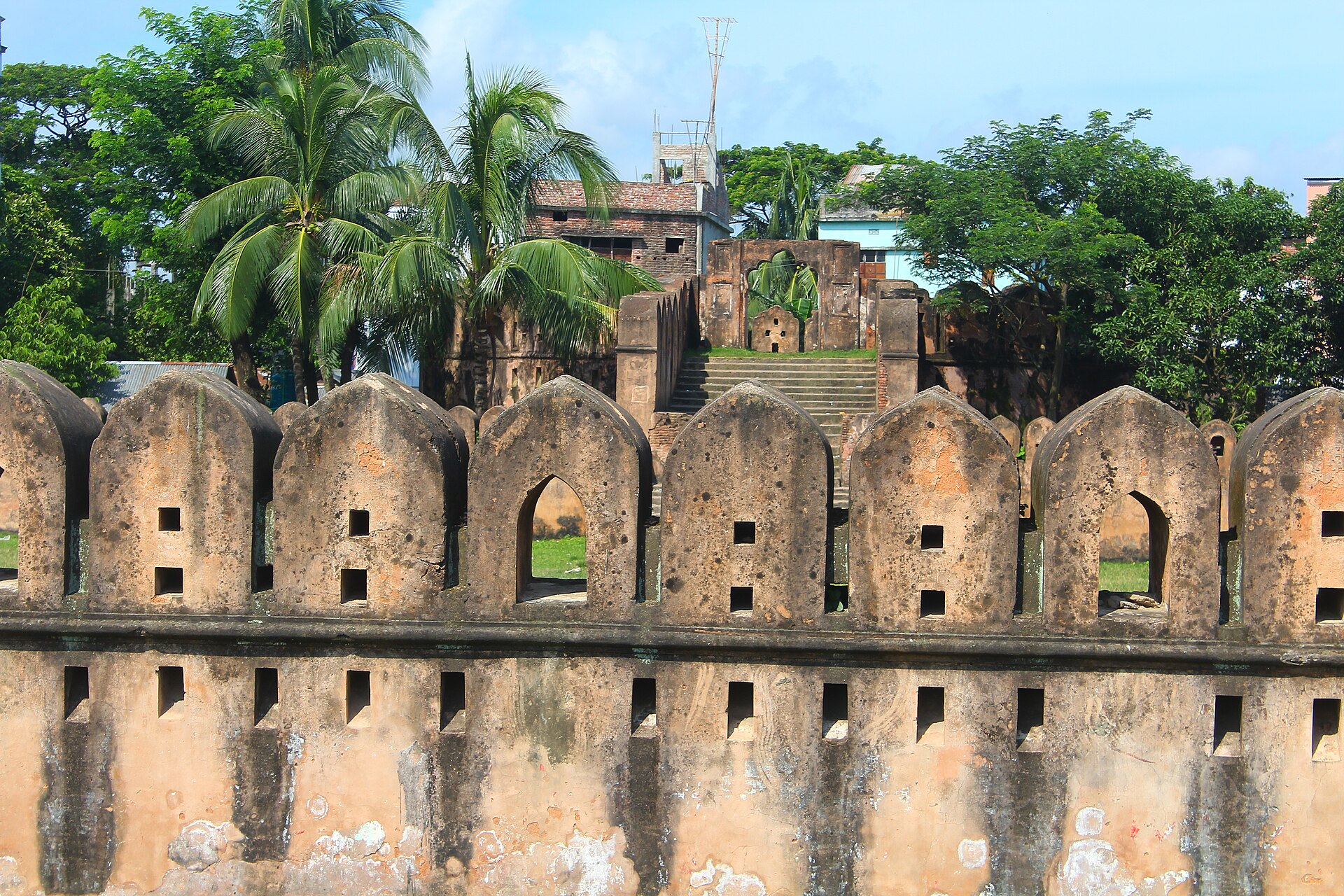
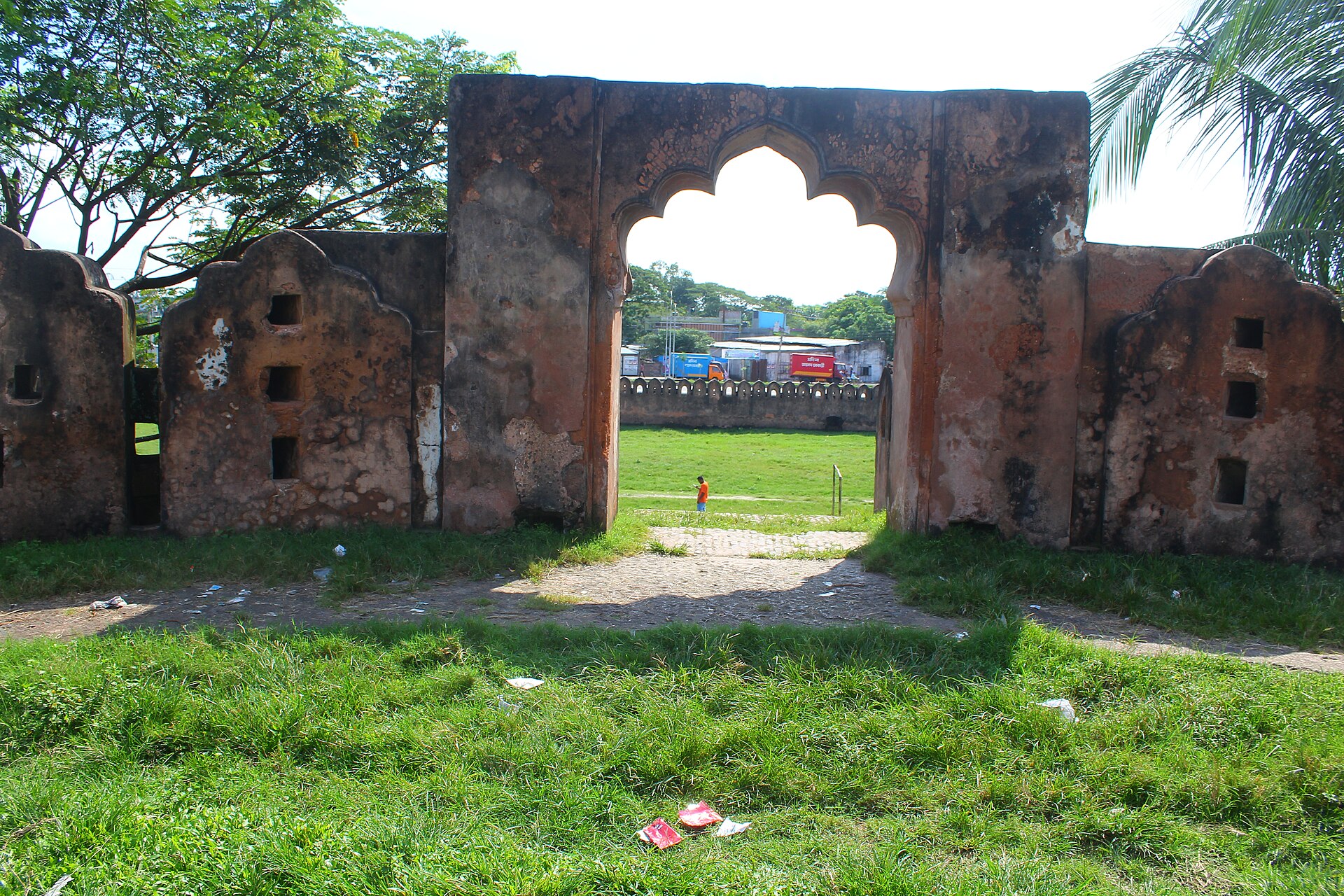
Hajiganj Fort, also called Khizirpur Fort, stands on the west bank of the Shitalakshya where the old course of the Buriganga once joined it. It was probably built soon after Islam Khan made Dhaka the Mughal capital, which would make it the oldest of the three forts. Its curtain wall is five-sided, with round bastions at the corners, a parapet of merlons and holes for muskets; a walkway about 1.2 metres up runs along the inside of the wall, and each bastion has its own staircase to the top. In one corner stands a tall square brick tower, probably a lookout. The single small gateway faces the river, crowned with a lotus finial. There are no buildings inside, which suggests the garrison camped in tents during the rainy season, when raids were expected.
Sonakanda Fort
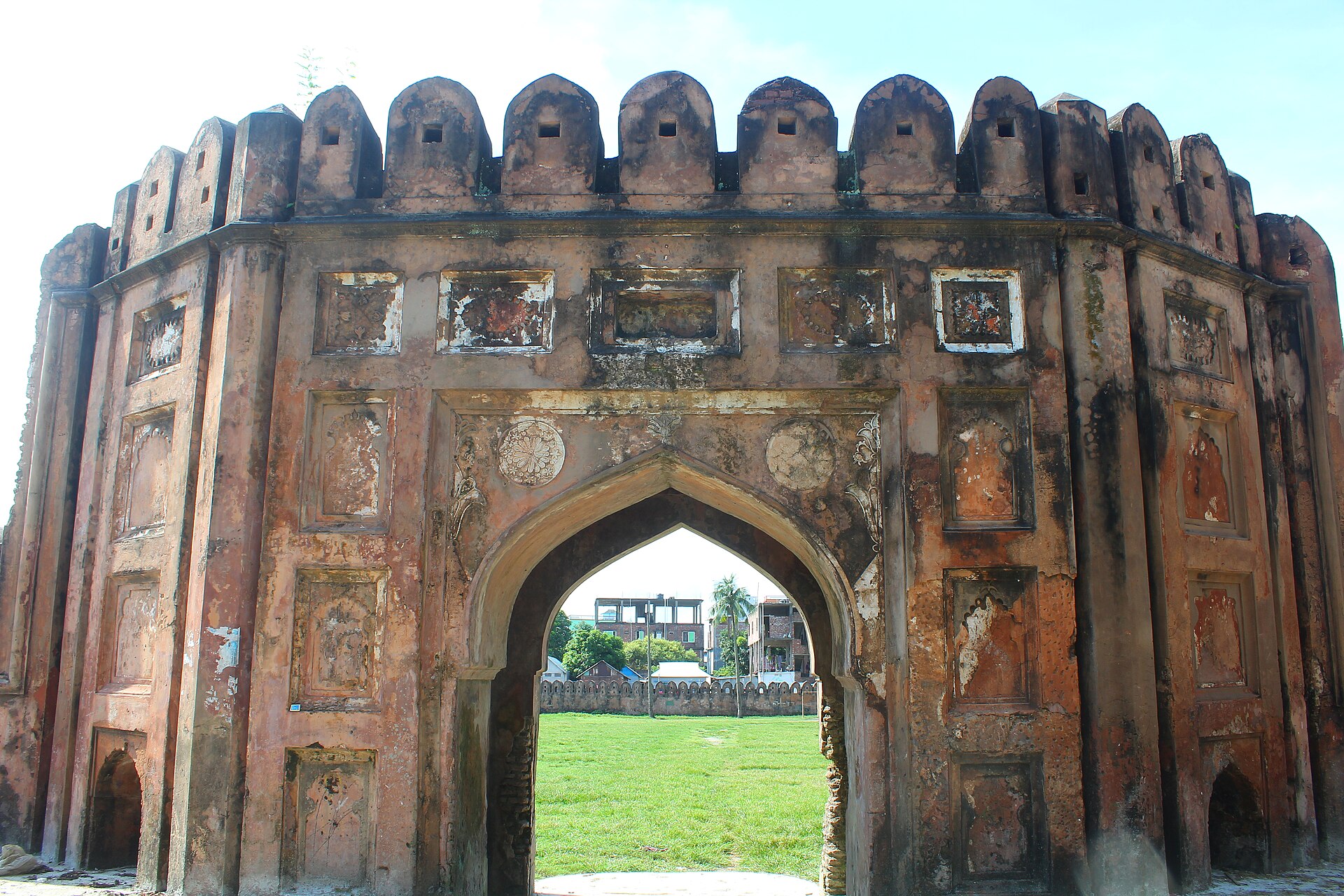
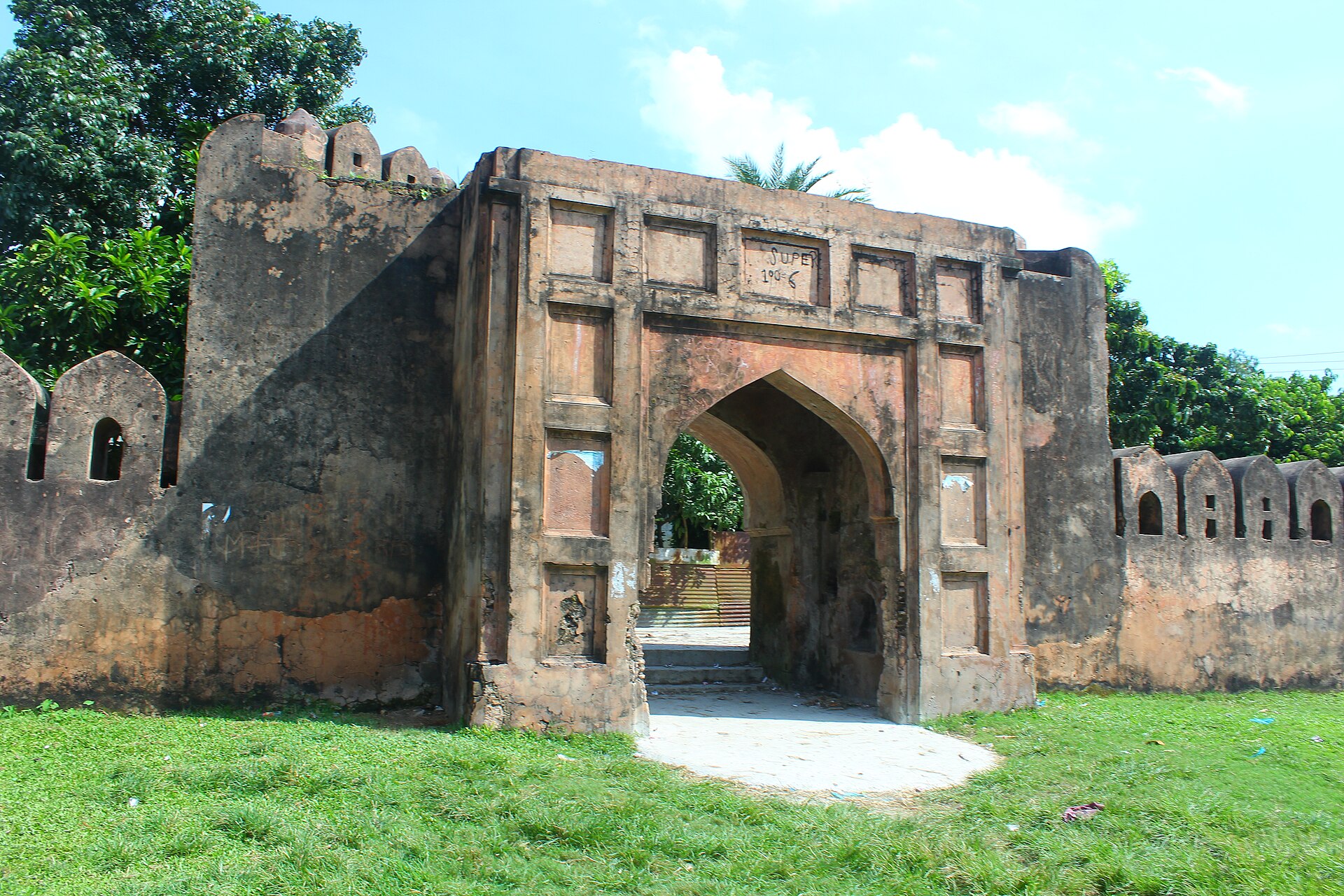
Sonakanda Fort stands almost opposite, on the east bank at Bandar. It is a rectangle of about 87 by 57 metres, enclosed by a brick wall about 3 metres high with octagonal bastions at the corners, unlike the round bastions of Hajiganj and Idrakpur. Its most striking feature is the massive round artillery platform on the west side, facing the river: two concentric circular walls, the outer about 19 metres across and 6 metres high, reached by a staircase through a five-foil arched gateway. Heavy cannon there could hit boats coming up the Shitalakshya. The fort is entered through a single gate on the north, a tall four-centred arch framed by plastered panels. Its construction is often attributed to Mir Jumla, governor of Bengal from 1660, but there is no firm evidence; on style it dates from the middle of the 17th century.
Both forts have been protected monuments of the Department of Archaeology since 1950 and have been repaired several times.
What the visit is like
These are open, grassy enclosures rather than buildings to explore room by room. Walk the walls, climb the gun platforms, and look out over the river traffic of Narayanganj, one of the busiest river ports in Bangladesh. Afternoons are lively with families and cricket games on the lawns; mornings are quieter and better for photographs. Come in daylight and keep an eye on your belongings, as you would in any public park.
When to go
November to March is dry and pleasant. In the monsoon the lawns can be waterlogged, but the river is at its fullest and you can best imagine the forts as they were meant to be seen.
Hajiganj and Sonakanda Forts opening hours and tickets
We have not been able to confirm the current opening hours or ticket prices of Hajiganj and Sonakanda forts from an official source. They are Department of Archaeology sites, which usually close on Sundays, so visit on a weekday in daylight and check locally.
- Closed
- Not confirmed: Department of Archaeology sites usually close on Sundays; visit on a weekday in daylight
- Entry fee
- Not confirmed from an official source; any tickets are included on our tours
Travelling with us? Entry tickets are included on all our guided tours, so you do not need to book them.
Where are Hajiganj and Sonakanda Forts?
- Where
- Hajiganj, Narayanganj Sadar and Bandar, Narayanganj District, Dhaka Division, Bangladesh
- Nearest town
- Narayanganj
- From Dhaka
- About 20 km, 1 to 1.5 hours by road
- Also known as
- Khizirpur Fort, Hajiganj Kella, Sonakanda Durgo, Sonakanda Kella
- Protected
- Protected monument of the Department of Archaeology (gazetted 1950)

Getting to Hajiganj and Sonakanda Forts on your own is hard work. We can send a private car with driver and guide from Dhaka or anywhere in Bangladesh.
Things to do at Hajiganj and Sonakanda Forts
-
Walk the walls of Hajiganj
Climb a bastion staircase and follow the rampart walk behind the merlons and musket holes.
-
Find the lookout tower
The tall square brick tower in a corner of Hajiganj Fort was probably used to watch the river.
-
Cross the Shitalakshya by boat
Take a small ferry boat between the two forts and watch the cargo boats and launches of Narayanganj’s busy river port.
-
Climb Sonakanda's gun platform
Go up the staircase through the five-foil arch onto the great round platform that once carried heavy cannon.
-
Photograph the gates
Sonakanda’s tall north gate with its plastered panels and Hajiganj’s small river gate with its lotus finial.
-
Continue to Sonargaon
Panam City and the Folk Art Museum, the old capital of eastern Bengal, are 30 to 45 minutes away.
How to get to Hajiganj and Sonakanda Forts
Hajiganj Fort is on the west bank of the Shitalakshya in Narayanganj, 1 to 1.5 hours by road or by commuter train from Dhaka. Sonakanda Fort is opposite in Bandar: cross by a small ferry boat from the town ghats.
By car: Narayanganj is about 20 km south-east of central Dhaka, 1 to 1.5 hours by road depending on traffic. Hajiganj Fort is on the west bank of the Shitalakshya, north of Narayanganj town centre; Sonakanda Fort is across the river in Bandar.
By train: commuter trains run from Kamalapur station in Dhaka to Narayanganj; from the station a rickshaw takes you to Hajiganj Fort.
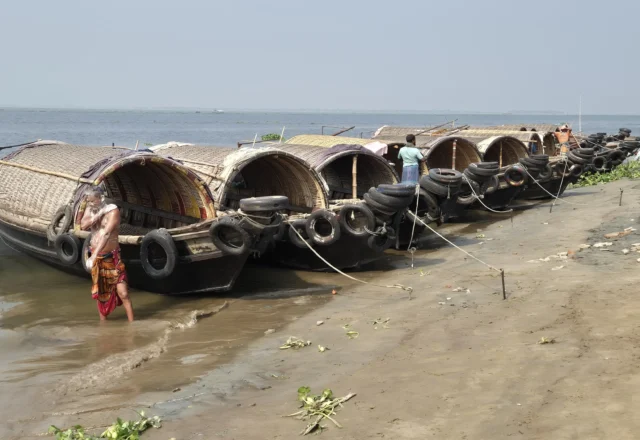
Crossing the river: small ferry boats cross the Shitalakshya from the ghats near Narayanganj town to Bandar for a few taka, which is the quickest way between the two forts and a fun ride in itself. By car you can also cross by road bridge.
Combine it with: Bibi Mariam’s Mughal tomb and mosque near Hajiganj, the Bandar Shahi Mosque (1481) and the Kadam Rasul shrine in Bandar, and, about 30 to 45 minutes away, Panam City and the Folk Art Museum at Sonargaon. The third and largest of the river forts, Idrakpur Fort in Munshiganj, is about an hour away.
Where to stay near Hajiganj and Sonakanda Forts
Narayanganj is an easy day trip from Dhaka, so most visitors stay in Gulshan, Banani or Dhanmondi. You can also combine the forts with Sonargaon and stay at one of the resorts on the Meghna side of Sonargaon.


Tours that visit Hajiganj and Sonakanda Forts
None of our set tours stop here yet, but we can add it to a tailor-made trip.
Questions about Hajiganj and Sonakanda Forts
Where are Hajiganj and Sonakanda forts?
In Narayanganj, about 20 km south-east of central Dhaka. Hajiganj Fort is on the west bank of the Shitalakshya river and Sonakanda Fort faces it on the east bank, in Bandar.
Who built Hajiganj Fort?
The Mughals, probably soon after Islam Khan made Dhaka the capital of Bengal in the early 17th century. There is no inscription, so the exact date is not known.
Who built Sonakanda Fort?
It is often attributed to Mir Jumla, Mughal governor of Bengal from 1660, but there is no firm evidence. Its style dates it to the middle of the 17th century.
Why were these forts built?
To stop Magh and Portuguese pirates sailing up the rivers to Dhaka, the Mughal capital. With Idrakpur Fort in Munshiganj they guarded the river routes to the city.
What are the opening hours and ticket prices?
We have not been able to confirm current hours or ticket prices from an official source. Both forts are managed by the Department of Archaeology, whose sites usually close on Sundays, so plan a weekday visit and check locally. On our guided tours any entry tickets are included.
What is the difference between the two forts?
Hajiganj has a five-sided wall with round bastions and a tall lookout tower; Sonakanda is rectangular with octagonal bastions and a massive round artillery platform facing the river.
How do I get from Hajiganj Fort to Sonakanda Fort?
Cross the Shitalakshya by one of the small ferry boats from the ghats near Narayanganj town to Bandar, or drive round by the road bridge.
How much time do I need?
About 30 to 45 minutes at each fort, plus time to cross the river. Half a day covers both comfortably; add Sonargaon for a full day.
Are the forts protected monuments?
Yes. Both have been on the Department of Archaeology's list of protected monuments since 1950.
Is it safe to visit?
Yes, in daytime. The forts are popular with local families. As in any public park, keep an eye on your belongings and avoid visiting after dark.
What else is there to see near the forts?
Bibi Mariam's tomb and mosque near Hajiganj, the Bandar Shahi Mosque of 1481 and the Kadam Rasul shrine in Bandar, and Panam City and the Folk Art Museum at Sonargaon.
How are they related to Idrakpur Fort?
All three are Mughal river forts that protected Dhaka. Idrakpur is in Munshiganj, about an hour's drive away, and has the largest gun platform of the three.
Do you include the forts on your tours?
We can add Hajiganj and Sonakanda to a Sonargaon day trip from Dhaka, with a car, an English-speaking guide and a boat across the Shitalakshya. Ask us when you plan your trip.