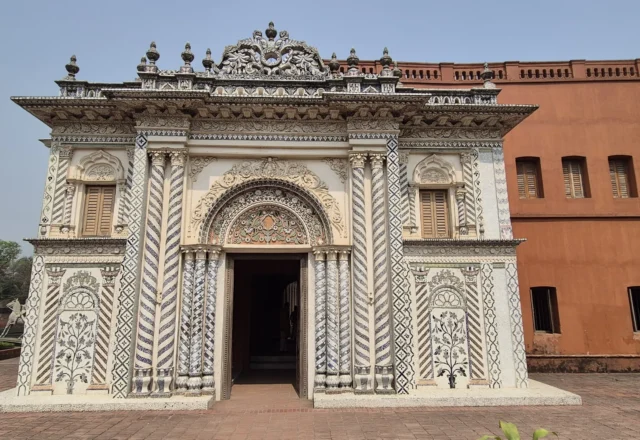

Lokenath Brahmachari Ashram, Barodi
About Lokenath Brahmachari Ashram
The Lokenath Brahmachari Ashram at Barodi (also spelt Baradi), in Sonargaon, is where the Hindu saint Baba Lokenath spent the last 26 years of his life and where he died in 1890. His shrine has made this small market village, about two hours east of Dhaka, one of the most visited Hindu pilgrimage places in Bangladesh. On an ordinary day it is a quiet courtyard of temples, old trees and pilgrim rest houses. On a few days each year it fills with tens of thousands of people.
Who was Baba Lokenath?
Lokenath Brahmachari was a Bengali yogi whose picture, a bearded ascetic sitting cross-legged, hangs in Hindu homes and shops across Bangladesh and West Bengal. By tradition he was born in 1730, on Janmashtami, to a Brahmin family in what is now North 24 Parganas, West Bengal; the villages of Kachua and Chakla both claim to be his birthplace. As a boy he left home with his teacher, Bhagwan Ganguly, and his friend Benimadhav, and the traditional accounts describe decades of fasting, meditation in the Himalayas and long journeys on foot, as far as Mecca by some tellings. These stories come from his followers and cannot be checked against records. The same is true of his age: devotees hold that he lived for 160 years.
What is better documented is the end of his life. In the 1860s he came down through Daudkandi to Barodi with a local man, Dengu Karmakar, whom he had helped. After Dengu’s death the zamindar of Barodi gave him a piece of rent-free land beside the village cremation ground, and an ashram was set up for him there. He lived in it until his death on 1 June 1890 (19 Jaistha 1297 in the Bengali calendar) and became known simply as the Brahmachari of Barodi.
His best-known promise explains his hold on people today. He is said to have told his followers that whenever they were in danger, in battle, in the forest or on the water, they should remember him and he would protect them. Devotees still repeat it, and many who come to Barodi are there to ask for a relative’s recovery or to give thanks for it.
What you see at the ashram
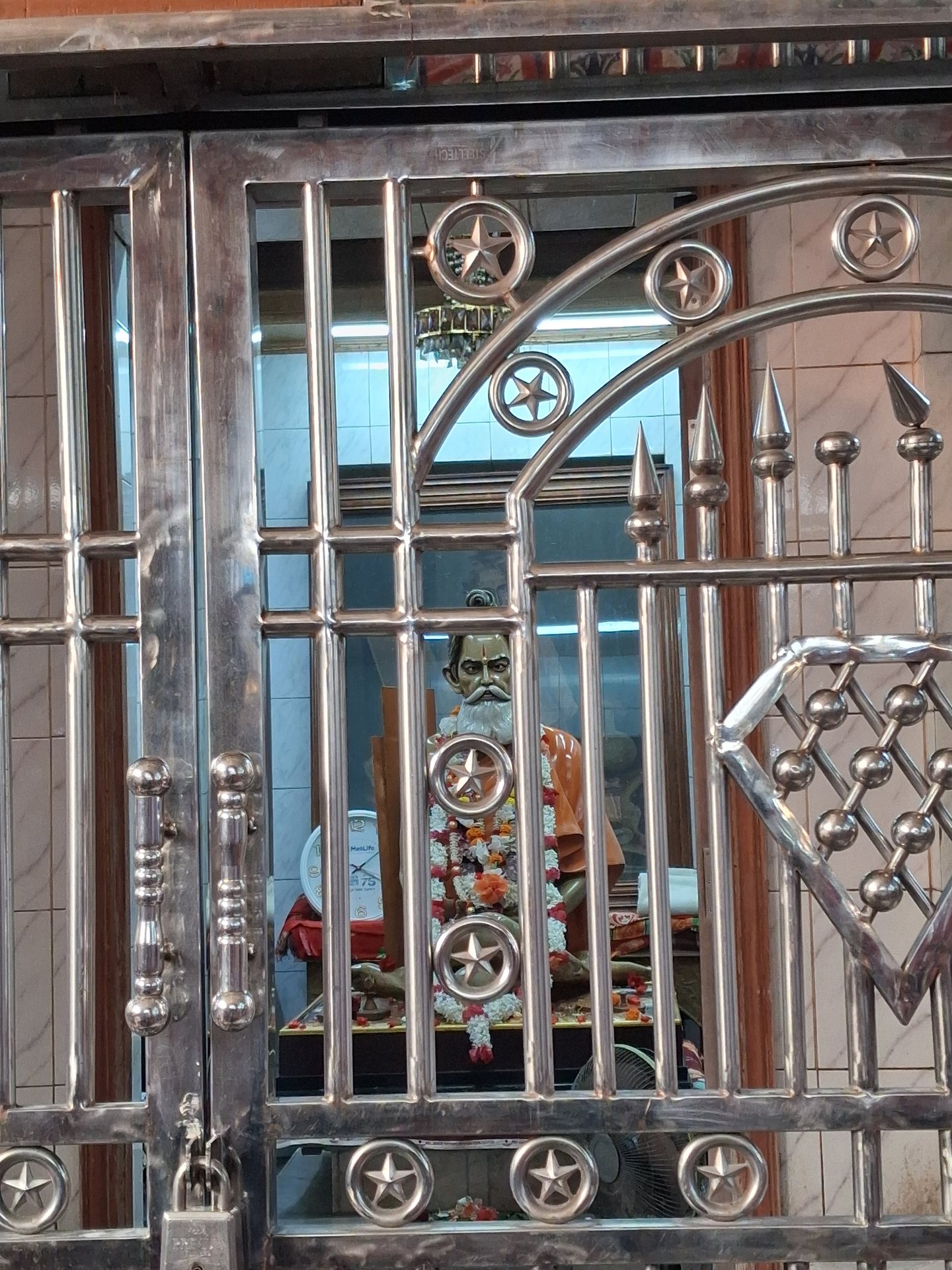
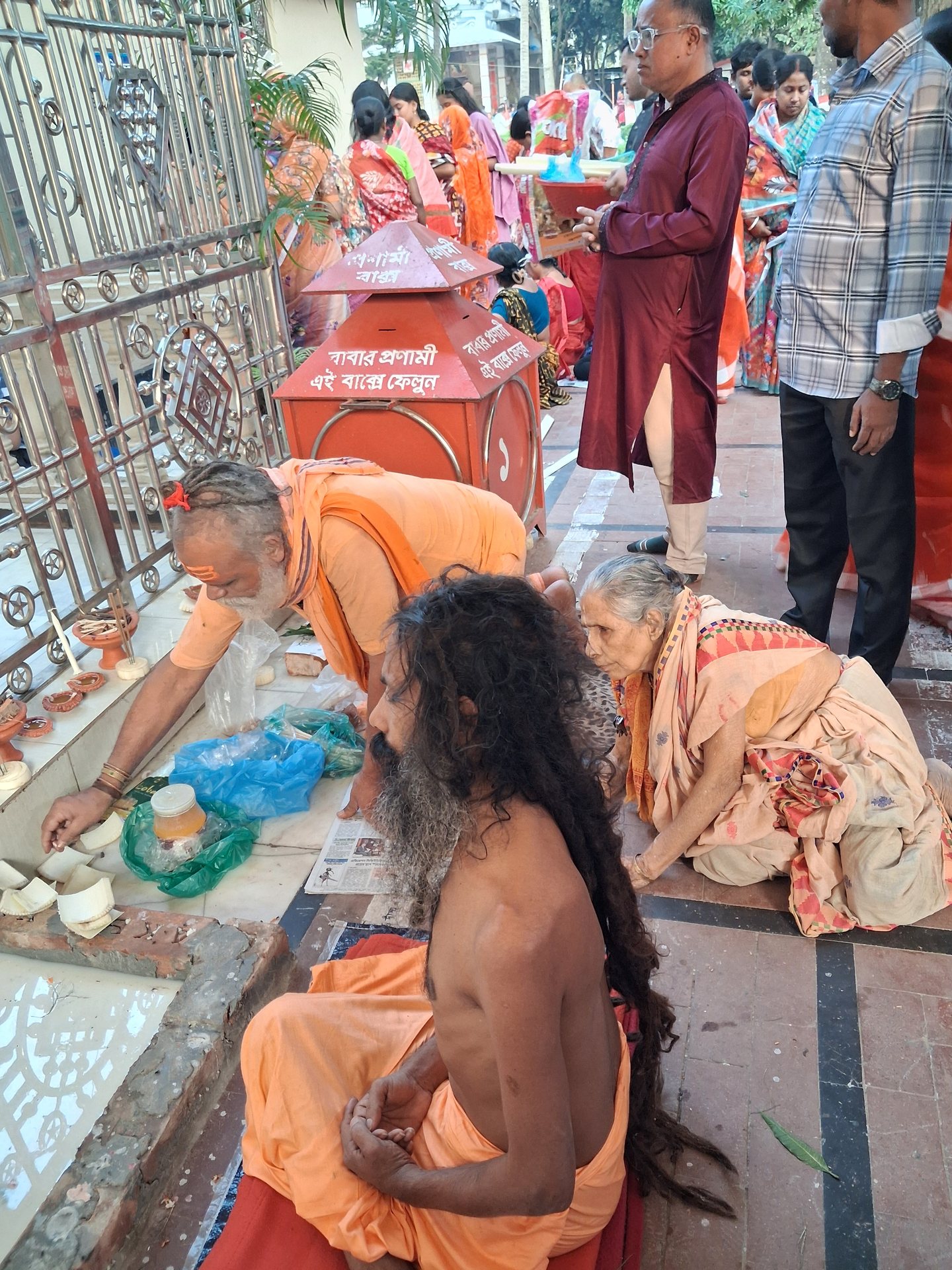
The ashram stands at the north-west corner of Barodi bazaar. At its centre is the samadhi temple, the shrine over the place where Lokenath’s remains were laid. Inside, behind a polished steel gate, sits a figure of the saint draped in fresh garlands; a large oil portrait of him hangs in the ashram as well. Worshippers queue to bow, leave flowers and sweets, and receive a blessing from the priests, and sadhus in saffron often sit beside the shrine.
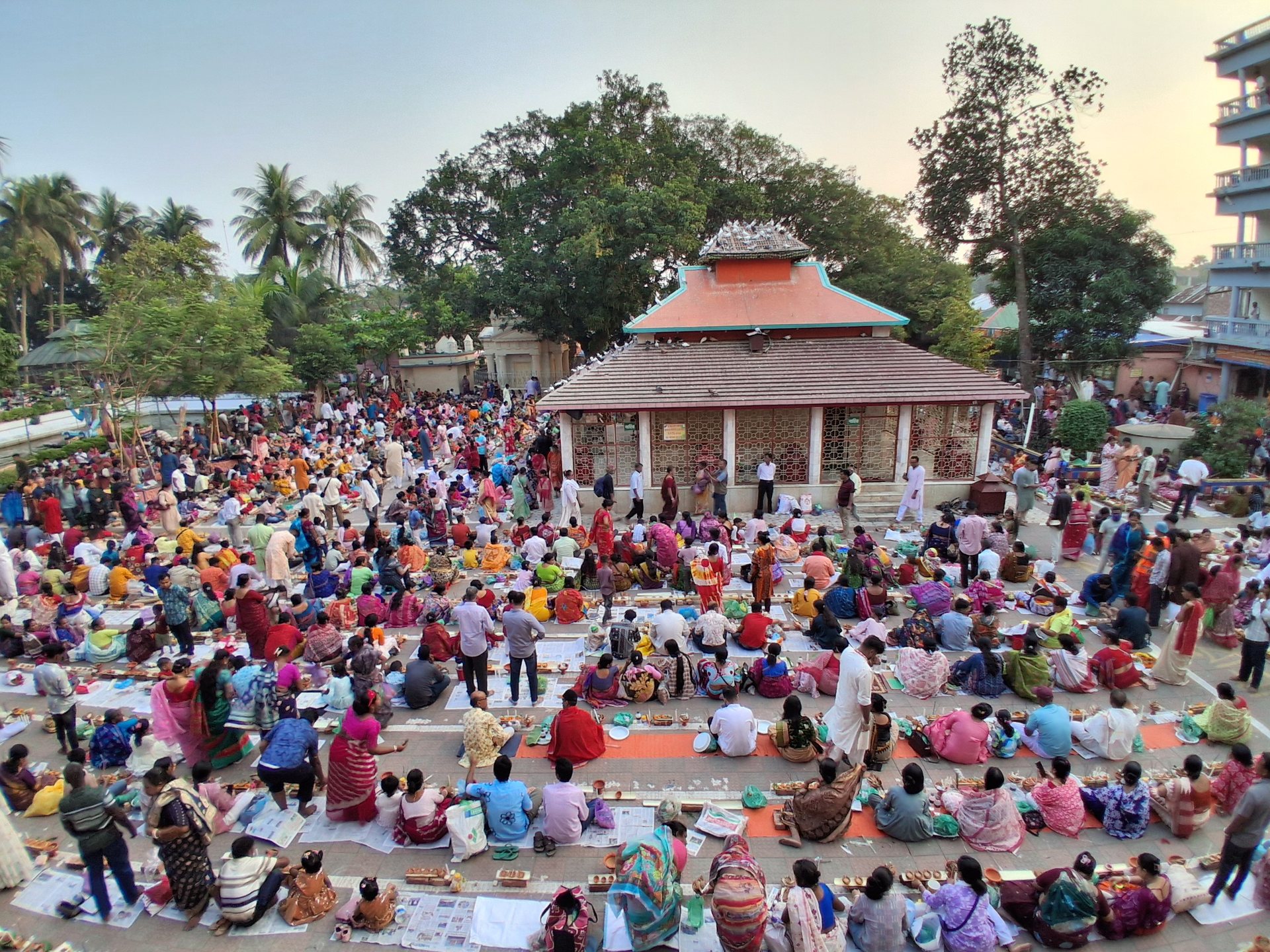
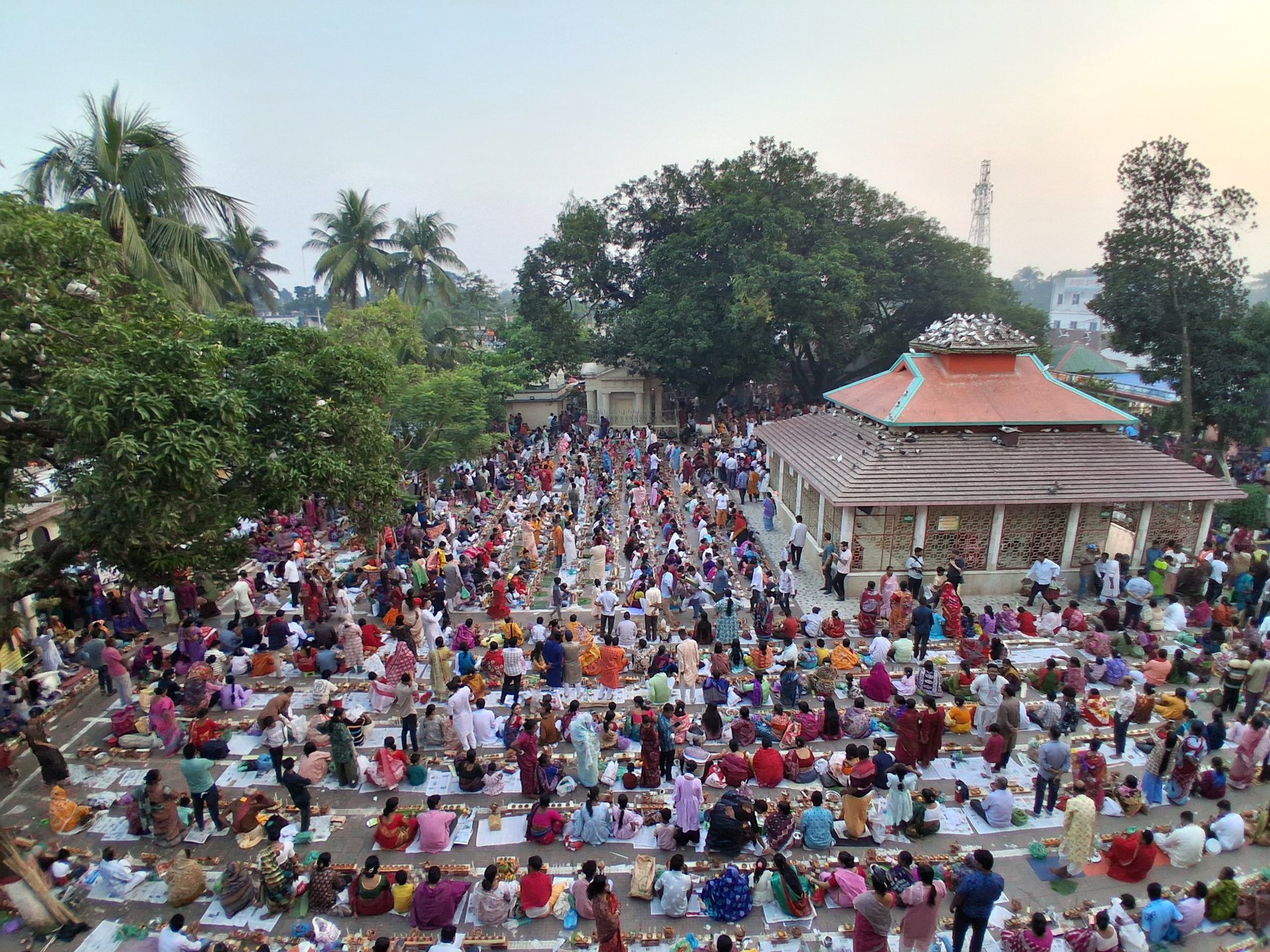
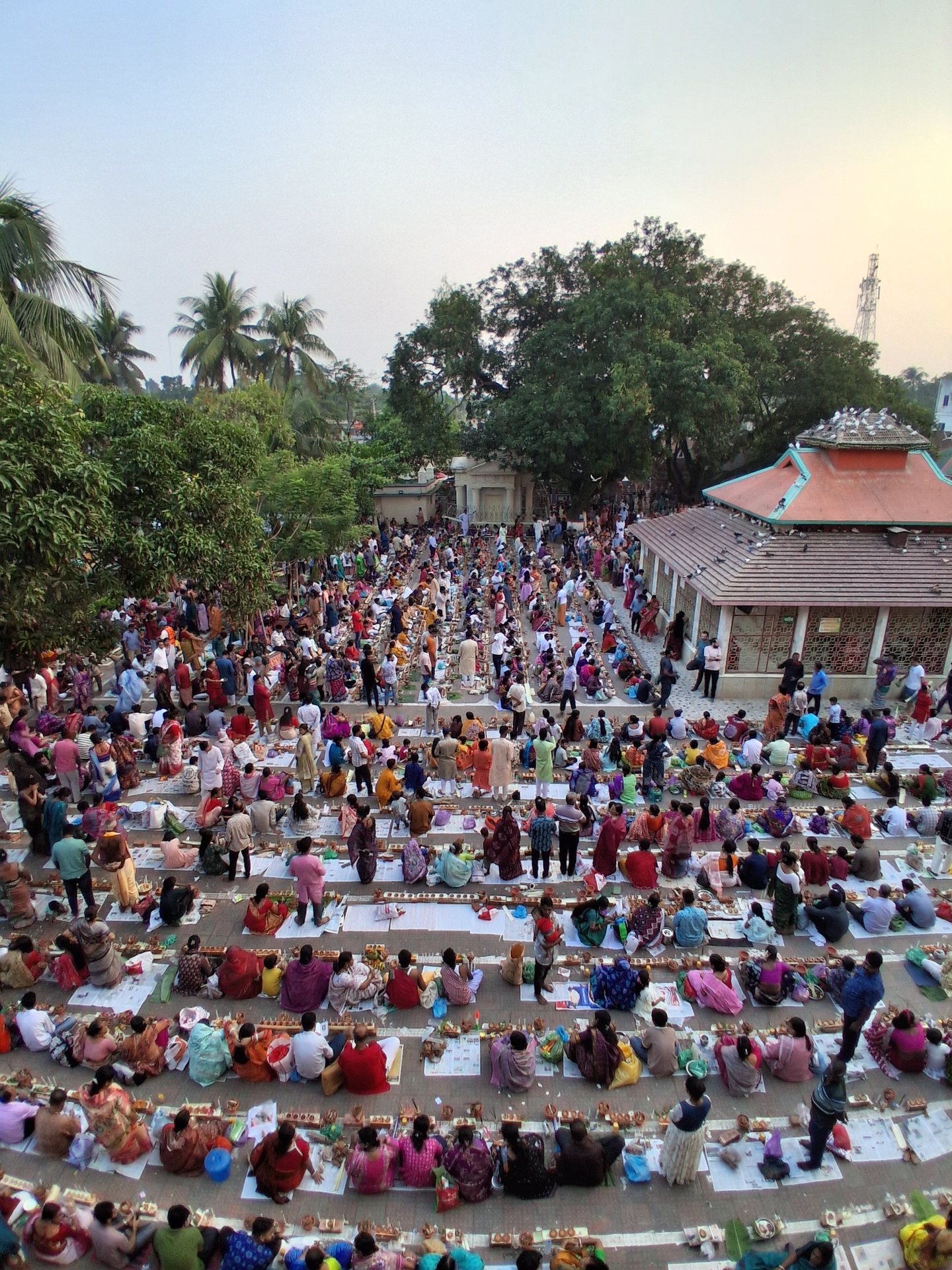
In the open courtyard is a tiered, tile-roofed temple pavilion, the building that appears in almost every photograph of the ashram. In the south courtyard, west of the samadhi, an old bakul tree spreads its shade; it is believed to be about a century old and devotees treat it as part of the shrine. Beside the ashram are two ponds, Kamana Sagar and Jiyos, said to have been dug in the saint’s lifetime, where pilgrims bathe before worship.
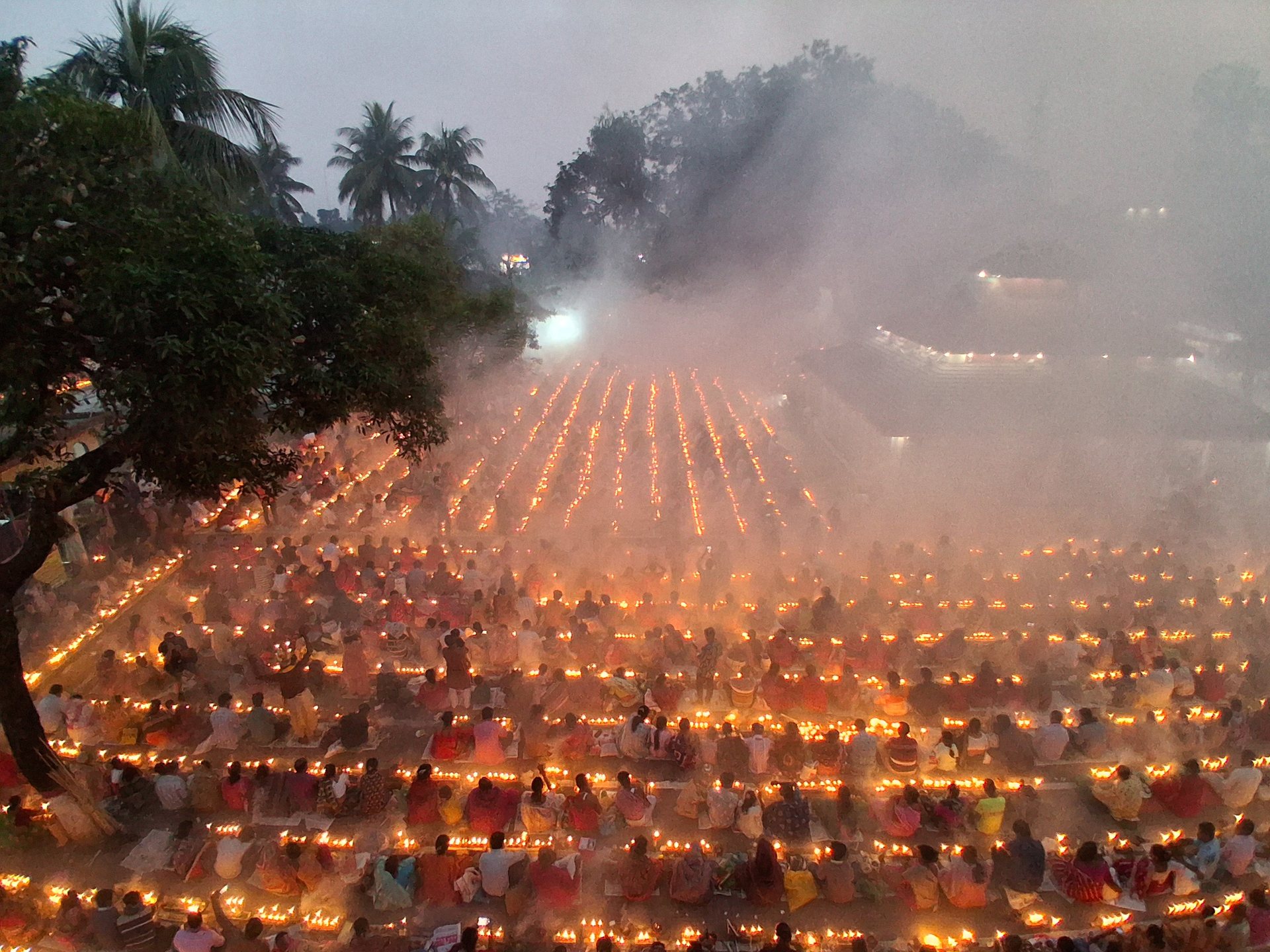
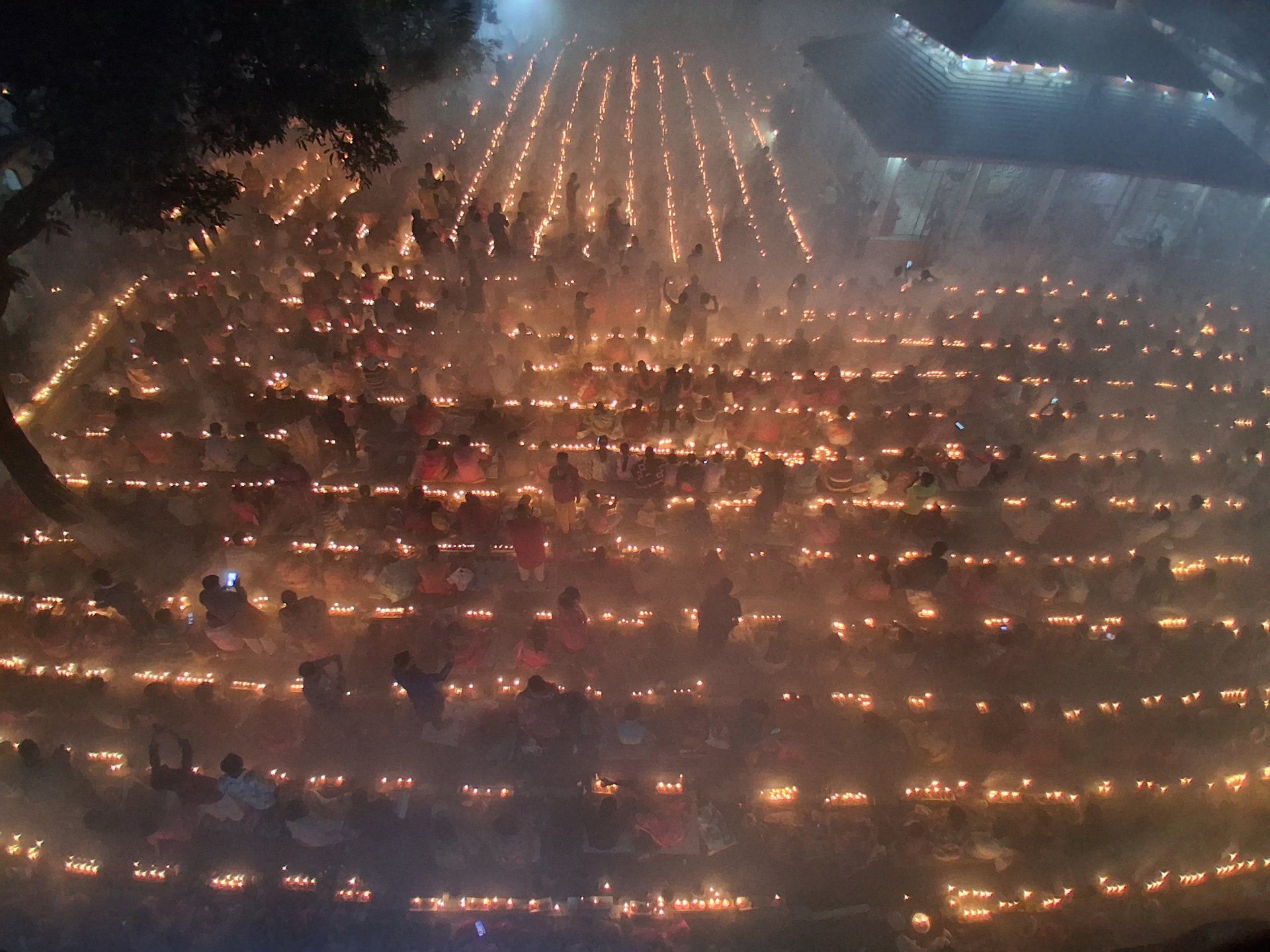
Around the courtyard rise several multi-storey pilgrim rest houses (jatri nibas) with long red-railed balconies. A signboard on one, the Ginoria Devi Jatri Nibas, dates it to 1999. Pilgrims stay in them during festivals, and their balconies give the famous view over the courtyard.
The two great gatherings
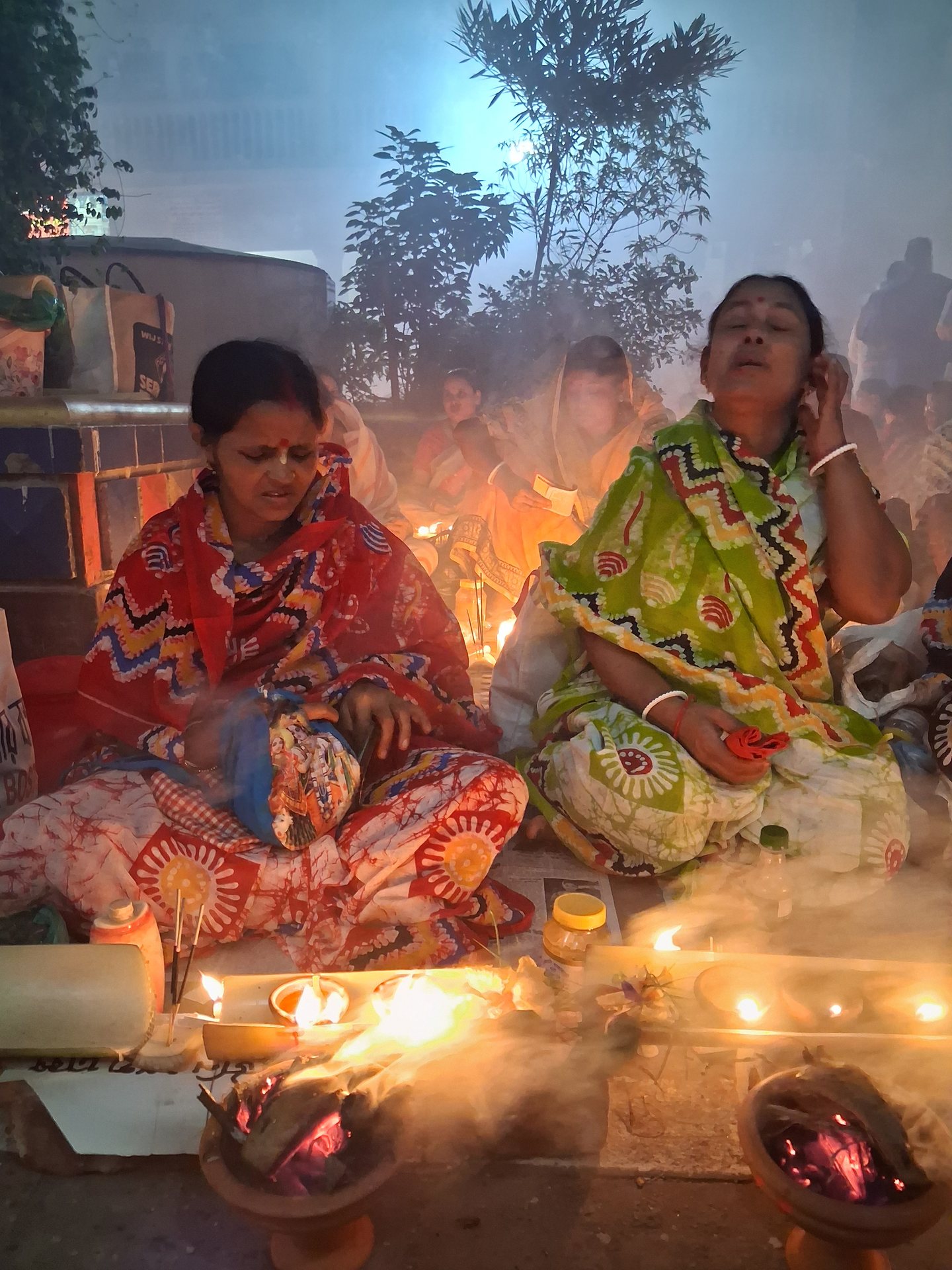
Rakher Upobash, on four evenings in early November, is the one travellers come for. Devotees who have fasted all day fill the courtyard in rows and light thousands of clay lamps and bowls of incense together at dusk. We photographed it on 14 November 2026; dates, timings and advice are on our Rakher Upobash page.
The Tirodhan Utsab, the anniversary of the saint’s death on 19 Jaistha (early June), is the ashram’s biggest religious festival. Pilgrims come from across Bangladesh and from India and Nepal, a fair runs for about a week on the field in front of the ashram, and the day is filled with readings from the Gita, offerings of food, the sharing of prasad and devotional songs. Its liveliest moment is the Hari Loot, when sugar sweets (batasa) are thrown from the temple roof and the crowd scrambles to catch them. It is hot, humid and extremely crowded: a festival for pilgrims more than for sightseeing.
Is it worth visiting on a normal day?
Yes, if you are already in Sonargaon and curious about living Hindu tradition in Bangladesh. The ashram takes under an hour, costs nothing and shows a side of the country that the Mughal and colonial monuments of Sonargaon do not. It is not a monument in itself: most of the buildings are modern and the interest is in the people and the worship. If you can time a trip for a Rakher Upobash evening, do that instead.
Lokenath Brahmachari Ashram opening hours and tickets
The Lokenath Brahmachari Ashram at Barodi is open every day from morning until evening and entry is free. Dress modestly and take off your shoes at the shrine.
- Opening hours
- Open daily, morning until evening (no published timetable)
- Entry fee
- Free
Hours and fees checked November 2026. They can change, so ask us before you go. How we check
Where is Lokenath Brahmachari Ashram?
- Where
- Barodi Bazar, Sonargaon, Narayanganj, Dhaka Division, Bangladesh
- Nearest town
- Sonargaon (Mograpara), about 10 km
- From Dhaka
- About 2 hours by road
- Also known as
- Baradi Lokenath Ashram, Shri Shri Lokenath Brahmachari Ashram, Baba Loknath Ashram

Getting to Lokenath Brahmachari Ashram on your own is hard work. We can send a private car with driver and guide from Dhaka or anywhere in Bangladesh.
Things to do at Lokenath Brahmachari Ashram
-
See the samadhi shrine
Join the queue to see the garlanded figure of Baba Lokenath at the place where he was laid to rest in 1890. Shoes off; bow or simply stand quietly.
-
Sit under the bakul tree
The old bakul tree in the south courtyard, beside the samadhi, is the shadiest corner of the ashram and a good place to sit and watch the pilgrims come and go.
-
Watch daily worship
Priests receive offerings of flowers, fruit and sweets through the day, and sadhus sit beside the shrine. Ask before photographing anyone at prayer.
-
Walk to the ponds
Kamana Sagar and Jiyos, the two ponds beside the ashram, are where pilgrims bathe before worship, as they are said to have done in the saint’s time.
-
Come for Rakher Upobash
On four evenings in early November the whole courtyard is lit with thousands of lamps at dusk. See our Rakher Upobash page for dates and tips.
-
Combine with Sonargaon
Spend the morning at Panam City, the Folk Art Museum and a Jamdani weaving village, then finish at the ashram in the late afternoon.
How to get to Lokenath Brahmachari Ashram
Barodi is about two hours from Dhaka: take the Dhaka to Chattogram highway to Mograpara in Sonargaon, then the local road about 10 km north. Buses run from Gulistan to Mograpara, with CNGs onward.
By car: take the Dhaka to Chattogram highway to the Mograpara crossroads in Sonargaon, then the local road north to Barodi bazaar, roughly 10 km further. Allow about two hours from central Dhaka, more on Thursday afternoons and festival days. The ashram is at the north-west corner of the bazaar.
By bus: buses from Gulistan in Dhaka run to Mograpara. From the crossroads, CNG auto-rickshaws and local buses go on to Barodi; agree the CNG fare before you set off.
From Panam City: Barodi is about half an hour by road from Panam City and the Sonargaon Folk Art Museum, so it is easily added to the end of a Sonargaon day.
On festival days: vehicles are stopped well short of the ashram and the last stretch is on foot. Keep your car and driver for the return; transport is scarce when the crowd leaves.
Where to stay near Lokenath Brahmachari Ashram
Almost every visitor comes on a day trip from Dhaka, and that is what we recommend: there are no tourist hotels in Barodi itself. The rest houses inside the ashram are for pilgrims and fill completely at festival time. If you want to be close, a few simple hotels and resorts stand along the highway around Sonargaon and Mograpara.
Tours that visit Lokenath Brahmachari Ashram
None of our set tours stop here yet, but we can add it to a tailor-made trip.
Questions about Lokenath Brahmachari Ashram
What is the Lokenath Brahmachari Ashram?
The ashram at Barodi in Sonargaon where the Hindu saint Baba Lokenath Brahmachari lived for his last 26 years and died in 1890. His shrine there is one of the main Hindu pilgrimage places in Bangladesh.
Where is Barodi?
In Sonargaon upazila, Narayanganj district, east of Dhaka. The ashram is at the north-west corner of Barodi bazaar, roughly 10 km north of the Mograpara crossroads on the Dhaka to Chattogram highway. The name is also spelt Baradi.
How do I get to the Barodi ashram from Dhaka?
By car, take the Dhaka to Chattogram highway to Mograpara and turn north to Barodi: about two hours. By bus, go from Gulistan to Mograpara and continue by CNG auto-rickshaw.
Is there an entry fee?
No. Entry is free. Offerings at the shrine are optional.
What are the opening hours?
The ashram is open every day from morning until evening. We are not aware of a weekly closed day or a published timetable, so avoid arriving very early or after dark.
Can non-Hindus and foreigners visit?
Yes. Visitors of every faith are welcome in the courtyard and at the shrine. Dress modestly, take off your shoes where others do and keep your voice down near people at prayer.
Who was Baba Lokenath?
A Bengali Hindu yogi, by tradition born in 1730 in what is now West Bengal, who settled at Barodi in the 1860s and died there on 1 June 1890. He is revered across Bangladesh and West Bengal.
Did Lokenath Brahmachari really live for 160 years?
That is the belief of his followers, based on a traditional birth year of 1730. There are no records to confirm it; his death at Barodi in 1890 is the firmly dated event.
When is Rakher Upobash at Barodi?
On the Saturdays and Tuesdays of the last 15 days of the Bengali month of Kartik, in early November. In 2026 the evenings were 3, 7, 10 and 14 November. See our Rakher Upobash page for the next dates.
What is the Tirodhan Utsab?
The anniversary of Baba Lokenath's death, on 19 Jaistha in the Bengali calendar (early June). It brings the largest crowds of the year, with a fair lasting about a week, readings, prasad and the Hari Loot, when sweets are thrown from the temple roof.
How long does a visit take?
30 to 45 minutes on a normal day. On a Rakher Upobash evening allow three hours, from mid-afternoon until after the lamps.
Can I take photographs?
Yes in the courtyard. Ask before photographing people at prayer or the priests, and do not use flash at the shrine.
What else is there to see near Barodi?
Panam City, the Sonargaon Folk Art Museum, Boro Sardar Bari and the Jamdani weaving villages are all about half an hour away, and the Meghna river is close by.