Because halal is the norm, most restaurants do not display a halal sign or certificate. Nobody expects one. This guide explains what is halal by default, the few places to take care, alcohol, packaged food and eating during Ramadan. For the dishes themselves, see our guide to Bangladeshi food.
Halal food at a glance
| Food | Is it halal? | Notes |
|---|---|---|
| Beef, mutton, goat, chicken, duck | Yes, as standard | Bought from local butchers who slaughter the Islamic way |
| Fish and prawns | Yes | Fish is the everyday protein. Prawns are in many dishes |
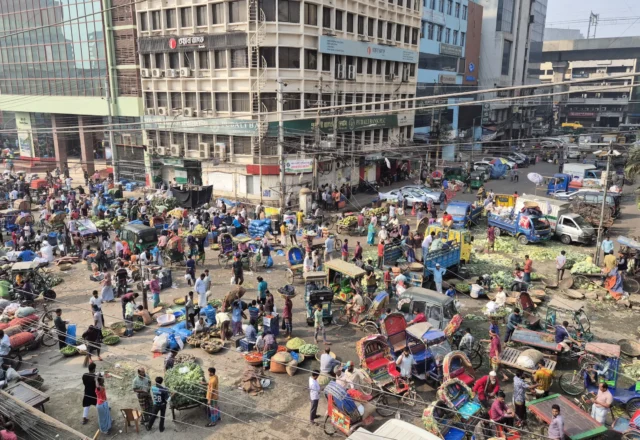
| Street food | Yes | Fuchka, chotpoti, jhalmuri, kebabs and biryani are all sold by Muslim vendors in most places |
| Pork | Very rare | Found only in a few indigenous and Christian communities and a handful of foreign restaurants |
| Alcohol | Restricted | Served only in licensed hotel bars and clubs, never in ordinary restaurants |
| Packaged and imported food | Check the label | Local products may carry a halal logo. Check imported sweets and snacks for gelatine |
Meat and restaurants
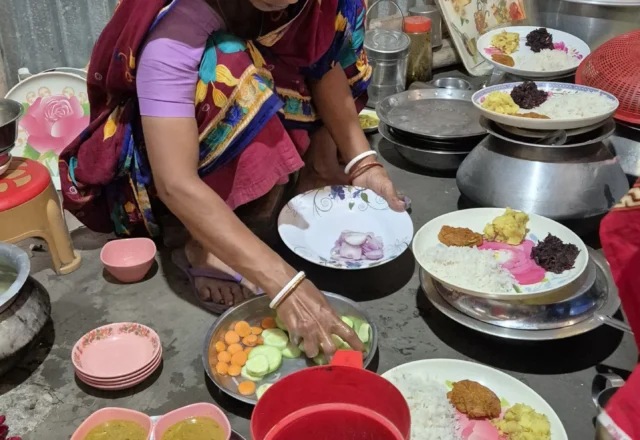
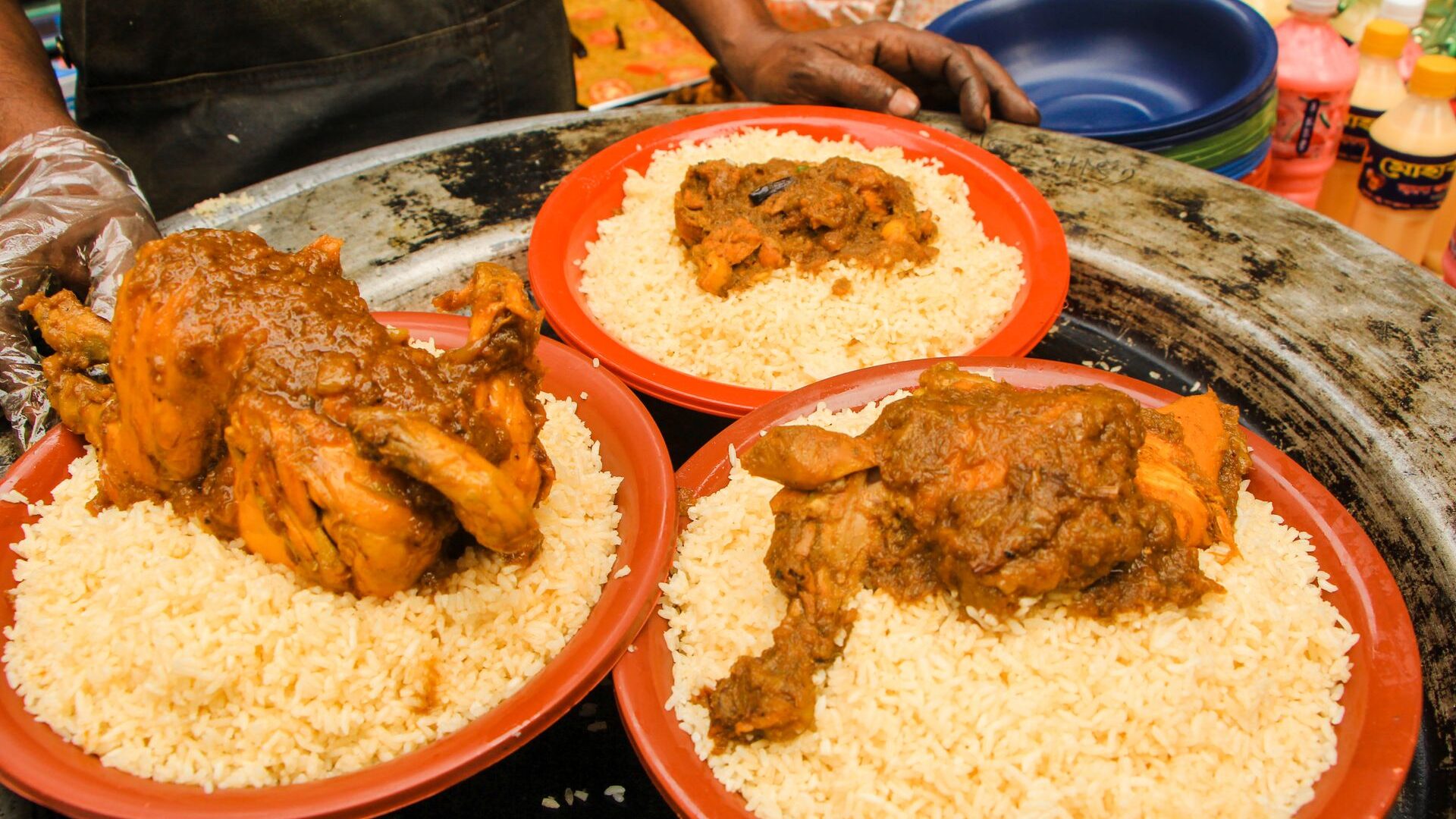
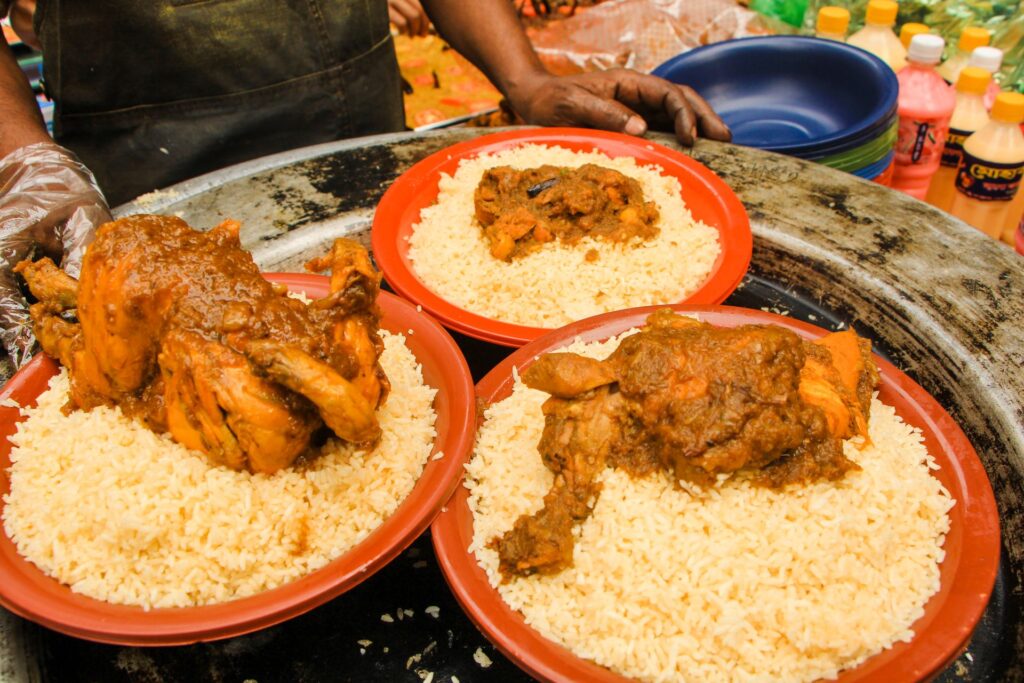
Beef, mutton, goat and chicken are eaten widely and are halal in ordinary Bangladeshi restaurants, from a roadside hotel to a wedding hall. Kacchi biryani, tehari, beef bhuna, kebabs and nehari are all safe choices. In international hotels in Dhaka, the kitchens also serve halal meat as standard, since most of their guests are Muslim.
Where to take a little care
- Indigenous areas: in parts of the Chittagong Hill Tracts and in some Garo and other indigenous villages, pork and home-made rice drinks are part of the local food. Ask before you eat, and your guide will tell you what each dish is.
- Foreign restaurants: a small number of Chinese, Korean and other foreign restaurants in Dhaka may have pork on the menu. It is always named.
- Hindu-run restaurants and sweet shops: many are fully vegetarian, which suits most Muslim travellers well. If they serve meat, ask how it is sourced.
- Imported products: supermarkets in Dhaka sell imported sweets, snacks and sauces. Read the ingredients as you would at home.
Alcohol
Alcohol is restricted in Bangladesh. It is served to foreigners in licensed bars in some international hotels and clubs, and it is not sold in ordinary restaurants or shops. It is not used in everyday Bangladeshi cooking, so you do not need to ask about it in local dishes.
Halal certification and packaged food
Halal certificates in Bangladesh are issued mainly for packaged and exported products, by the Islamic Foundation and by the Bangladesh Standards and Testing Institution (BSTI). You may see a halal logo on packaged food from large local brands. Restaurants are rarely certified, because customers take halal for granted.
Eating during Ramadan
During Ramadan most restaurants close or keep their curtains drawn during the day, and reopen for iftar at sunset. Hotels serve food to travellers through the day. Evenings are special: iftar markets fill with kebabs, jilapi, haleem and fried snacks, and the most famous is the Chawkbazar iftar market in Old Dhaka. Read more in our Dhaka street food guide and our guide to festivals in Bangladesh.
Useful words
- Eta ki halal? Is this halal?
- Gorur mangsho: beef
- Khashir mangsho: mutton or goat
- Murgi: chicken
- Maach: fish
- Shukor: pork
- Niramish: vegetarian
Mosques and prayer
Mosques are everywhere, in every neighbourhood, market and highway stop, and many larger restaurants and shopping centres have a prayer room. If you would like prayer stops planned into your days, tell us when you book and your guide will arrange the timings.
Frequently asked questions
Is all food in Bangladesh halal?
Almost all of it. Meat in ordinary restaurants and street stalls is halal as standard. The exceptions are a few indigenous and Christian communities, a handful of foreign restaurants, and some imported packaged food.
Can you find pork in Bangladesh?
Rarely. It is eaten in some indigenous and Christian communities and served in a few foreign restaurants, where it is clearly named on the menu.
Is street food in Bangladesh halal?
Yes, in almost all cases. Choose busy stalls where the food is cooked fresh and hot. See our Dhaka street food guide for what to try and how to eat safely.
Do restaurants in Bangladesh show halal certificates?
Usually not. Halal is assumed, so restaurants do not display a sign. Certificates are mostly used for packaged and exported products.
Is alcohol served in Bangladesh?
Only in licensed bars in some international hotels and clubs. It is not served in ordinary restaurants.
Can I eat during the day in Ramadan?
Yes. Hotels serve meals through the day, and your guide knows which restaurants stay open for travellers. Eat discreetly out of respect for people who are fasting.
Is Bangladesh a good destination for Muslim travellers?
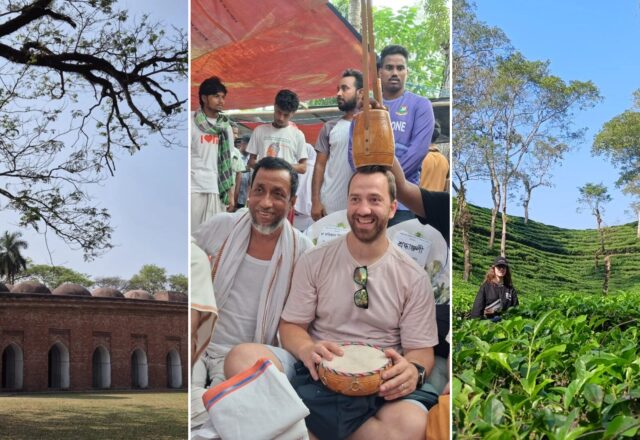
Yes. Halal food, mosques and prayer facilities are everywhere, and the country has fine historic mosques to visit, including the Sixty Dome Mosque in Bagerhat and the Star Mosque in Dhaka.
Have a specific dietary requirement? Tell us when you plan your trip and your guide will choose restaurants to match.