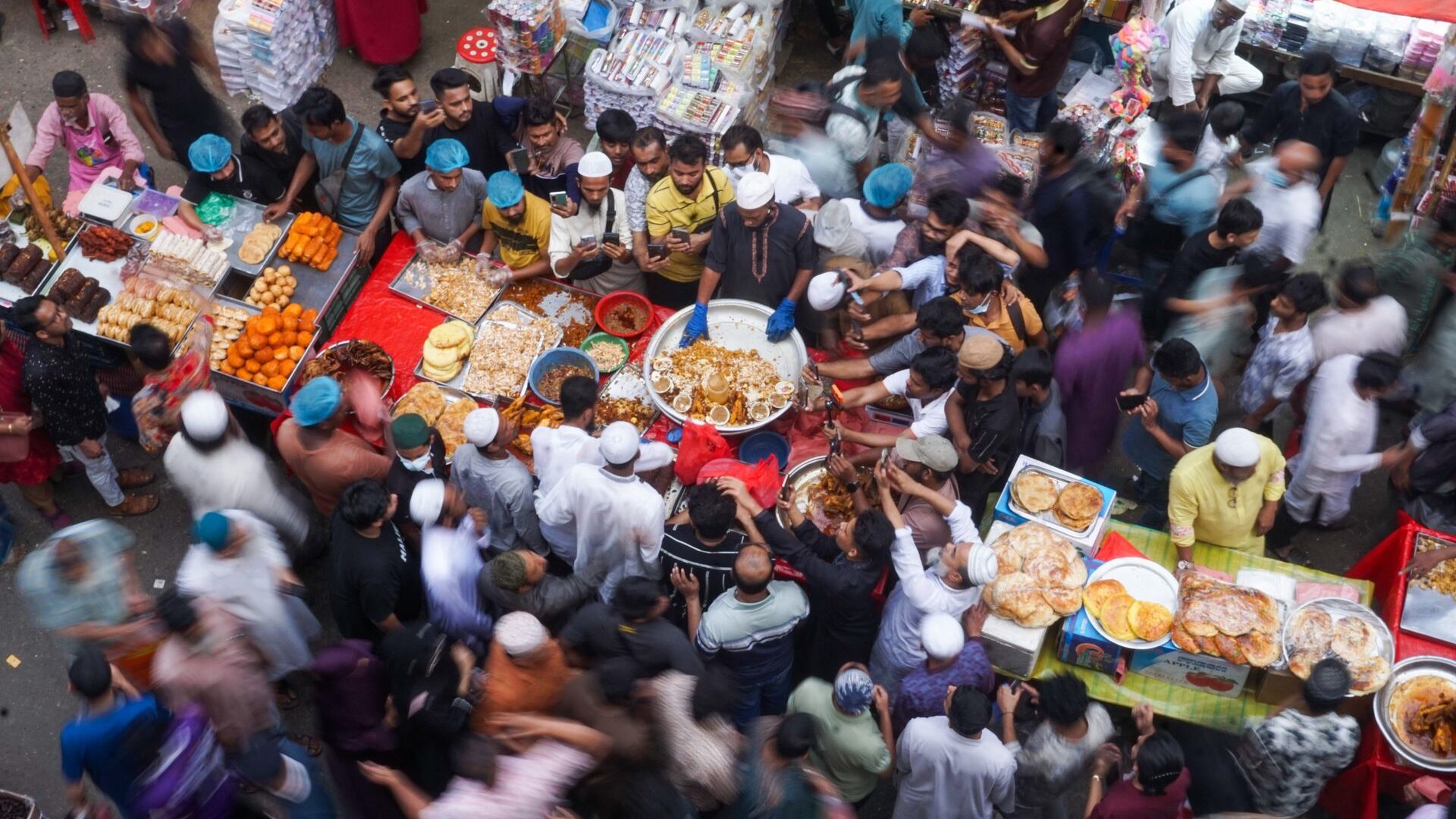
Dhaka eats on the street. From the tea stall on every corner to the fuchka carts that appear in the late afternoon and the biryani houses of the old city, some of the best food in the capital costs less than a dollar and comes on a paper plate. This guide covers what to try, where to find it, a short food walk through Old Dhaka, and how to eat street food without getting ill. For the wider picture, from hilsa to mishti doi, see our guide to Bangladeshi food.
What to eat: Dhaka street food to try
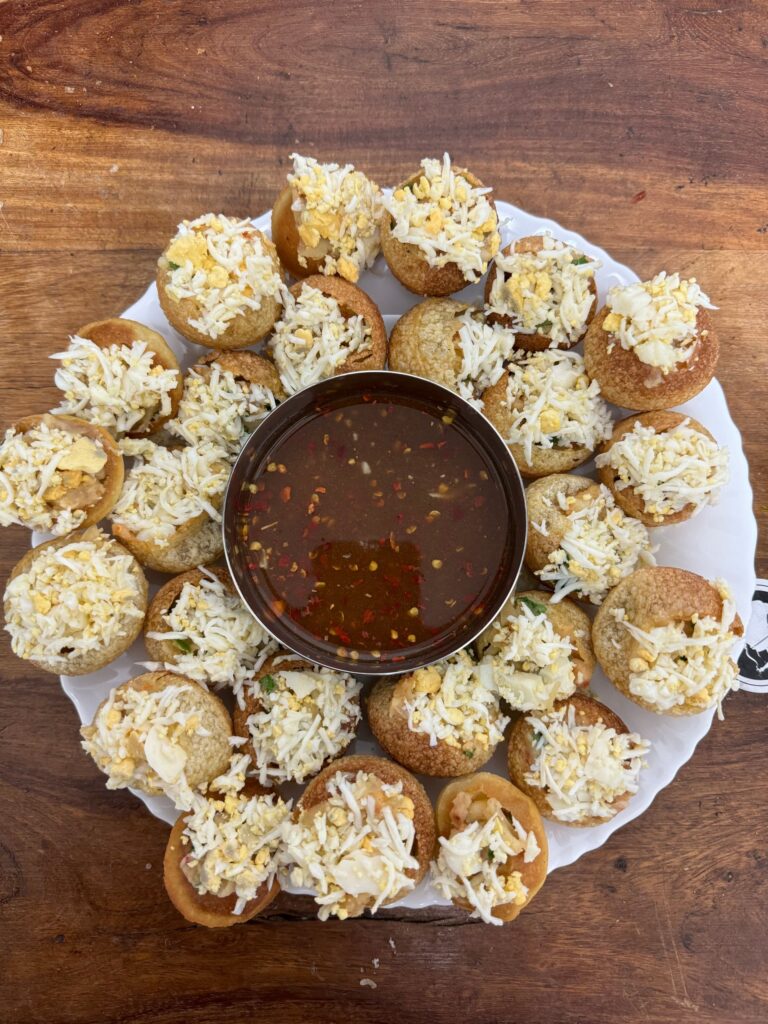
Fuchka
Dhaka’s favourite snack: thin, crisp shells filled with a spiced potato and chickpea mix, topped with grated egg and dipped in sour tamarind water. It is a cousin of Indian panipuri, but the Bangladeshi version uses the chotpoti mix and the egg on top. Eat each one in a single bite as soon as it is handed to you, before the shell goes soft.
Chotpoti
A warm, tangy bowl of yellow peas and potato, topped with chopped onion, chilli, coriander, grated egg and tamarind sauce, often with crushed fuchka shells on top. The name means something like “spicy and lively”. Ask for it less hot (jhal kom) if you prefer.
Jhalmuri
Puffed rice tossed to order with mustard oil, chopped onion, green chilli, chanachur (a crunchy spiced mix), peanuts and a squeeze of lime, served in a paper cone. You will find jhalmuri sellers wherever people wait: at bus stops, in parks and on launches.
Singara, samosa, beguni and piyaju
The fried snacks of every tea stall: triangular singaras filled with spiced potato, samosas with minced meat or vegetables, beguni (aubergine slices in batter) and piyaju (lentil and onion fritters). They are best straight from the oil, so watch for a fresh batch.
Kebabs, chaap and biryani
In the evening the lanes of Old Dhaka fill with the smoke of grilled beef and chicken kebabs, chaap (flattened, spiced meat fried in a pan) and naan. Biryani is the city’s pride: Old Dhaka’s kacchi and the goat biryani of the old houses around Nazira Bazar are served from huge pots from lunchtime until they run out.
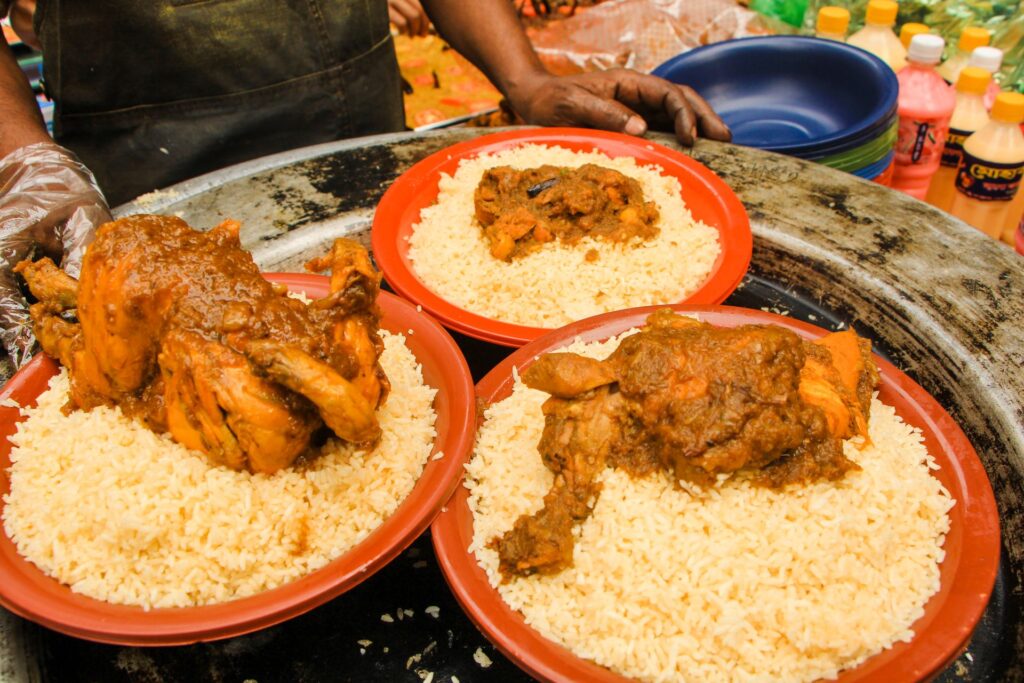
Haleem
A thick stew of meat, lentils and wheat, cooked for hours and served with fried onion, ginger, chilli and lime. It is sold all year in Old Dhaka and is everywhere during Ramadan.
Bakarkhani
A crisp, layered flatbread from the Mughal kitchen, baked on the walls of clay ovens in the bakeries of Old Dhaka. It is almost like a biscuit and is eaten with milk tea for breakfast or in the afternoon. Buy it warm from the oven.
Tea, lassi and faluda
Sweet milk tea (dudh cha) or tea with ginger and lemon is poured from every corner stall for a few taka. For something cold, Old Dhaka’s lassi and faluda shops serve sweet and salted lassi, lemonade and faluda.
Winter pitha and jilapi
From about November to February, street stalls steam bhapa pitha (rice cakes with molasses and coconut) and make chitoi pitha in clay moulds, especially in the early morning and evening. Jilapi, spirals of fried batter soaked in syrup, are sold all year.
Where to eat street food in Dhaka
Old Dhaka: Nazira Bazar and Chawkbazar
Old Dhaka is the heart of the city’s food. Around the crossroads of Nazira Bazar, along Kazi Alauddin Road and Bangshal, the traditional shops serve biryani, chaap, kebabs, sweets and bakarkhani from morning to late at night. Two names have been here for generations: Haji Biryani, started in 1939 as a roadside food corner and still selling one goat biryani from its main shop at 70 Kazi Alauddin Road, and Beauty Lacchi and Faluda, founded in 1922, with its original shop on Johnson Road and a branch in Nazira Bazar. Nanna Biryani, known for morog polao (chicken polao), is also in the area.
A short walk west, Chawkbazar is a Mughal market square that has traded since the 17th century, with the Chawk Mosque beside it and the gateways of Bara Katra nearby. Its lanes are full of snack sellers and bakarkhani bakeries all year.
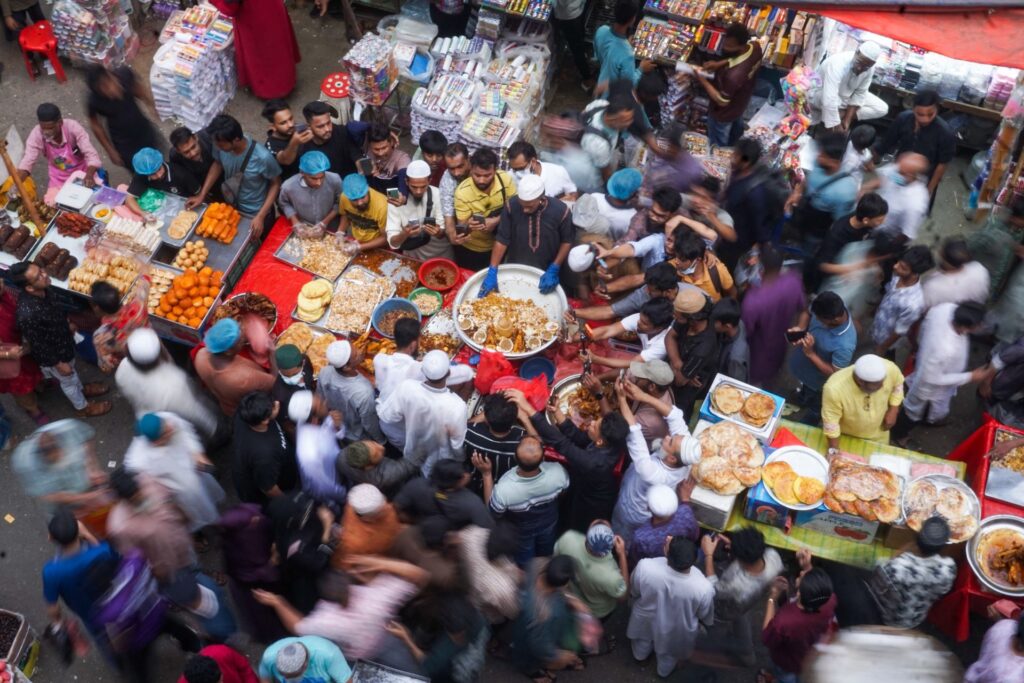
Chawkbazar iftar market in Ramadan
During Ramadan, Chawkbazar becomes the busiest iftar market in the country. From the early afternoon until sunset the square is packed with stalls selling shahi jilapi (huge “sunflower” jilapis), beguni, piyaju, keema paratha, quail roast, chops, haleem and a famous mixed dish with a cheeky name, boro baper polay khay, a spiced mix of meat, eggs, chickpeas and more. Go around 3 to 5 pm, keep your bag in front of you, and eat after the sunset call to prayer, as everyone else does. Ramadan moves about 11 days earlier each year: in 2027 it is expected to begin around 8 February.
Fuchka and chotpoti across the city
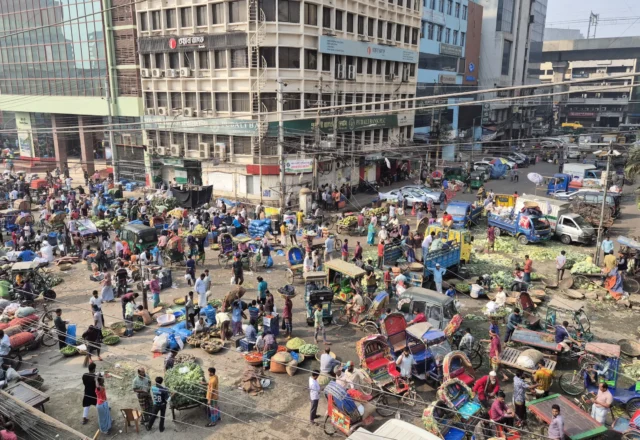
Fuchka and chotpoti carts gather in the late afternoon wherever students and families stroll: around Dhaka University, by the lakes in Dhanmondi and in the markets of every neighbourhood. In Gulshan and Banani you will find cleaner, pricier versions in food courts and cafés if you want to ease in.
A street food walk in Old Dhaka
A good half-day route, best from late afternoon into the evening:
- Start at Nazira Bazar with a plate of biryani or chaap and a glass of borhani (a salted yoghurt drink).
- Walk to a lassi shop for a lassi or lemonade.
- Head west through Chawkbazar for kebabs, fritters and warm bakarkhani.
- End at Lalbagh Fort for the last light, or detour east to Shakhari Bazar for tea and sweets.
The lanes are narrow, busy and easy to get lost in, and a local knows which stalls are fresh that day. Our Dhaka City Day Tour and half-day Dhaka tour include Old Dhaka food stops, and our Old Dhaka travel guide has a one-day route with the sights.
How to eat street food safely
- Choose busy stalls with a fast turnover, where food is cooked hot in front of you.
- Eat fried and grilled food straight from the pan; be careful with anything that has been standing.
- Fuchka water and chutneys are made with local water: if you have a sensitive stomach, start with chotpoti or fried snacks, and wait a few days before fuchka.
- Drink bottled water and skip ice unless you know where it came from; ask for lassi without ice.
- Carry hand sanitiser and tissues, and bring rehydration salts in case of an upset stomach. Our health guide has more.
Prices and etiquette
Street food is cheap: a plate of fuchka or chotpoti usually costs less than a dollar, a cup of tea a few taka, and a plate of biryani at a famous Old Dhaka shop a few dollars. Prices are fixed at most stalls and there is no need to tip. Carry small notes, eat with your right hand or ask for a spoon, and remember that during Ramadan many people fast in daytime, so eat discreetly before sunset.
Frequently asked questions
What is the most famous street food in Dhaka?
Fuchka is the favourite: crisp shells filled with a spiced chickpea and potato mix, topped with egg and dipped in tamarind water. Chotpoti, jhalmuri and Old Dhaka biryani follow close behind.
Where is the best street food in Dhaka?
Old Dhaka, around Nazira Bazar and Chawkbazar, for biryani, kebabs, chaap, bakarkhani and lassi. For fuchka and chotpoti, look for busy carts around Dhaka University and Dhanmondi in the late afternoon.
Is street food in Dhaka safe to eat?
Usually, if you choose busy stalls where food is cooked hot in front of you, drink bottled water and avoid ice. Fuchka water is the riskiest item for a sensitive stomach, so start with fried and grilled food.
When is the Chawkbazar iftar market?
Every afternoon during Ramadan, from about 3 pm until sunset. In 2027 Ramadan is expected to begin around 8 February.
What is Haji Biryani?
One of the oldest biryani shops in Old Dhaka, started in 1939 by Haji Mohammad Hossain. It serves one dish, goat biryani, from its main shop at 70 Kazi Alauddin Road, Nazira Bazar.
What is bakarkhani?
A crisp, layered flatbread from the Mughal kitchen, baked in the clay ovens of Old Dhaka and eaten with milk tea.
How much does street food cost in Dhaka?
A plate of fuchka or chotpoti usually costs less than a dollar, tea a few taka, and a plate of biryani at a well-known shop a few dollars.
Is Dhaka street food spicy?
Often, yes, especially chotpoti, jhalmuri and kebabs. Ask for “jhal kom” (less spicy) and the seller will tone it down.
Can vegetarians eat street food in Dhaka?
Yes. Fuchka, chotpoti, jhalmuri, singara, beguni, piyaju, pitha and jilapi are vegetarian, though some fuchka and chotpoti come with egg on top; ask for it without.