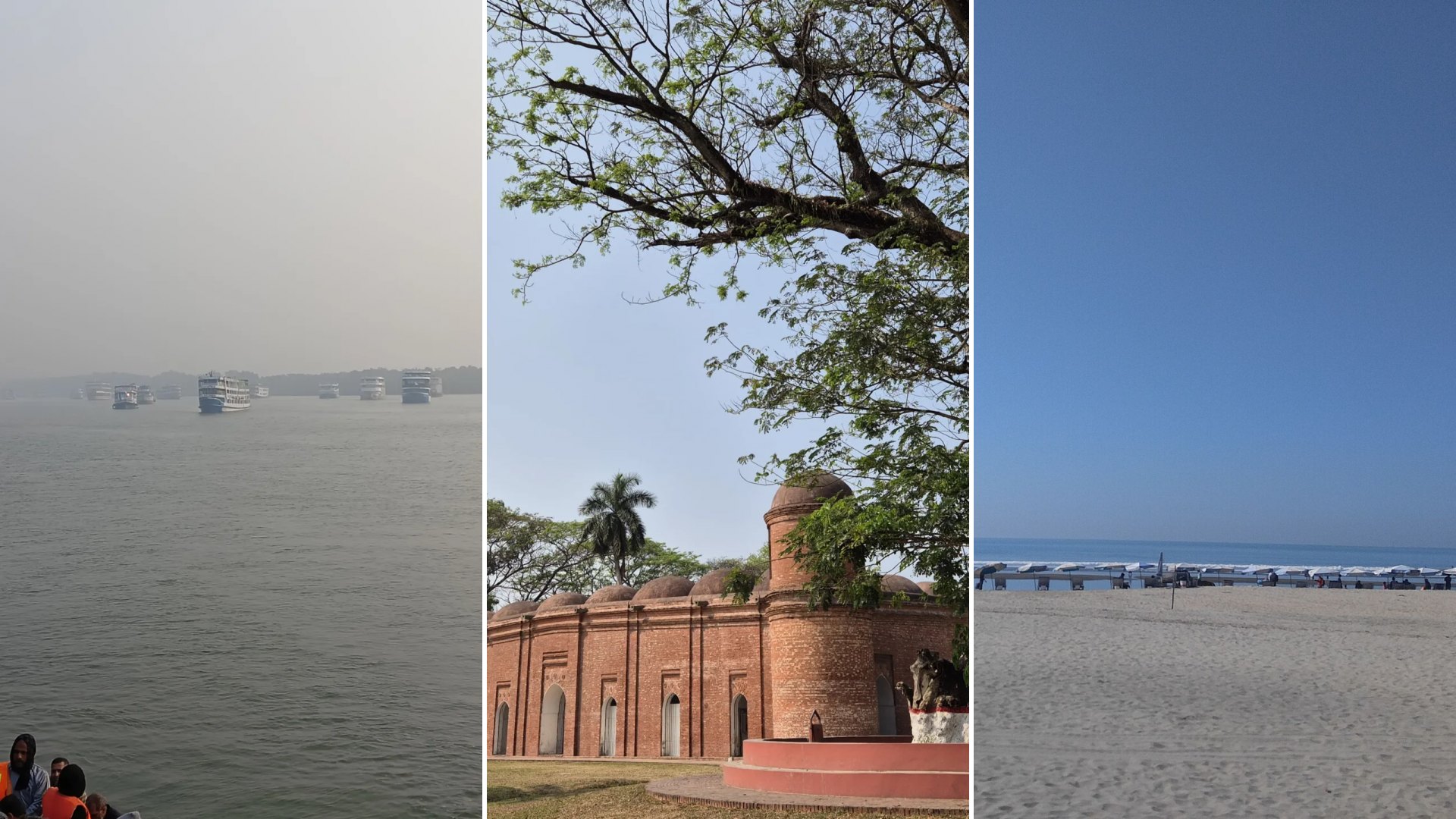
Bangladesh is small on the map but rich in places: three UNESCO World Heritage Sites, the world’s largest mangrove forest, one of its longest beaches, rainforest with gibbons, Mughal forts, Sultanate mosques and rivers everywhere. Every place below has its own page with opening hours, tickets, how to get there and FAQs. For every place by region, more than a hundred in all, see our list of tourist destinations in Bangladesh.
The 25 best places to visit in Bangladesh
1. The Sundarbans
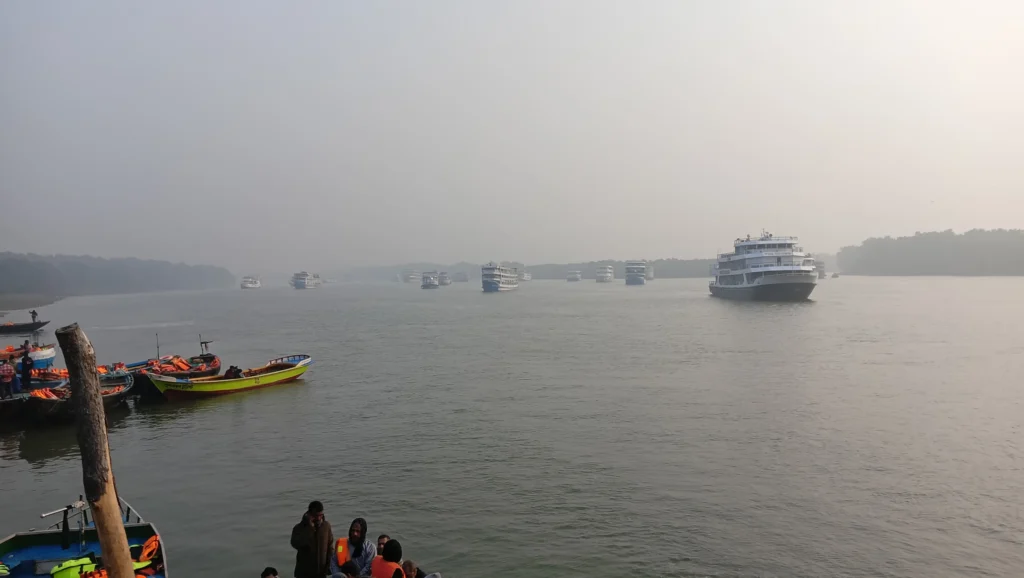
The world’s largest mangrove forest and a UNESCO World Heritage Site, explored by boat on two or three day trips from Khulna or Mongla. You will see spotted deer, monkeys, crocodiles and kingfishers; the Bengal tiger lives here but is rarely seen. Highlights include Katka and its meadows by the sea. Best for: wildlife and river life. Allow: 2 to 3 days.
2. Cox’s Bazar
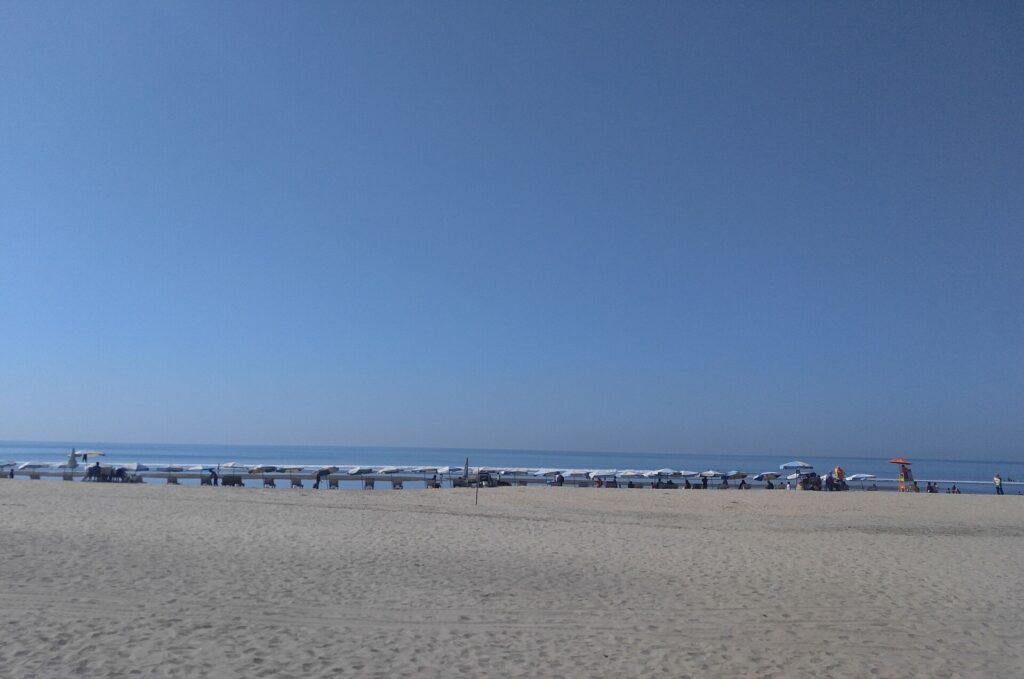
About 120 km of continuous sandy beach on the Bay of Bengal, with sunsets, seafood stalls, the Marine Drive coast road, the hills of Himchari and a boat trip to Maheshkhali Island. Best for: the beach and the Bangladeshi holiday scene. Allow: 2 to 3 days.
3. Old Dhaka
The old city is the best introduction to Bangladesh: the Mughal Lalbagh Fort, the pink Ahsan Manzil, the conch-shell lane of Shakhari Bazar, the river port of Sadarghat and some of the best street food in the country. Best for: history, people and food. Allow: 1 full day.
4. The Sixty Dome Mosque and Bagerhat
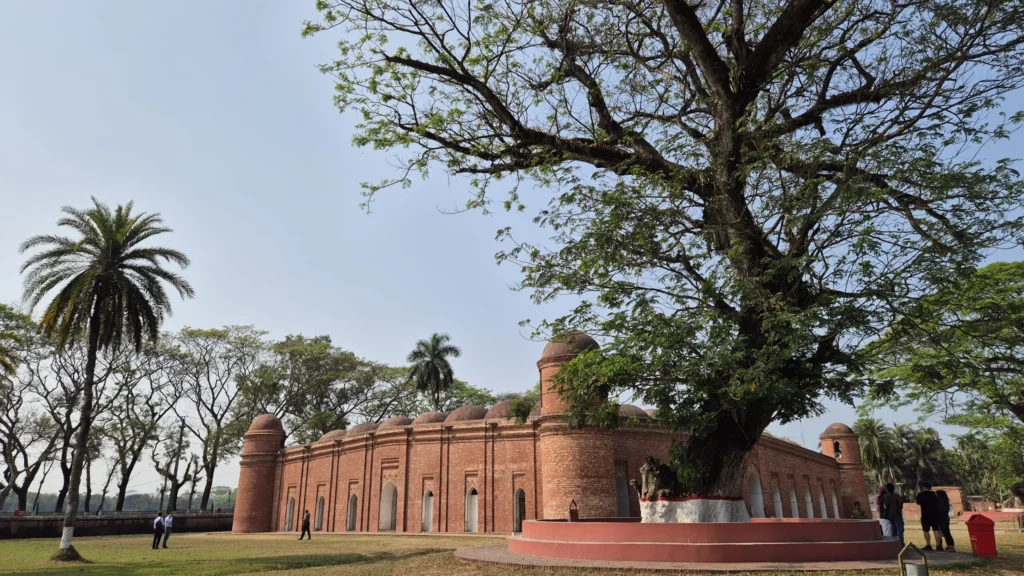
The great 15th-century brick mosque of Bagerhat is the centrepiece of the Historic Mosque City, a UNESCO World Heritage Site founded by Khan Jahan Ali. Easy to combine with a Sundarbans trip. Best for: Sultanate architecture. Allow: half a day to a day.
5. Paharpur (Somapura Mahavihara)
The vast ruins of an 8th-century Buddhist monastery in rural Naogaon, a UNESCO World Heritage Site and the most important archaeological site in Bangladesh. Best for: archaeology. Allow: 2 to 3 hours.
6. Sonargaon and Panam City
An hour from Dhaka, the old capital of Bengal: the abandoned merchant street of Panam City, the Folk Art Museum and a 1519 mosque. The easiest day trip from the capital. Best for: a day out of Dhaka. Allow: 1 day.
7. Sreemangal and Lawachara
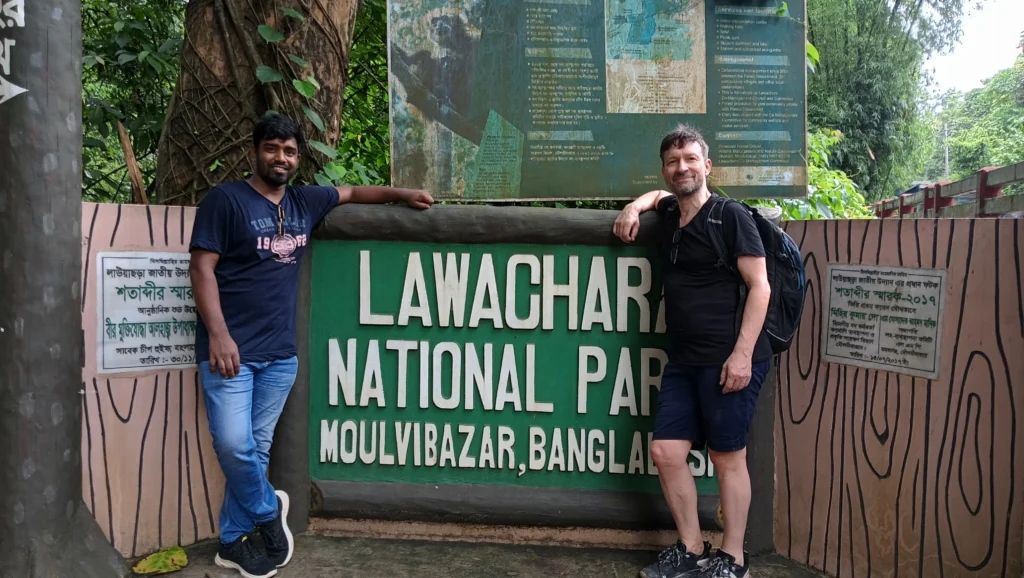
The tea capital of Bangladesh: rolling tea estates, seven-colour tea, Manipuri and Khasi villages and the rainforest of Lawachara, home of the hoolock gibbon. Best for: nature and tea. Allow: 2 days.
8. Ratargul Swamp Forest
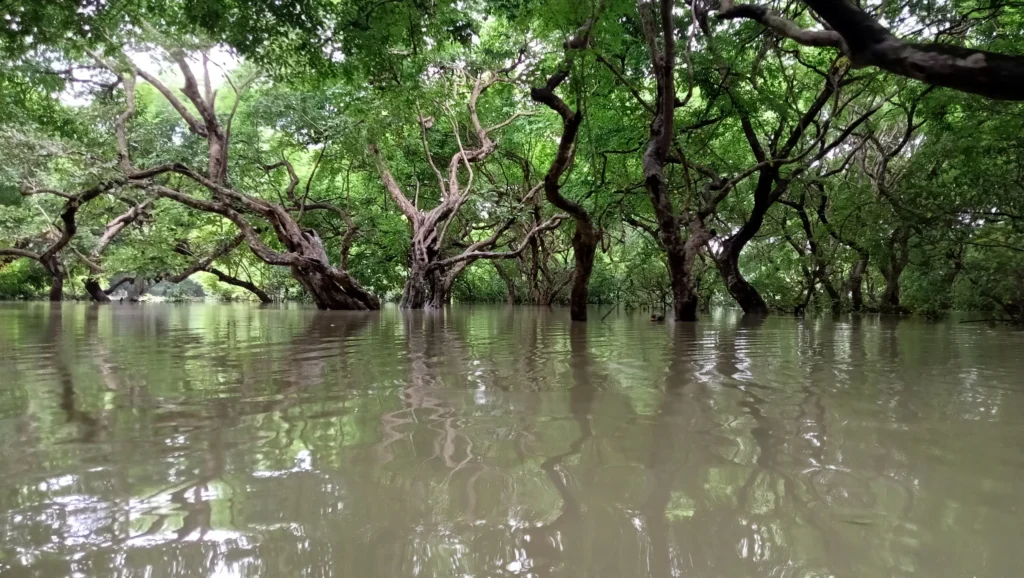
A freshwater swamp forest north of Sylhet where, in the rainy season, you glide by boat between trees standing in the water. Best for: the monsoon. Allow: half a day, July to October.
9. Jaflong
The Piyain River at the Indian border, where the hills of Meghalaya rise straight from the plain and stone boats work the river. Best for: river and hill views. Allow: 1 day from Sylhet.
10. Bichhanakandi and Sada Pathor
Two stony river basins at the border north of Sylhet, where clear streams run over boulders below the hills; Sada Pathor is the “white stone” one at Bholaganj. Best for: clear water and boat trips. Allow: half a day each.
11. Bandarban: Nilgiri and Nilachal
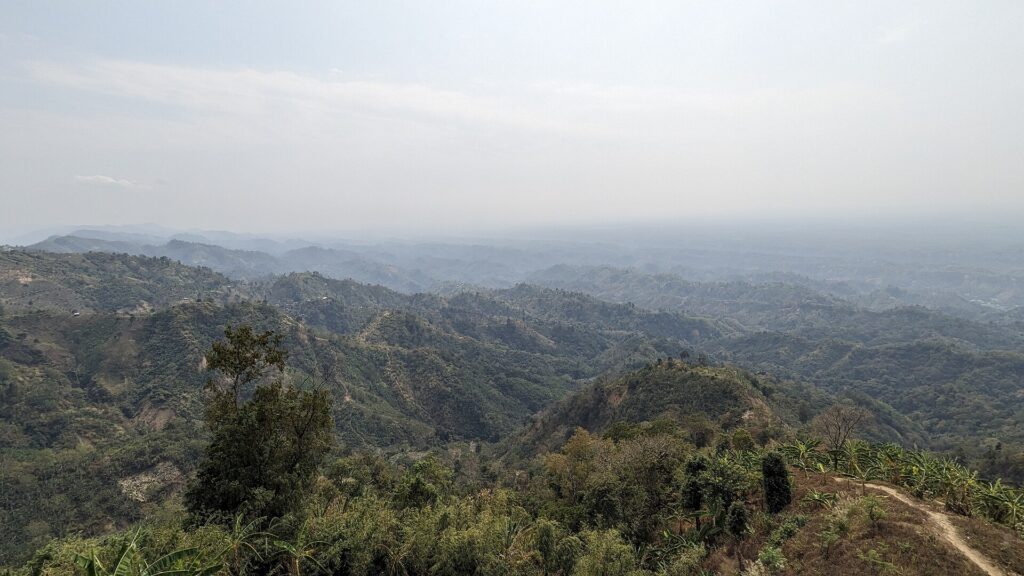
The hills of the Chittagong Hill Tracts, with ridge-top viewpoints above the clouds at Nilgiri and sunset over rolling hills at Nilachal. Foreign visitors to the Hill Tracts must follow special rules that change from time to time, so check before you go. Best for: hills and indigenous cultures. Allow: 2 days.
12. Kantajew Temple
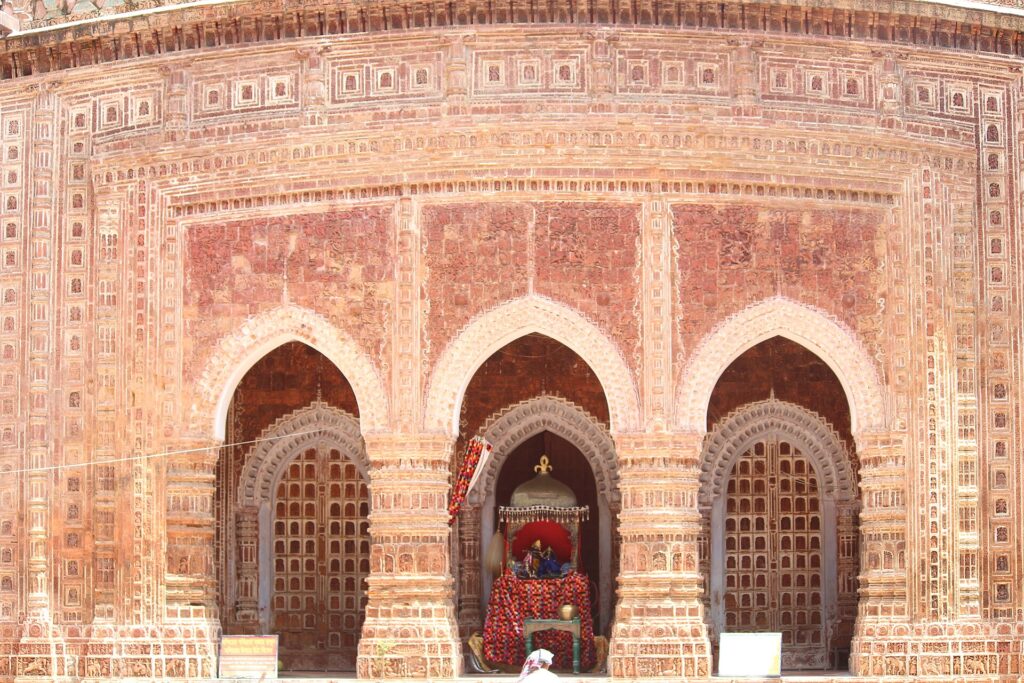
An 18th-century Krishna temple near Dinajpur, covered from plinth to roof in terracotta panels telling the Hindu epics: the finest terracotta temple in Bangladesh. Best for: art and architecture. Allow: 1 to 2 hours.
13. Puthia Rajbari
The 1895 palace of the Puthia rajas near Rajshahi, surrounded by the largest group of historic Hindu temples in the country. Best for: temples. Allow: 2 to 3 hours.
14. Mahasthangarh
The ruins of Pundranagara near Bogura, the oldest city in Bangladesh, with brick ramparts, excavations and a site museum. Best for: ancient history. Allow: 2 to 3 hours.
15. Gaur and the Choto Sona Mosque
The ruins of the medieval capital of Gaur on the Indian border, with the stone-faced Choto Sona Mosque, the best preserved mosque of the Bengal Sultanate. Best for: Sultanate history off the beaten track. Allow: 1 day.
16. The floating markets of Barishal
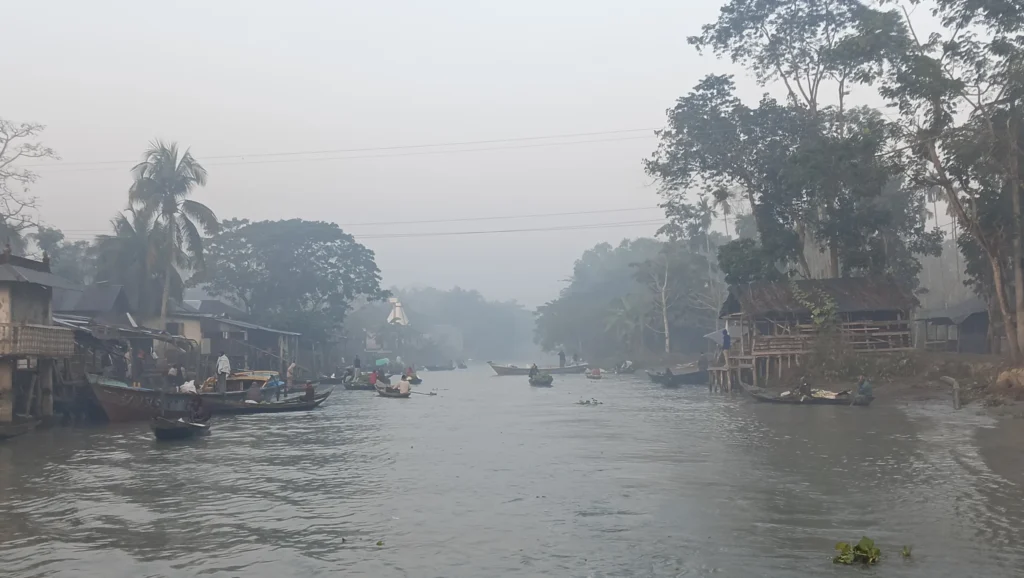
In the backwaters of Jhalokathi and Pirojpur, farmers sell guavas and vegetables straight from their boats; most colourful in the monsoon guava season. Best for: river life. Allow: a morning.
17. Mainamati and Shalban Vihara
The brick ruins of a 7th to 8th-century Buddhist monastery in the Mainamati hills near Cumilla, with a site museum, on the way from Dhaka to Chattogram. Best for: archaeology on a road trip. Allow: 1 to 2 hours.
18. Tetulia and the Kanchenjunga view
Flat tea gardens at the northern tip of the country, where on clear autumn mornings the snow peaks of Kanchenjunga appear on the horizon. Best for: a mountain view from Bangladesh. Allow: 1 night, October to November.
19. Lalon Akhra, Kushtia
The shrine of the mystic poet Lalon Shah, where Baul singers gather to perform his songs, above all at the Lalon festival. Best for: music and spirituality. Allow: 2 to 3 hours.
20. Rabindra Kuthibari, Shilaidaha
Rabindranath Tagore’s estate house near the Padma, where he lived and wrote at intervals in the 1890s, now a museum. Best for: literature lovers. Allow: 1 to 2 hours.
21. Bijoypur China Clay Hills
Low hills of white and coloured china clay with blue-green pools, across the clear Someshwari River from Birishiri, near the Garo Hills. Best for: landscapes off the tourist trail. Allow: 1 day.
22. Tajhat Palace, Rangpur
An early 20th-century zamindar palace with a white marble staircase and the Rangpur Museum inside. Best for: a stop in the north. Allow: 1 to 2 hours.
23. Madhabpur Lake
A quiet lake between tea-covered hills near Kamalganj, with water lilies and easy ridge walks. Best for: a calm afternoon. Allow: 2 to 3 hours.
24. The Shah Jalal Shrine, Sylhet
The shrine of the 14th-century Sufi saint Hazrat Shah Jalal, one of the most visited shrines in Bangladesh. Best for: living faith. Allow: about an hour.
25. National Martyrs’ Memorial, Savar
The soaring national monument to those who died in the 1971 Liberation War, in calm gardens outside Dhaka. Best for: understanding modern Bangladesh. Allow: about an hour plus travel.
How to fit them into a trip
One week: Old Dhaka and Sonargaon, then either the Sundarbans with Bagerhat, or Sreemangal and Sylhet. Two weeks: add the north (Paharpur, Mahasthangarh, Puthia and Kantajew) or the coast (Cox’s Bazar and Bandarban). Our Bangladesh itinerary guide has day-by-day routes, and getting around Bangladesh compares flights, trains and launches.
When to go
November to February is the best time for most of these places: dry, sunny and comfortable. The monsoon (June to September) is the season for Ratargul, the floating markets and the greenest tea gardens, but the Sundarbans are closed to visitors for about three months, usually June to August. See the best time to visit Bangladesh and our tickets and opening hours guide, which shows which sights close on which days.
Frequently asked questions
What is the most famous place in Bangladesh?
The Sundarbans, the world’s largest mangrove forest and home of the Bengal tiger, and Cox’s Bazar, with one of the longest natural sea beaches in the world.
What are the UNESCO World Heritage Sites in Bangladesh?
Three: the Historic Mosque City of Bagerhat (with the Sixty Dome Mosque), the Ruins of the Buddhist Vihara at Paharpur, and the Sundarbans.
What are the best places to visit near Dhaka?
Old Dhaka, Sonargaon and Panam City, the National Martyrs’ Memorial at Savar, and a boat trip on the Buriganga or the Meghna.
How many days do I need in Bangladesh?
At least a week to see Dhaka and one region; two weeks lets you combine the Sundarbans, Sylhet or Sreemangal, and the north or the coast.
Which part of Bangladesh is the most beautiful?
For green hills and tea gardens, Sylhet and Sreemangal; for rivers and forest, the Sundarbans; for the sea, Cox’s Bazar; and for hills, the Chittagong Hill Tracts.
Can I visit these places on my own?
Many, yes, but transport is slow and signs are mostly in Bangla. The Sundarbans need a permit and a licensed boat, and the Hill Tracts have special rules for foreign visitors, so a local operator makes those far easier.
What is the best time to visit Bangladesh?
November to February for dry, comfortable weather. The monsoon is beautiful for rivers and swamp forests but hard for travel.
Which places in Bangladesh are free to visit?
Beaches, parks, markets and most mosques and shrines are free. Archaeology sites and museums charge a ticket, higher for foreign visitors; our tickets and opening hours guide lists them.