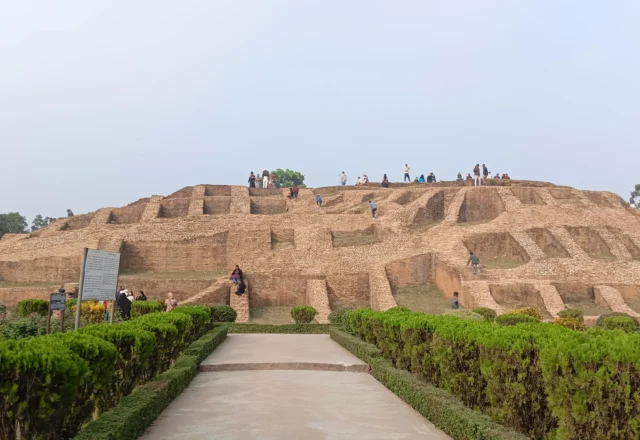

Photo: Zaheed Sarwer Khan, CC BY 4.0, via Wikimedia Commons
Mahasthangarh
About Mahasthangarh
Mahasthangarh is where the story of Bengal’s cities begins. The raised, brick-walled citadel above the Karatoya River was the heart of Pundranagara, a regional capital that archaeologists trace back to at least the 3rd century BCE. A limestone slab with a Brahmi inscription found here is one of the oldest written records in the country.
Today you walk along grassy ramparts roughly a kilometre and a half long, past excavated gateways, temple bases and a mosque, with village life carrying on all around. On the mound stands the shrine of Shah Sultan Balkhi Mahisawar, a saint linked to the spread of Islam in the area, so expect pilgrims as well as students and families on outings.
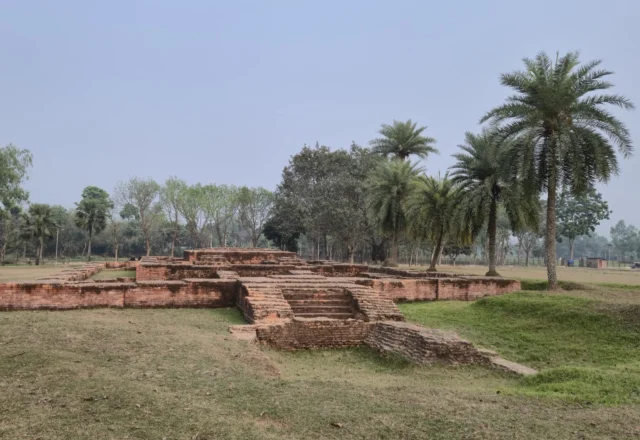
The small Mahasthan Archaeological Museum just north of the citadel displays terracotta plaques, coins, stone sculpture and pottery from the site and helps make sense of what you have seen. Two other sites from the same landscape are close by: the terraced brick mound of Gokul Medh to the south and the monastery ruins of Vasu Bihar to the north-west.
Evergreen Bangladesh Tours includes Mahasthangarh on private trips through Bogura and the north, with a local guide who can explain the layers of Maurya, Gupta, Pala and Sultanate history.
Things to do
-
Walk the citadel walls
Follow the old ramparts above the Karatoya and look down on the excavated gates, temple bases and fields that hide the rest of the city.
-
Visit the site museum
See terracotta plaques, coins and sculpture found at Mahasthangarh and the mounds around it, laid out in a compact museum near the citadel.
-
Shah Sultan Balkhi’s shrine
Pay a quiet visit to the hilltop shrine, one of the best-known pilgrimage spots in northern Bangladesh.
-
Taste kotkoti
Stalls around Mahasthan sell kotkoti, a crunchy fried sweet the area is known for. Buy a bag for the road.
Getting there
From Bogura: about 13 km north on the Rangpur road, roughly 30 minutes by car.
From Dhaka: around 200 km via the Jamuna Bridge, usually five to six hours by road depending on traffic. Most travellers combine it with an overnight in Bogura.
Where to stay
Stay in Bogura town, which has the best choice of mid-range hotels in the area and is a short drive from the site. Simple guesthouses near Mahasthan are basic. Bogura is also famous across Bangladesh for its sweet yoghurt, doi, served in clay pots.
More to see in Bogura
Tours that visit Mahasthangarh
 Holiday Tours
Bangladesh Cultural and Heritage Discovery Tour
from $800 per person
 Short Tours
Heritage Treasures of North Bengal
from $550 per person
 Holiday Tours
Ten Days Across Bangladesh
from $800 per person
Questions
How much time do I need at Mahasthangarh?
Two to three hours covers the citadel walls, the shrine and the museum. Add another two hours if you also want to see Gokul Medh and Vasu Bihar.
When is the museum open?
From April to September the site museum opens 10:00 to 18:00, and from October to March 9:00 to 17:00, with a lunch break that is longer on Fridays. It is closed on Sundays and government holidays, and on Mondays it opens only in the afternoon. The ramparts themselves are open ground. Hours can change around Eid and Ramadan, so we check before every trip.
Is there a dress code?
Dress modestly, covering shoulders and knees, especially at the shrine. Shoes come off where signs ask you to.
What is the best time to visit?
November to March is dry and cool, which makes walking the open ramparts much more comfortable than in the hot, humid summer.
What is Mahasthangarh famous for?
It is the oldest known city site in Bangladesh: the walled citadel of ancient Pundranagara, capital of the Pundra region, with brick ramparts, temple and monastery mounds, a Muslim shrine and a site museum of finds such as terracotta, coins and sculpture.
Where is Mahasthangarh?
In Shibganj upazila of Bogra (Bogura) district, on the west bank of the Karatoya river, about 13 km north of Bogra town on the road to Rangpur.