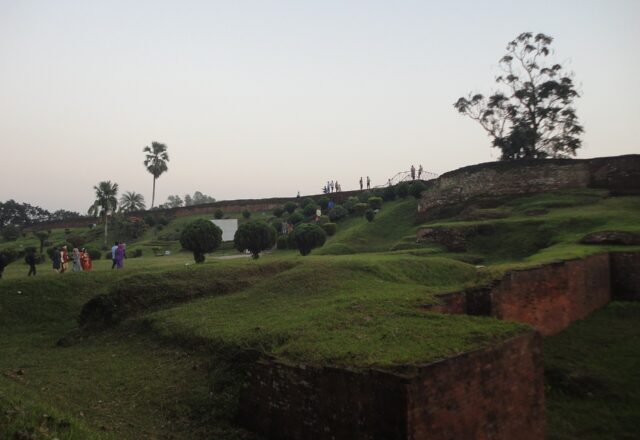

Gokul medh
About Gokul medh
Gokul Medh rises out of the flat rice fields of Gokul village, a short drive south of Mahasthangarh. From a distance it looks like a natural hill, but up close it is made of brick: a stepped mass of about 170 enclosed cells packed with earth, built to raise a structure high above the plain.
Excavations in the 1930s showed that it was most likely the base of a Buddhist stupa or temple, dated to around the 6th or 7th century, with later building on top. Local people know it by another name, Behula’s Basar Ghar, the bridal chamber of Behula and Lakhindar from the Manasamangal folk tale, in which a snake slips into the sealed room on their wedding night. You will often hear the story told on site.
Steps lead to the top, where you get a wide view over green fields towards Mahasthan. It is a calm, open place, best at the start or end of the day when the brick glows.
Evergreen Bangladesh Tours usually pairs Gokul Medh with Mahasthangarh and Vasu Bihar on a half-day loop from Bogura.
Things to do
-
Climb the mound
Walk up the brick terraces for a view over the fields and see how the cellular walls were built.
-
Hear the Behula legend
Ask your guide to tell the Manasamangal story of Behula and Lakhindar that gives the site its popular name.
-
Photograph at golden hour
Early morning and late afternoon light bring out the colour of the brickwork and the paddy around it.
Getting there
From Bogura: about 10 km north, around 20 to 30 minutes by car.
From Mahasthangarh: a few kilometres south, roughly 10 minutes by road.
Where to stay
Stay in Bogura town and visit on a short loop with Mahasthangarh. There is nowhere to stay at the site itself.
More to see in Bogura
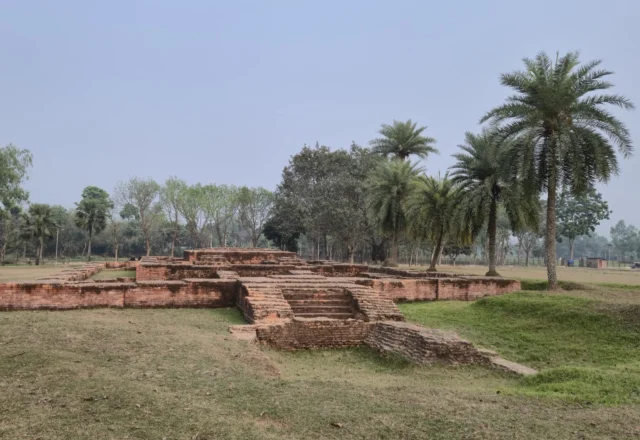
Tours that visit Gokul medh
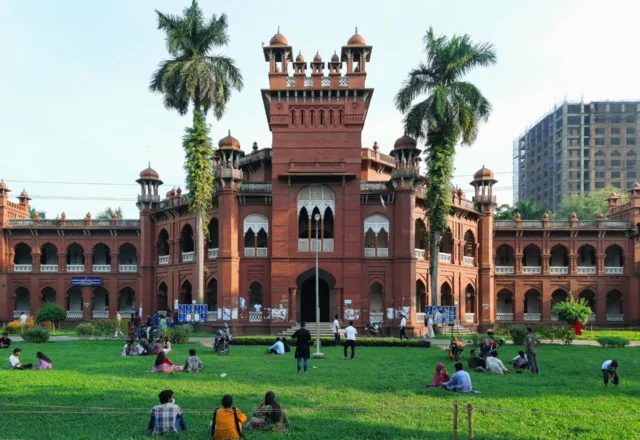 Holiday Tours
Bangladesh Cultural and Heritage Discovery Tour
from $800 per person
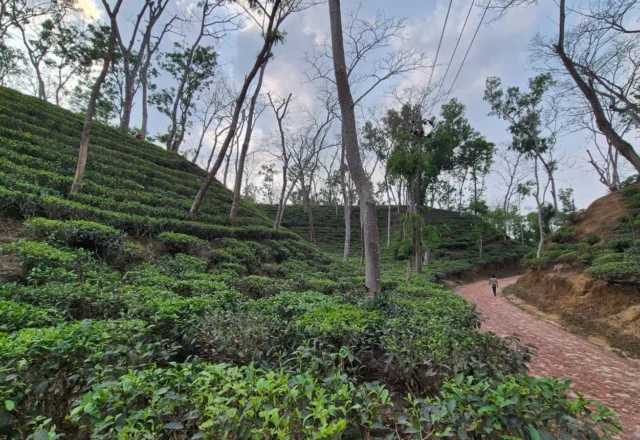 Holiday Tours
Ten Days Across Bangladesh
from $800 per person
Questions
What is Gokul Medh?
A terraced brick mound, probably the base of a Buddhist stupa or temple from around the 6th or 7th century, built from many earth-filled brick cells.
Why is it called Behula’s Basar Ghar?
Local tradition links it to the bridal chamber of Behula and Lakhindar from the Manasamangal folk tale. The archaeology points to an older Buddhist monument.
How long should I spend there?
About 30 to 45 minutes is enough. It fits easily into a half day with Mahasthangarh.
Is it suitable for children?
Yes, but keep an eye on them on the steep, uneven brick terraces.