After the noise of Dhaka, Sreemangal feels like another country: green hills of clipped tea bushes, shade trees, quiet lanes and cool mornings. It is the easiest place in Bangladesh to see wildlife in the forest, meet the Manipuri and Khasi communities, and drink tea where it is grown. This guide covers what to do, where to go, how to get there and when.
What to do in Sreemangal
Walk in the tea gardens
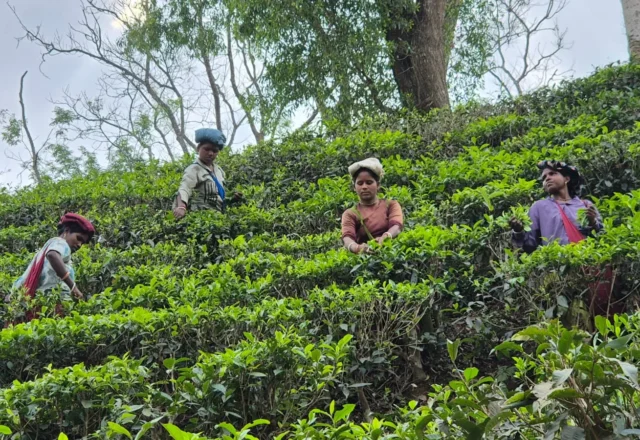
Dozens of tea estates surround the town, and you can walk the estate roads between the bushes, see the pluckers at work and visit a garden such as Nur Jahan Tea Garden, a short drive from town. The Bangladesh Tea Research Institute, set up as a research station in 1957 and an institute since 1973, is also in Sreemangal, with its own tea gardens on the edge of town.
Lawachara National Park
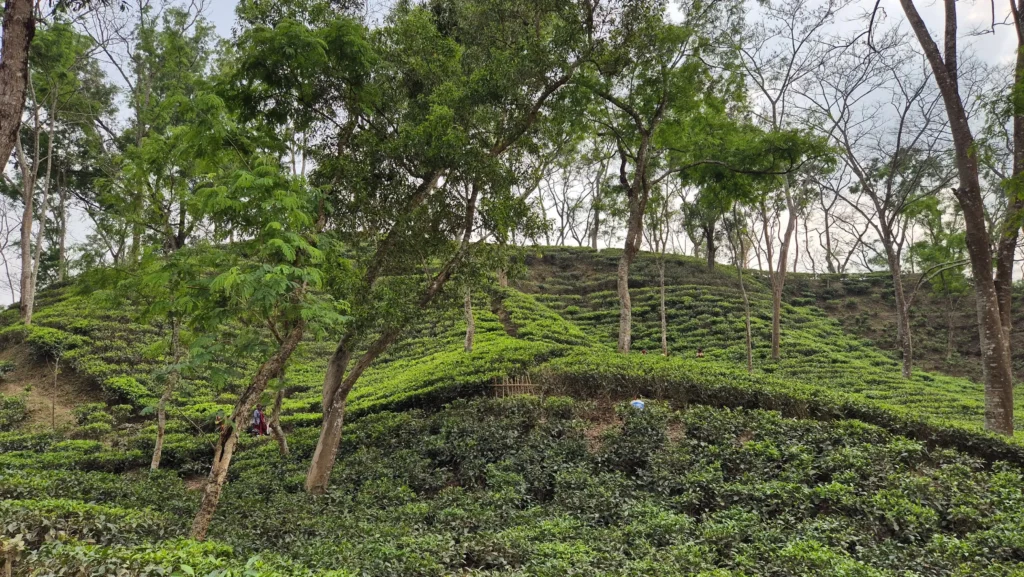
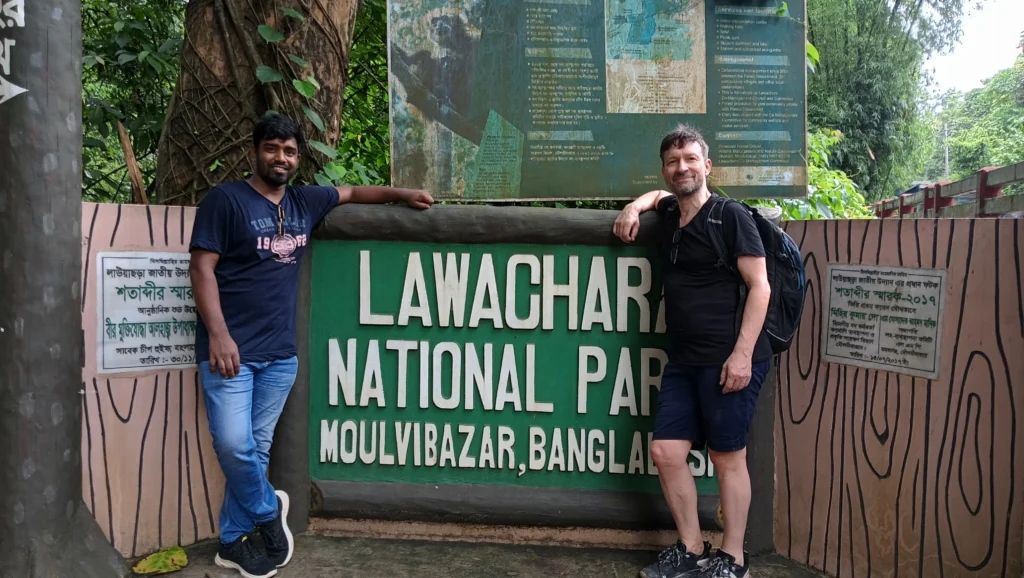
About 8 km from town, Lawachara protects about 1,250 hectares of semi-evergreen forest, declared a national park in 1996. Some 246 bird species have been recorded here, and it is one of the best places in the country to hear and see the hoolock gibbon. Walking trails of 30 minutes to three hours start at the entrance, and the Dhaka to Sylhet railway runs right through the forest. Go early in the morning with a local guide for the best chance of wildlife.
Try seven-colour tea
Sreemangal’s famous drink is seven-colour tea: layers of different teas, with milk, sugar and spices, poured so that they settle into separate bands by density. Romesh Ram Gour, who runs a tea cabin in Sreemangal, says he invented it, and it has been copied across Bangladesh. Sip each layer in turn.
Madhabpur Lake
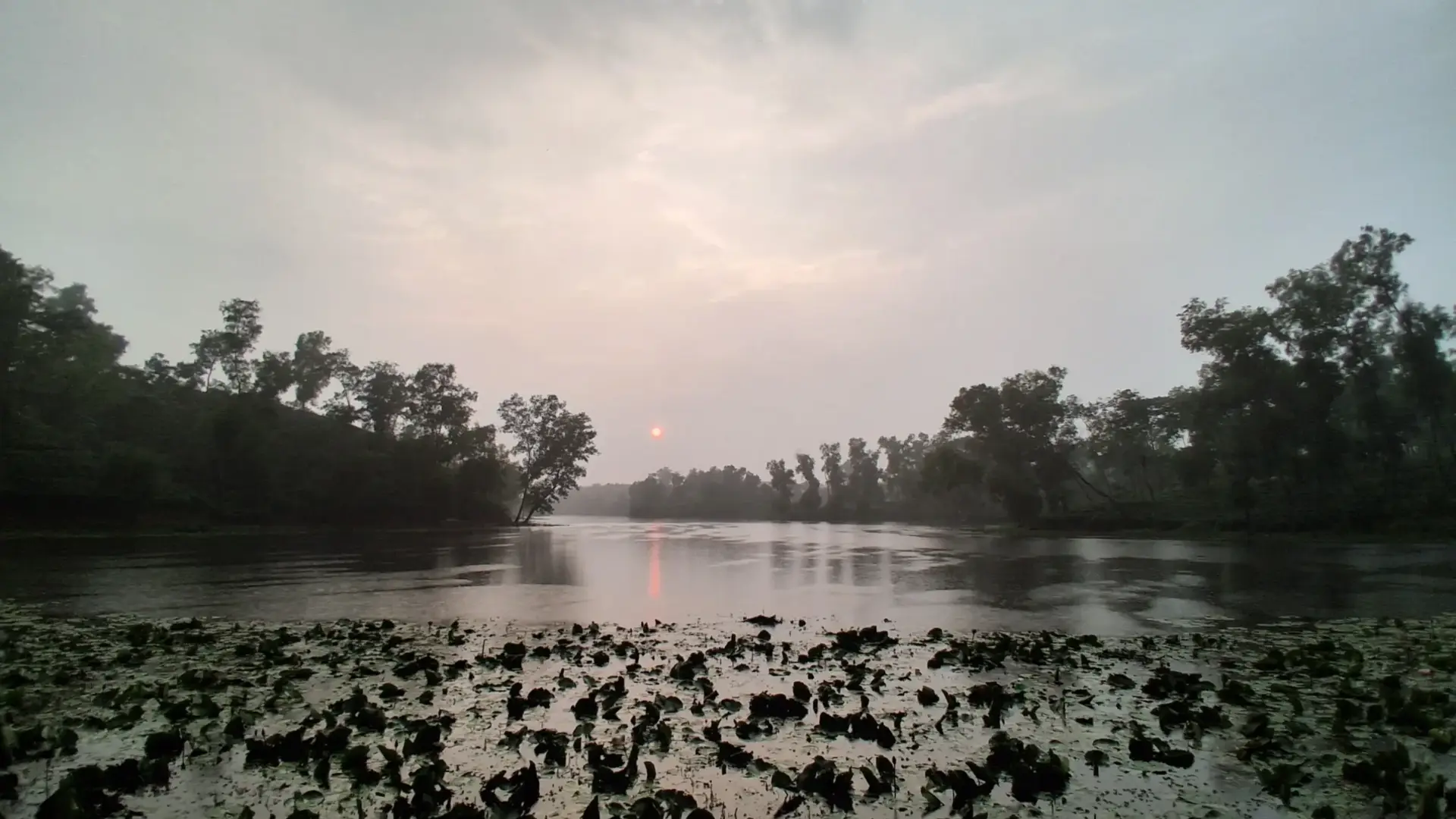
A long, quiet lake set among the tea hills of an estate near Kamalganj, about an hour from Sreemangal, with water lilies in season and a path along the shore. Madhabpur Lake is at its best in the late afternoon.
Meet the Manipuri and Khasi communities
The Manipuri villages around Sreemangal and Kamalganj are known for their weaving and their dance. The Khasi live in hill villages called punji, such as Magurchhara inside Lawachara, where betel leaf is grown on the forest trees (see Khasi villages). Visit with a local guide, ask before taking photos, and respect that these are homes, not attractions.
Rubber and pineapple gardens
Besides tea, Sreemangal grows rubber, pineapple, lemon and betel. A walk in a rubber garden to see the trees being tapped is an easy half hour.
Festivals
On the full moon of Kartik in November, the Manipuri communities near Sreemangal hold the Rash Leela, a night of dance from late evening until dawn, open to visitors. Book rooms early if you plan to go.
A two-day plan
- Day 1: the morning train from Dhaka, lunch in town, an afternoon walk in the tea gardens and seven-colour tea at sunset.
- Day 2: an early walk in Lawachara with a guide, a visit to a Khasi or Manipuri village, then Madhabpur Lake in the afternoon.
- With a third day: add a rubber garden, the Tea Research Institute and a slower day in the hills, or go on to Sylhet for Ratargul and Jaflong.
How to get to Sreemangal
By train: the most pleasant way. Intercity trains on the Dhaka to Sylhet line stop at Sreemangal, taking four to five hours from Dhaka, through the green countryside and, near the end, the forest of Lawachara. Book a seat in an air-conditioned carriage in advance through the official railway ticketing site or a local agent.
By road: four to six hours from Dhaka by car or coach, depending on traffic on the Dhaka to Sylhet highway.
Getting around: CNG auto-rickshaws wait at the station and in town for short trips; for a full day around Lawachara and the lakes, a car with a driver is easiest.
When to go
October to March is the most comfortable time, with cool mornings, dry trails and clear skies; January can be misty and cold at night. The tea is plucked from spring to late autumn, so the gardens are greenest and busiest from about April, but the monsoon from June to September brings heavy rain, muddy trails and leeches in the forest. Lawachara is quietest on weekdays.
Where to stay
Sreemangal has simple hotels in town and a growing number of eco-resorts and guesthouses among the tea gardens on the roads out of town, from basic cottages to resorts with pools. Book ahead for weekends, holidays and the Rash Leela in November.
Tips
- Wear long trousers and closed shoes in Lawachara, and carry leech socks in the rainy season.
- Keep quiet on forest trails and go early: gibbons and birds are most active in the morning.
- Tea estates are private land: keep to the estate roads and ask before entering workers’ lines or taking close photos.
- Bring a light jacket from December to February.
Our Sreemangal and Sylhet Discovery Tour includes the tea gardens, Lawachara and the Manipuri and Khasi villages with a local guide.
Frequently asked questions
Where is Sreemangal?
In Moulvibazar District, Sylhet Division, in north-east Bangladesh, about 160 km north-east of Dhaka and close to the border with the Indian state of Tripura.
Why is Sreemangal called the tea capital of Bangladesh?
Because it is surrounded by tea estates, more than anywhere else in the country, and is home to the Bangladesh Tea Research Institute.
How do I get from Dhaka to Sreemangal?
By intercity train on the Dhaka to Sylhet line, about four to five hours, or by road in four to six hours.
How many days do I need in Sreemangal?
Two days is enough for the tea gardens, Lawachara, a village visit and Madhabpur Lake; three days lets you slow down or add Sylhet.
What is seven-colour tea?
A layered tea made with different teas, milk, sugar and spices that settle into separate bands. It was devised in Sreemangal and is now copied across the country.
Can I see gibbons in Lawachara?
Often, yes. Lawachara is one of the best places in Bangladesh to see hoolock gibbons, especially early in the morning with a local guide.
What is the best time to visit Sreemangal?
October to March for comfortable weather and dry trails. From June to September it is very green but wet, with leeches in the forest.
Is Sreemangal the same as Srimangal?
Yes. Sreemangal, Srimangal, Srimongol and Sri Mangal are all spellings of the same town, শ্রীমঙ্গল in Bangla.
Can I visit a tea factory?
Some estates allow visits to their factories, usually with permission arranged in advance; a local guide can ask for you. The estate roads are open to walk without a visit.