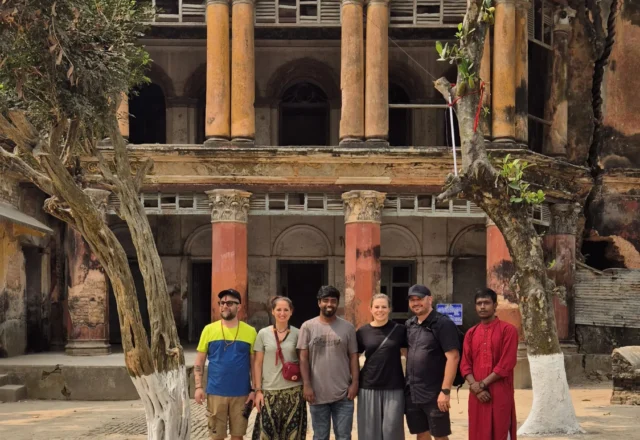

Paharpur Buddhist Monastery (Somapura Mahavihara)
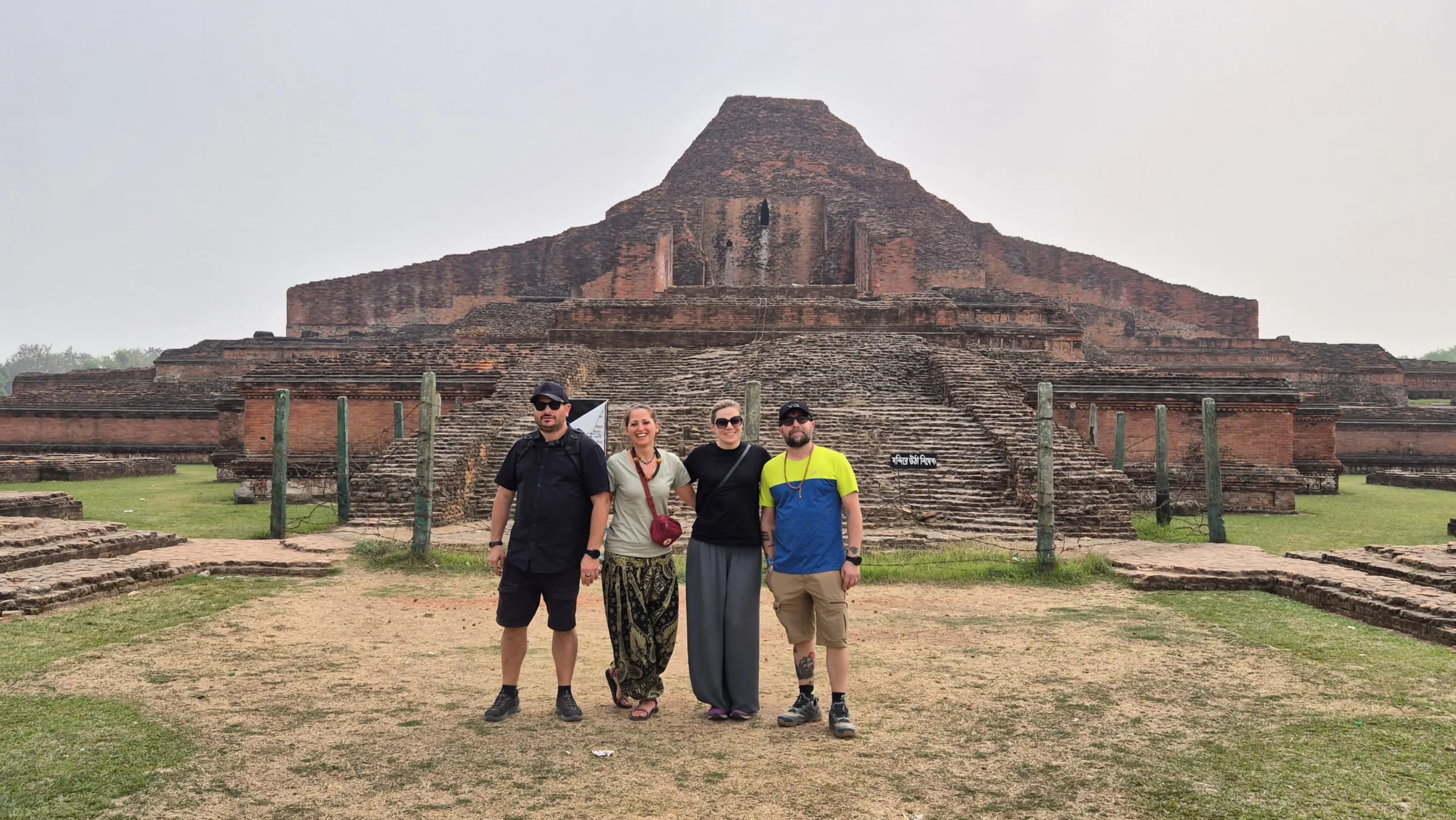
About Paharpur Buddhist Monastery (Somapura Mahavihara)
Paharpur, the village that gave the site its local name, lies in Badalgachhi upazila of Naogaon district, in the far north-west of Bangladesh. Here stand the remains of Somapura Mahavihara, a great Buddhist monastery founded in the late 8th century under the Pala king Dharmapala. It was listed as a UNESCO World Heritage Site in 1985, one of three in Bangladesh.
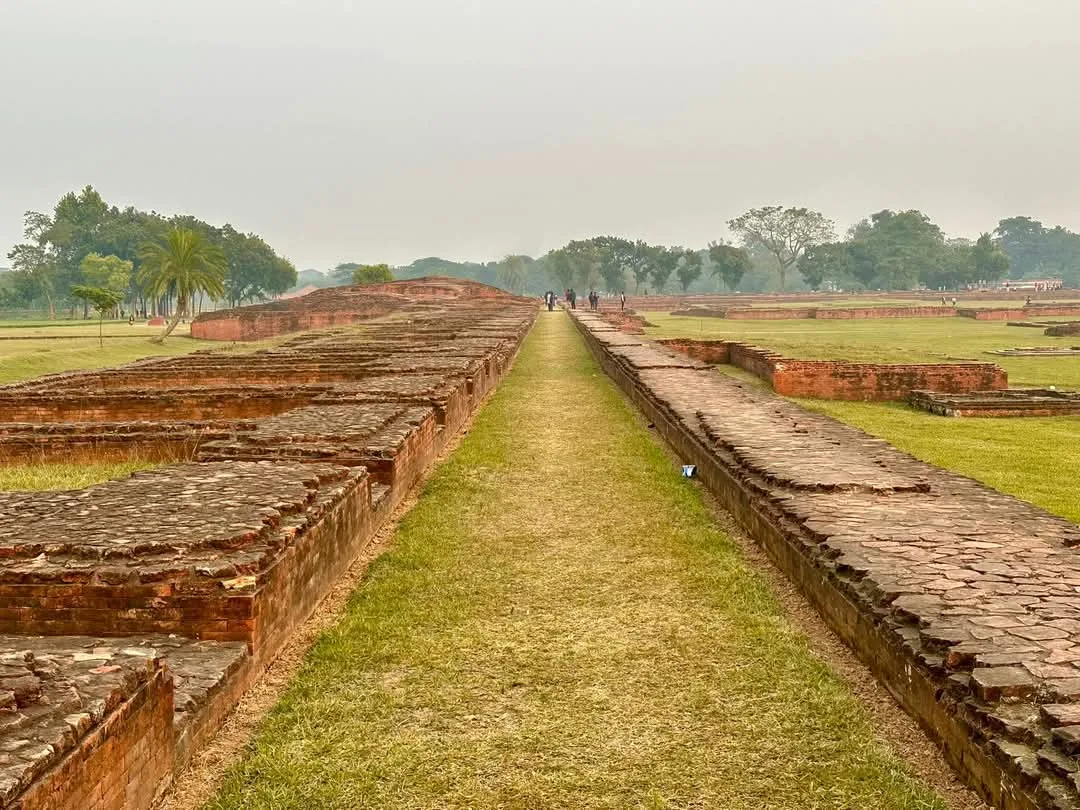
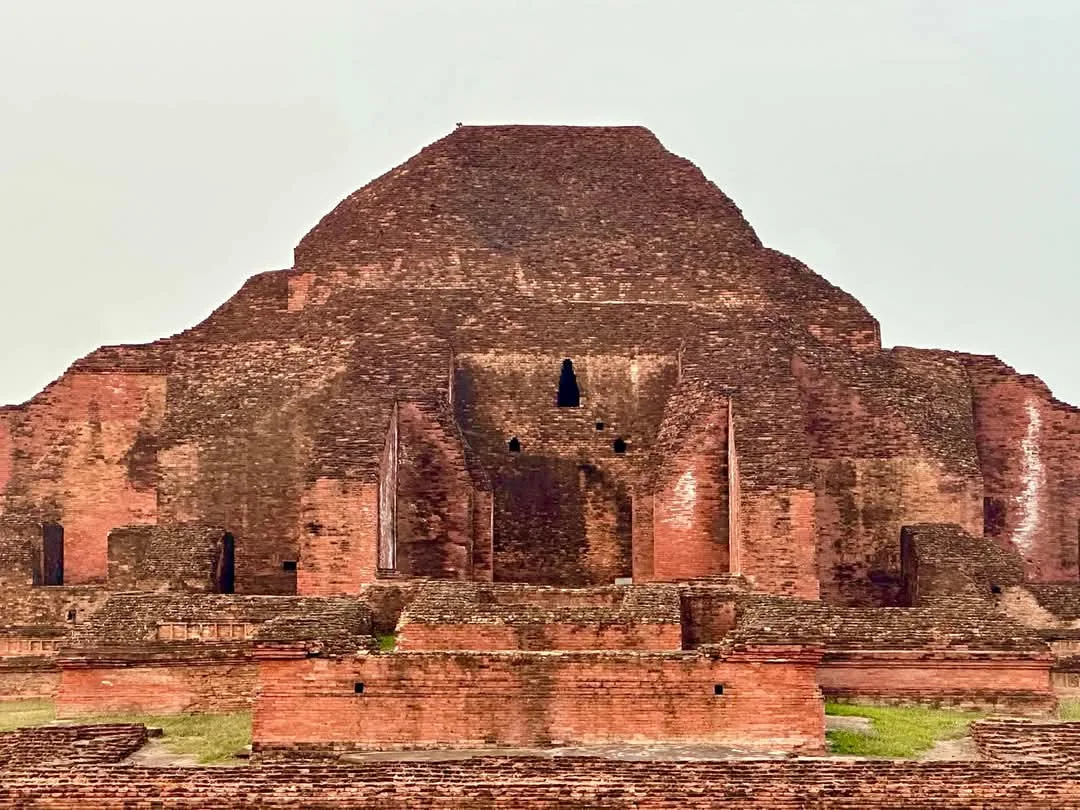
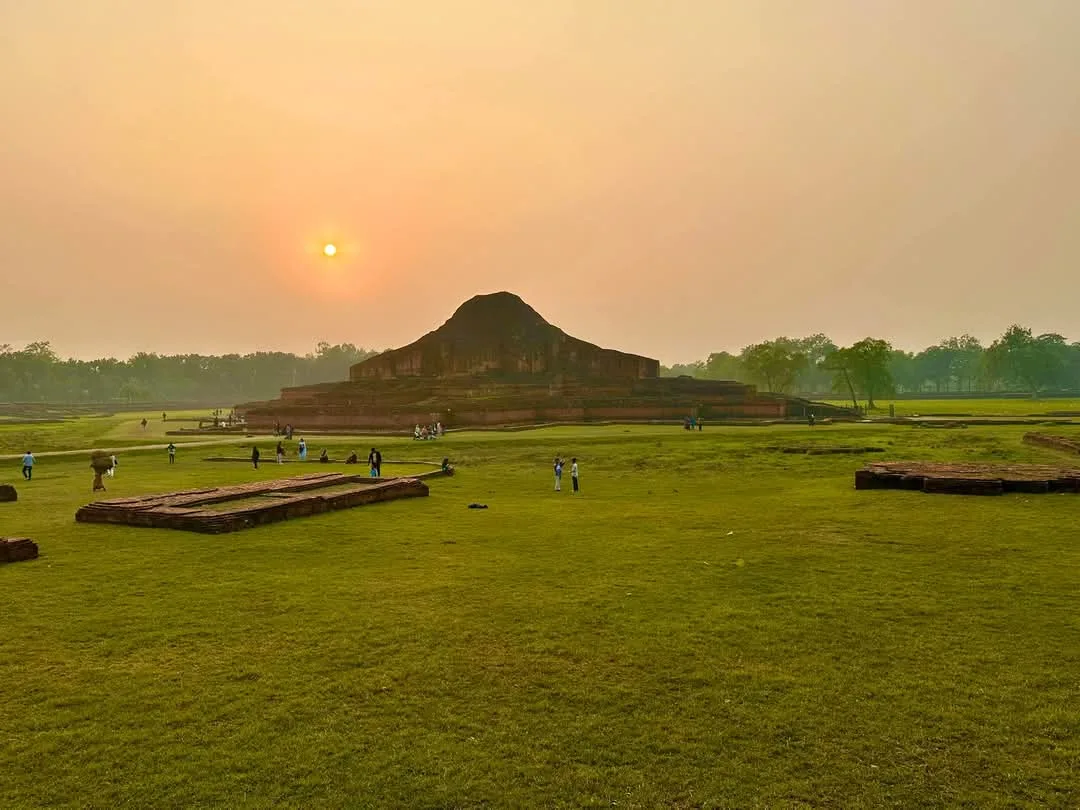
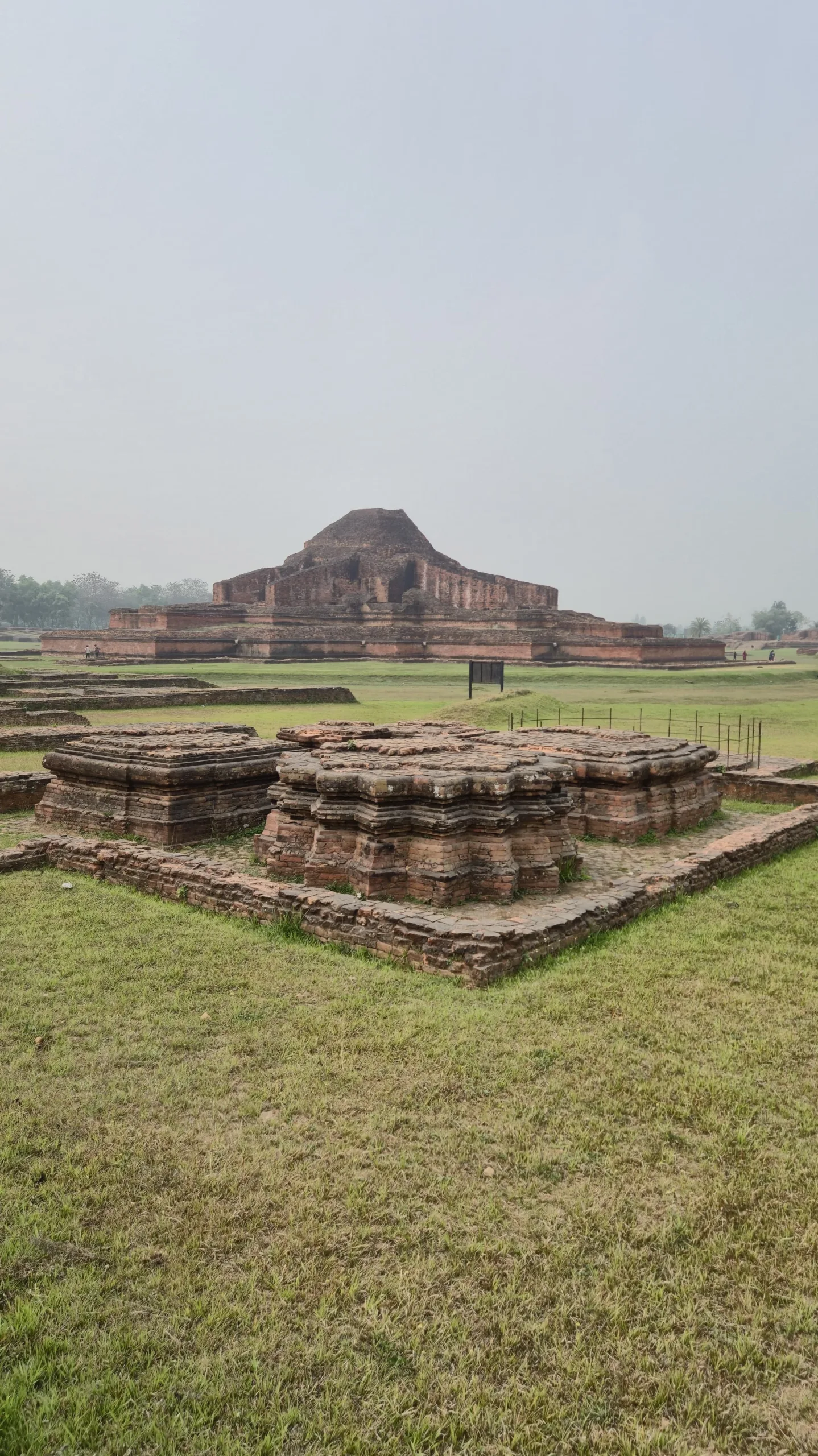
A visit starts at the gate and leads across lawns to the huge square enclosure. Rows of brick monks’ cells line the outer walls, and in the middle rises the stepped central shrine, still tall enough to dominate the flat countryside. Walk the outer wall for an overview, then circle the shrine to see the terracotta plaques set into its base.
A small site museum displays finds from the excavations, including sculpture, terracotta and pottery, and more pieces are in the Varendra Research Museum in Rajshahi. Evergreen Bangladesh Tours visits Paharpur on private tours of Naogaon and north Bengal, with a guide who brings the history to life on the spot.
The plan of Somapura Mahavihara
For several centuries the monastery was a major centre of Buddhist learning, drawing monks from far beyond Bengal. Its plan is remarkable: a square enclosure of more than 170 brick cells surrounds a vast open courtyard, and at its centre a cross-shaped shrine rises in terraces, with chambers on each side. Scholars see this design as an influence on later Buddhist monuments in Myanmar and Indonesia.
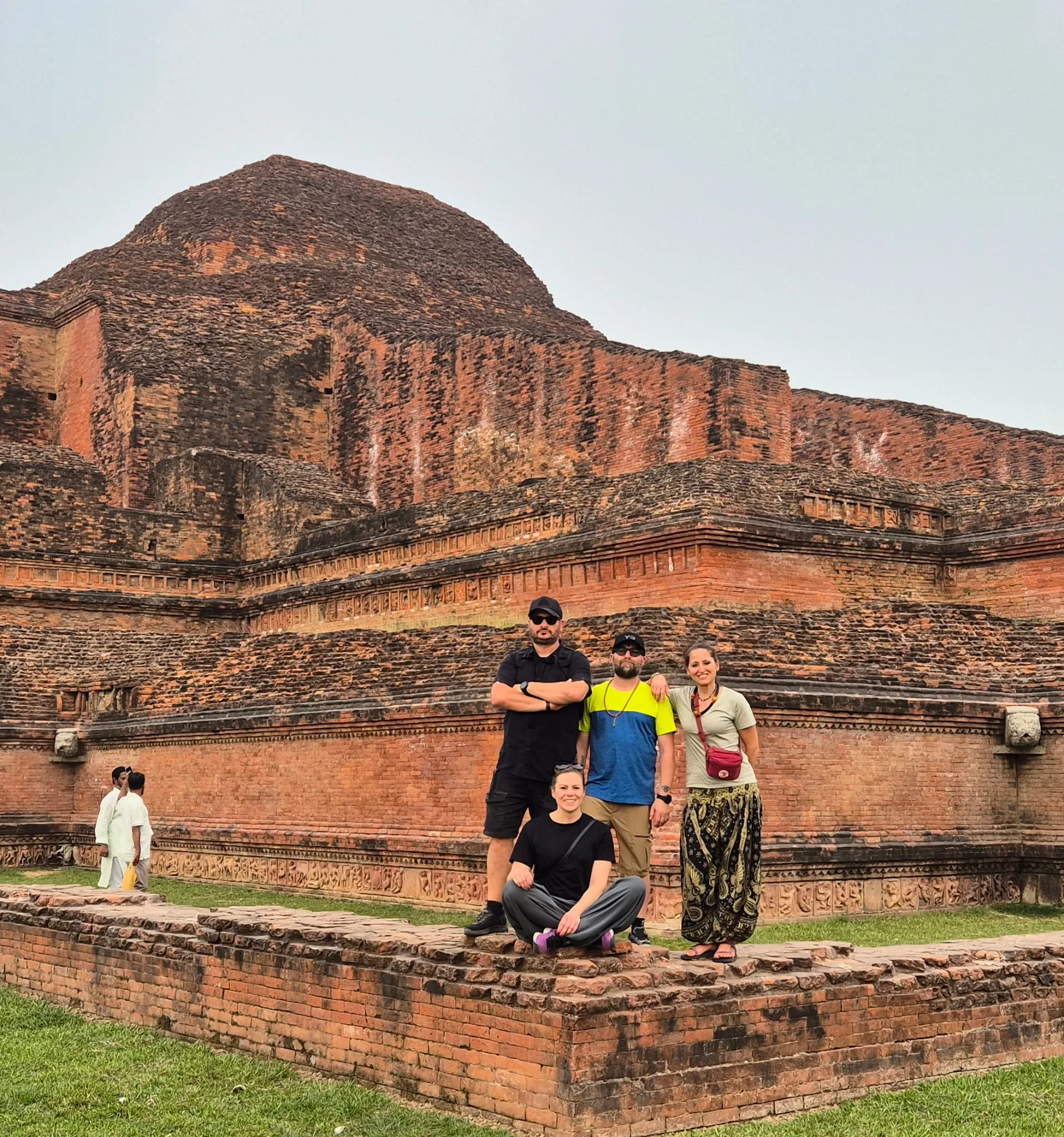
The base of the shrine is decorated with hundreds of terracotta plaques showing Buddhist and Hindu deities, animals, musicians and village scenes, a rich record of early Bengali art. The monastery declined after the 12th century and was later covered by earth, which gave it the look of a hill, or pahar, and the village its name.
Things to do
-
Walk the monastery walls
Follow the outer enclosure to understand the scale of the site and its rows of monks’ cells.
-
Terracotta plaques
Circle the central shrine to spot plaques of animals, deities and everyday scenes.
-
Site museum
See sculpture and objects found during excavations, close to the ruins.
-
Sunset photography
The red brick of the shrine glows in the last hour of daylight.
Getting there
From Dhaka: About 6 to 7 hours by road. Alternatively take a train to Jamalganj or Joypurhat and drive the last stretch.
From Rajshahi or Bogura: Around 2 to 3 hours by car, making it a full day trip that can include Kusumba Mosque.
Where to stay
Options near the site are very limited. Most travellers stay in Bogura, which has the best hotels in the area, or in Naogaon or Rajshahi, and visit as a day trip.
More to see in Naogaon
Tours that visit Paharpur Buddhist Monastery (Somapura Mahavihara)
 Holiday Tours
Bangladesh Cultural and Heritage Discovery Tour
from $800 per person
 Short Tours
Heritage Treasures of North Bengal
from $550 per person
 Holiday Tours
Ten Days Across Bangladesh
from $800 per person
Questions
Is Paharpur a UNESCO World Heritage Site?
Yes, the ruins of the Buddhist Vihara at Paharpur were listed in 1985.
How long do I need at Paharpur?
Two to three hours covers the ruins and the site museum at an easy pace.
Is the site open every day?
Archaeological sites and their museums in Bangladesh close on certain days, so check the opening days before you travel.
Where should I stay?
Bogura is the most practical base, with Naogaon and Rajshahi as alternatives.
Who built Somapura Mahavihara?
It was founded in the late 8th century under the Pala king Dharmapala.
Is Somapura Mahavihara the same as Paharpur?
Yes. Somapura was the monastery’s historic name; Paharpur is the village where the ruins stand today.
Why is it important?
It was one of the largest Buddhist monasteries in South Asia, and its cruciform shrine design influenced temples elsewhere in Asia.