
Bara Katra and Chhota Katra
About Bara Katra and Chhota Katra
Bara Katra and Chhota Katra are the two great Mughal caravanserais of Old Dhaka, built in the 1640s and 1660s near the bank of the Buriganga in Chawkbazar. Bara Katra is older than Lalbagh Fort, and its towering gateway was once the grandest building on Dhaka’s river front. Today both are battered, crowded and only partly standing, hidden among the lanes of one of the busiest markets in the city. They are not a polished monument: they are a piece of Mughal Dhaka that you have to look for, and that is exactly why they are worth the detour.
What is a katra?
A katra (from the Arabic and Persian for a colonnaded building) is a caravanserai: a fortified inn built around a large courtyard, where travelling merchants slept, stored their goods and kept their animals. Dhaka was a busy river port under the Mughals, and the katras sat right on the water, with rooms and shops on all four sides of the courtyard and gateways to the river and the town.
Bara Katra: the great caravanserai
Bara Katra was built between 1644 and 1646 by Mir Abul Qasim, the diwan (chief revenue official) of Prince Shah Shuja, son of the Emperor Shah Jahan and then governor of Bengal. Tradition says it was meant as the prince’s palace, but two Persian inscriptions record that Shah Shuja gave it to Mir Abul Qasim as a waqf, a charitable endowment, on the condition that no rent be taken from deserving travellers who stayed there; the rent of 22 shops paid for its upkeep.
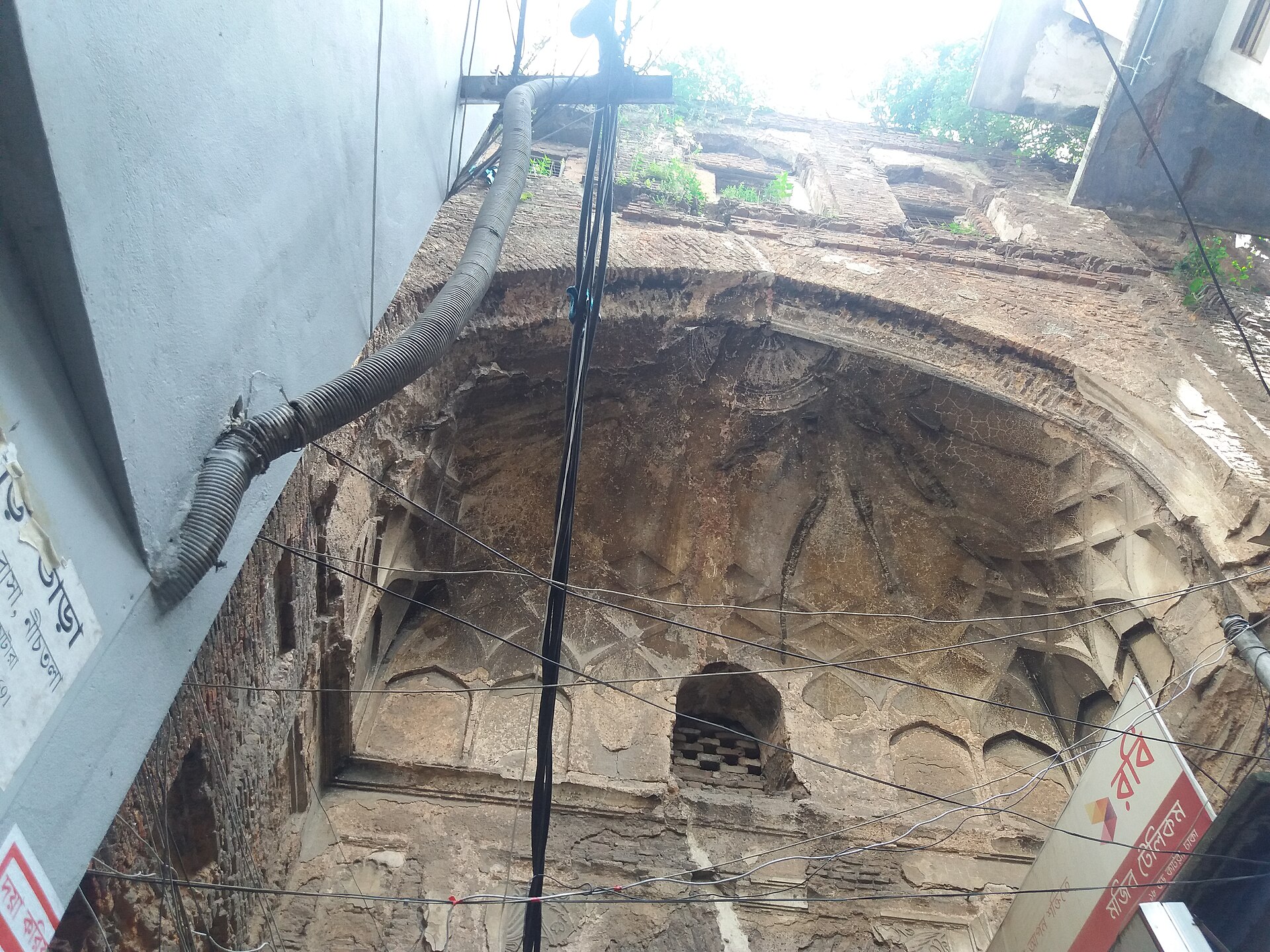
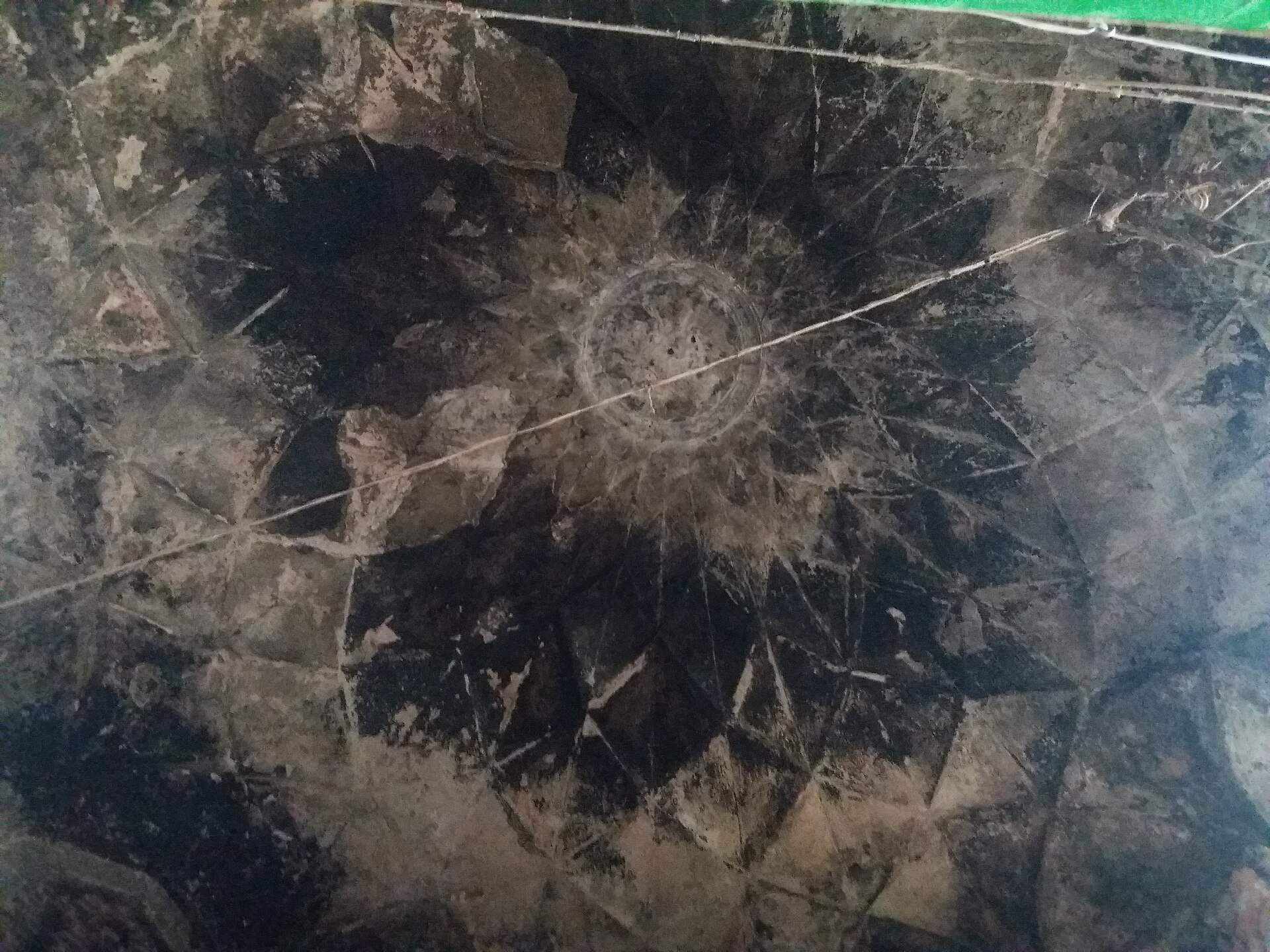
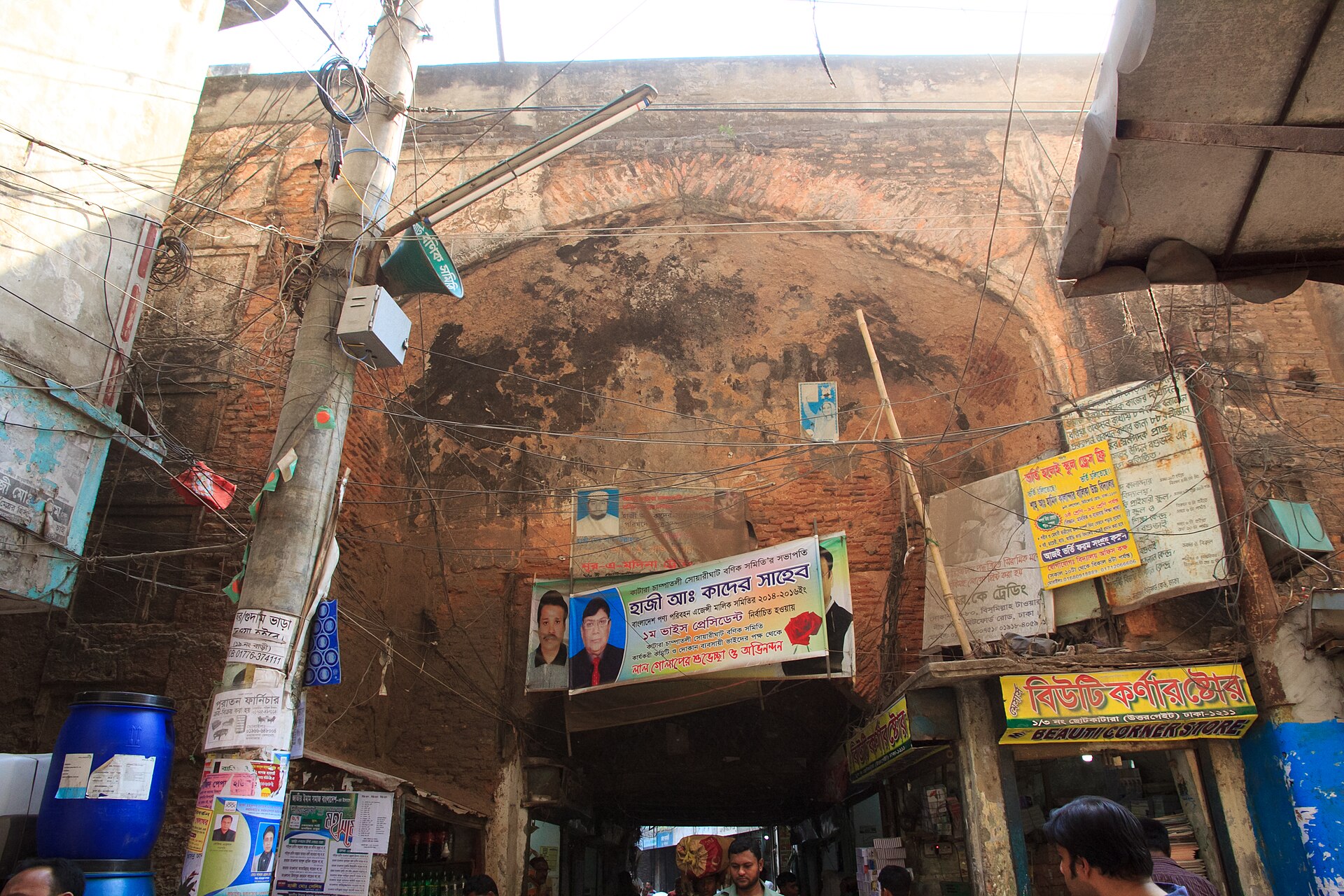
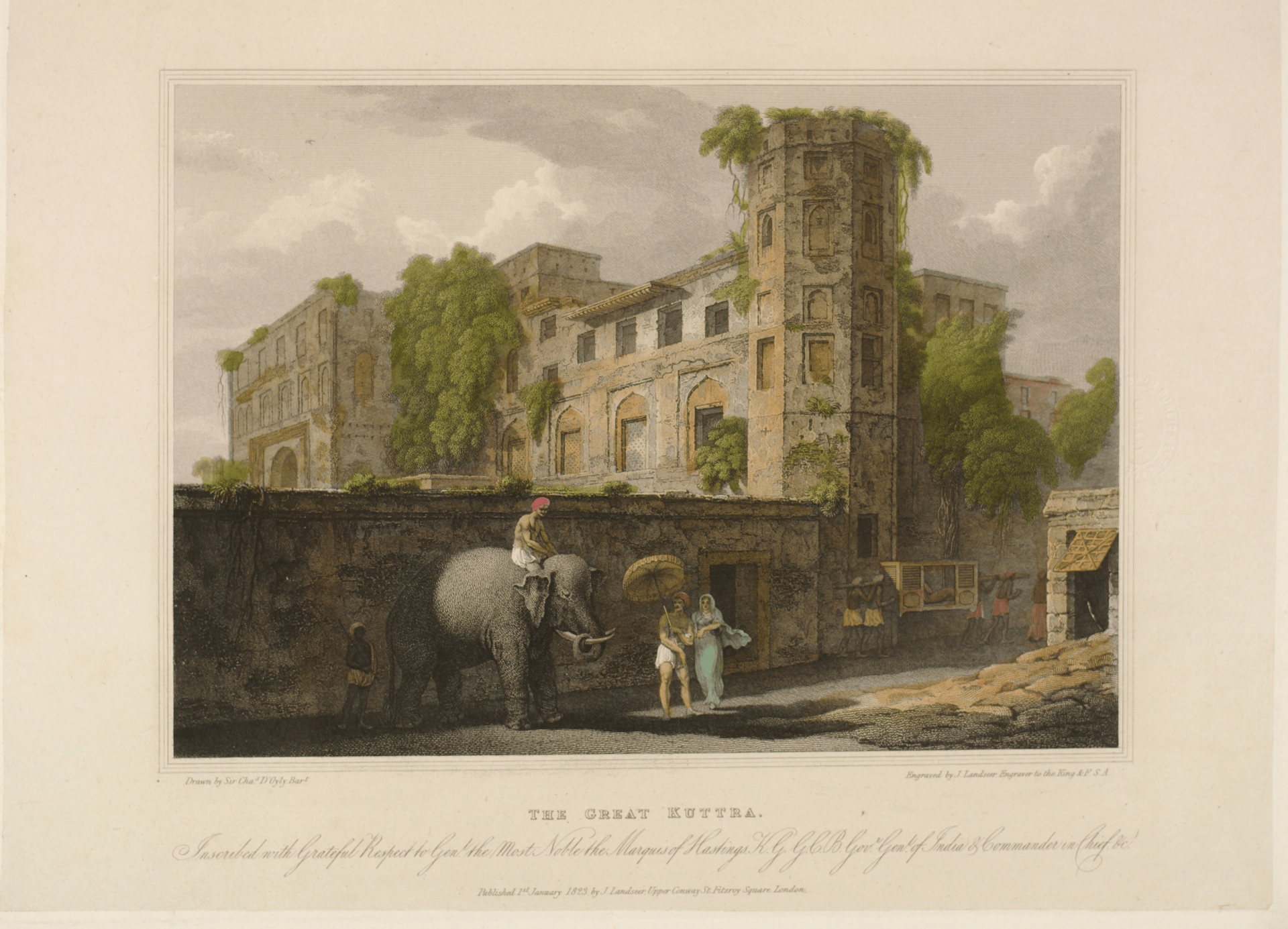
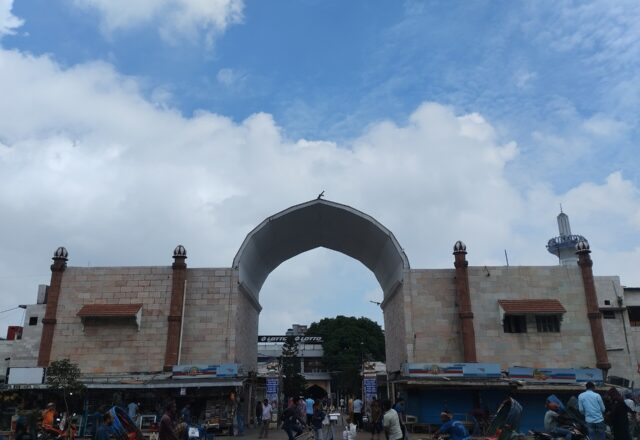
The south wing, facing the river, was the showpiece: about 68 metres long, two storeys high, with octagonal towers at the corners and a three-storey gateway in the middle. The gateway’s tall arched alcove is decorated with plaster panels of cusped, horseshoe and four-centred arches, and inside it an octagonal domed hall still has a plastered ceiling with net patterns and foliage. In the 19th century the orientalist James Atkinson called the building “a stupendous pile of grand and beautiful architecture”.
Chhota Katra: the small caravanserai
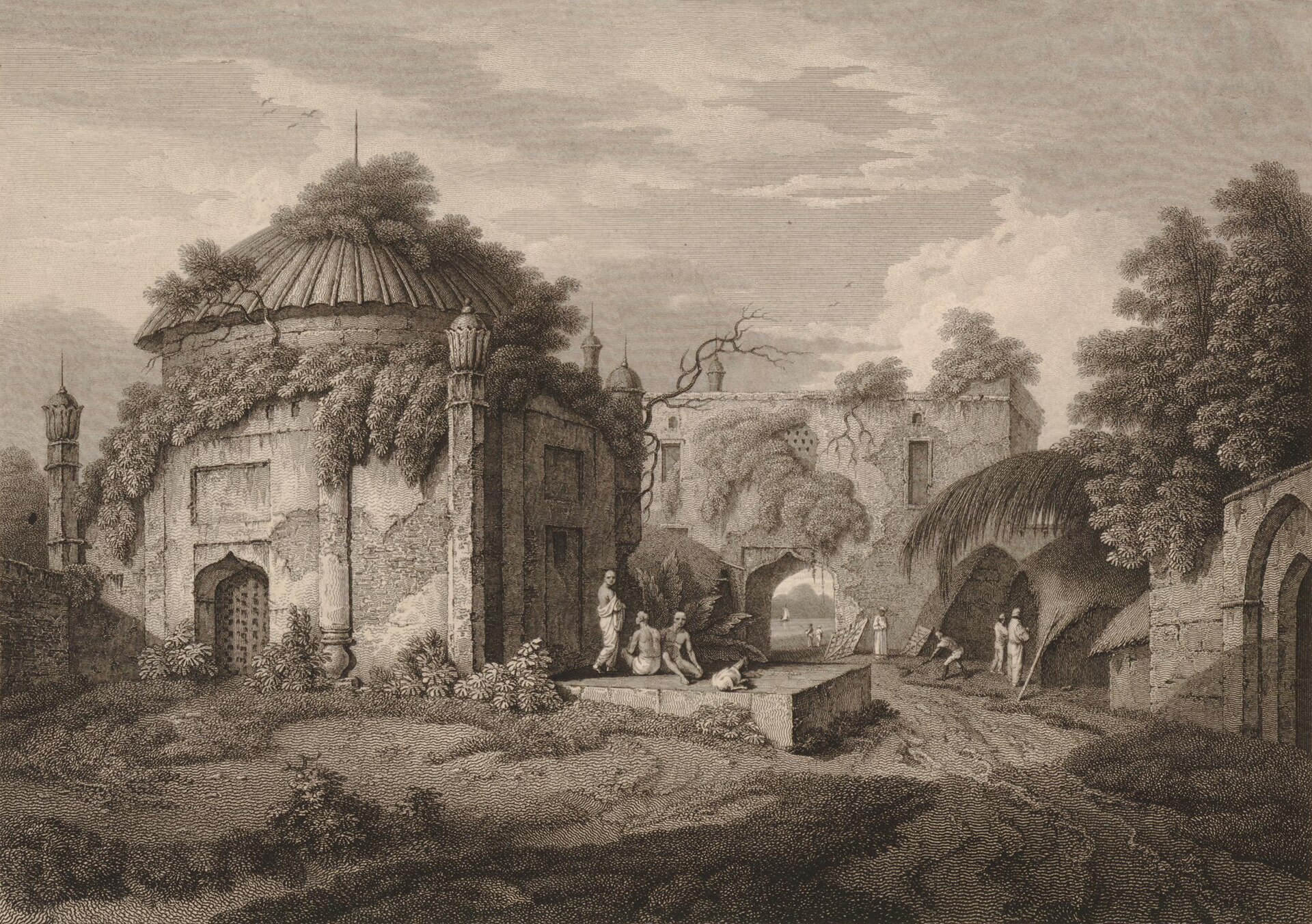
Chhota Katra stands about 185 metres east of Bara Katra. It was built from 1663 by Shaista Khan, the Mughal governor who also began Lalbagh Fort, to house officials and his growing household. It is slightly smaller but similar in plan, with a gateway on the river side and octagonal towers on its southern corners. Later centuries changed it more than its big sister: in 1816 it housed Dhaka’s first English-medium school, and the Nawabs of Dhaka later rented it as a store for coal and lime. Inside the enclosure stood the tomb of Bibi Champa, said to be a wife or daughter of Shaista Khan; it survives among the shops of Champatali.
What you will see today
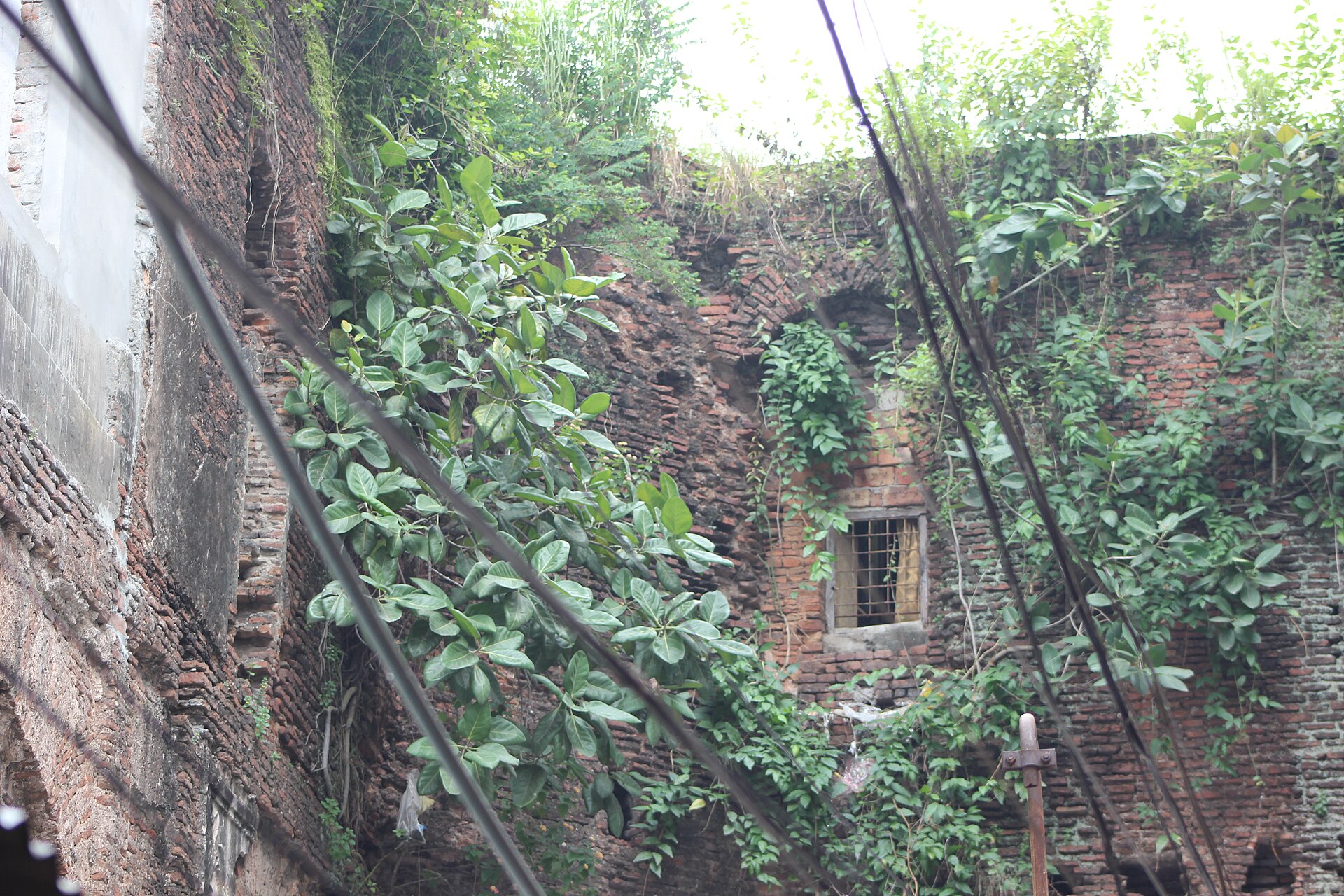
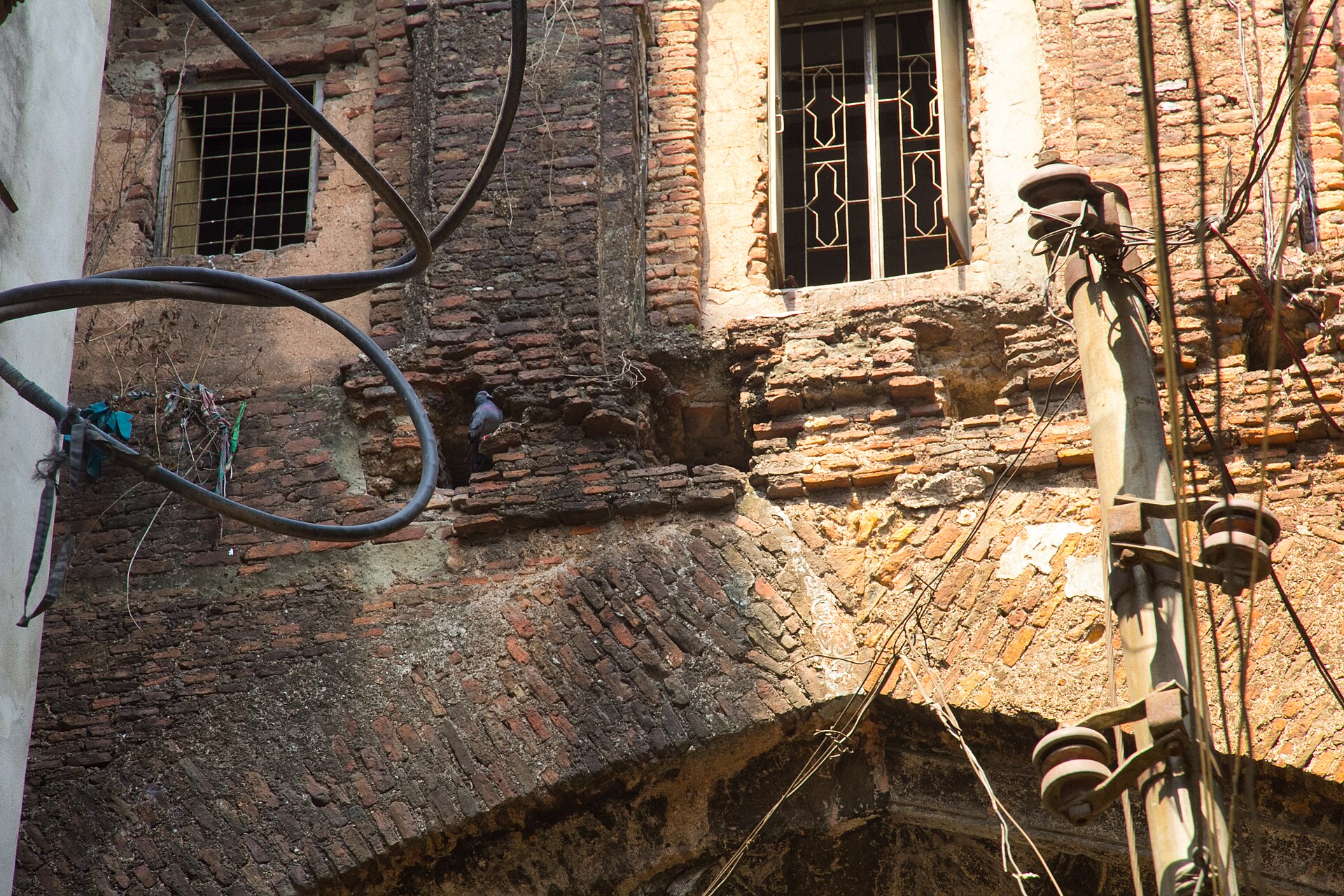
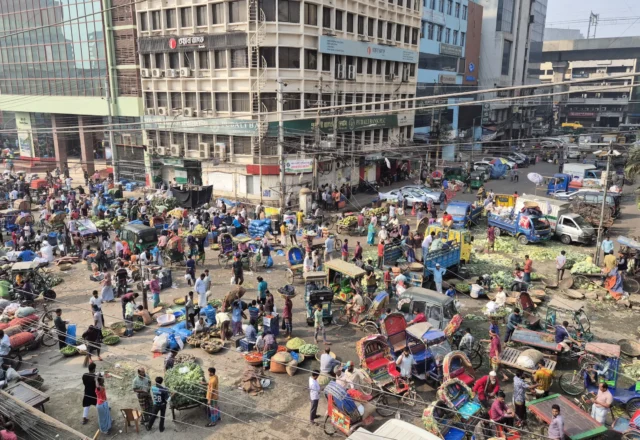
Be prepared: more than half of Bara Katra has gone. Owners and occupiers have altered and built over it for decades, and sections were pulled down in 2022 and again in 2024 despite campaigns by heritage groups and promises by the city corporation to protect it. Both katras are on the Department of Archaeology’s list of protected monuments, gazetted in 1989, but the department has never been able to take them into its care because of ownership disputes. What remains is the great southern gateway of Bara Katra with its arch, towers and domed hall, stretches of Mughal brick wall, and the gateway and towers of Chhota Katra, all wrapped in shops, signboards and electric cables.
That makes them a powerful stop for anyone interested in Dhaka’s history: you see a Mughal building still in daily use, as it has been for almost four centuries, rather than behind a ticket gate. Go with an open mind and a guide who can point out what to look for.
Best time to visit
Weekday mornings, roughly 8:00 to 11:00, are the most comfortable, before the lanes of Chawkbazar fill with handcarts and traffic. Avoid Friday midday prayers. During Ramadan the Chawkbazar iftar market draws huge crowds in the late afternoon, which is an experience in itself but makes the katras hard to see. The dry season from November to March is the most pleasant time for walking in Old Dhaka.
Bara Katra and Chhota Katra opening hours and tickets
Bara Katra and Chhota Katra have no ticket, gate or opening hours: they are occupied by homes and shops, and you see the gateways and walls from the lanes of Chawkbazar in daylight. Weekday mornings are the quietest time.
- Closed
- No gate or opening hours: the buildings are occupied; visit in daylight
- Entry fee
- Free; there is no ticket
Where are Bara Katra and Chhota Katra?
- Where
- Bara Katra Lane, Chawkbazar, Old Dhaka, Dhaka, Bangladesh
- Nearest town
- Chawkbazar, Old Dhaka
- From Dhaka
- In Old Dhaka; 1 to 1.5 hours by road from Gulshan
- Also known as
- Boro Katra, Bara Katara, Choto Katra, Chhoto Katra
- Protected
- Protected monument of the Department of Archaeology (gazetted 1989)

Getting to Bara Katra and Chhota Katra on your own is hard work. We can send a private car with driver and guide from Dhaka or anywhere in Bangladesh.
Things to do at Bara Katra and Chhota Katra
-
Look up at the Bara Katra gateway
The three-storey gateway with its tall arched alcove and octagonal towers is the finest surviving piece of Mughal civic architecture in Dhaka.
-
Find the domed hall
Inside the gateway passage, look up at the octagonal hall and its plastered ceiling with net patterns and foliage.
-
Walk to Chhota Katra
Follow the lanes about 185 metres east to Shaista Khan’s smaller caravanserai, with its own gateway and towers.
-
Compare old pictures with today
Engravings by Charles D’Oyly from 1817 and 1823 show both katras standing proud on the river bank; see how the city has grown around them.
-
Explore Chawkbazar
The old market around the katras sells everything from spices and perfume to plastic toys; during Ramadan its iftar market is famous across Dhaka.
-
Continue to Lalbagh Fort
Shaista Khan’s unfinished fort is about 1 km west, the natural next stop on a Mughal Dhaka walk.
How to get to Bara Katra and Chhota Katra
Bara Katra is in Chawkbazar, Old Dhaka, just north of the Buriganga and about 1 km east of Lalbagh Fort. Go by car or ride-share to Chawkbazar or Lalbagh, then walk; from Gulshan allow 1 to 1.5 hours by road.
By car and on foot (recommended): the lanes around the katras are too narrow and crowded for cars. Drive or take a ride-share to Chawkbazar or to Lalbagh Fort, then walk south through Chawkbazar towards the river; Bara Katra stands on Bara Katra Lane just north of the Buriganga embankment, and Chhota Katra is a few minutes’ walk east, near Hakim Habibur Rahman Lane. From Gulshan or Banani allow 1 to 1.5 hours to reach Old Dhaka by road.
By metro and rickshaw: take MRT Line 6 to the Secretariat or Motijheel station and continue by cycle rickshaw (about 20 to 30 minutes through Old Dhaka). Agree the fare before you set off.
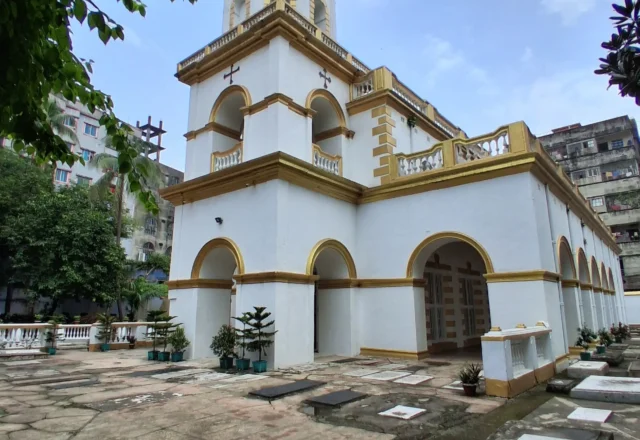
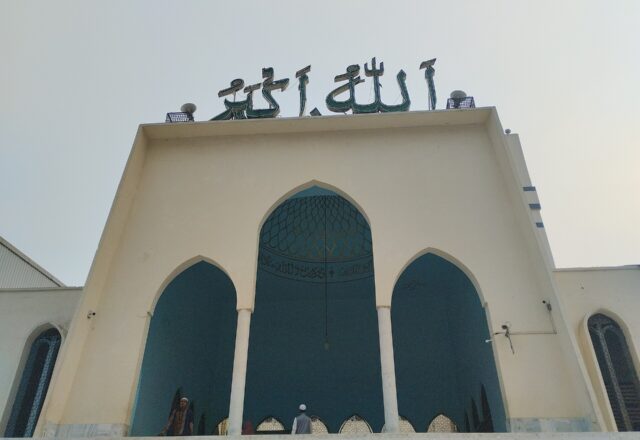
Combine it with: Lalbagh Fort (about 1 km west), Khan Mohammad Mridha Mosque, the Armenian Church, Star Mosque, Ahsan Manzil and Sadarghat, which together make a full day in Old Dhaka.
Where to stay near Bara Katra and Chhota Katra
Old Dhaka has few hotels suited to international travellers, so most visitors stay in Gulshan, Banani or Dhanmondi and come to Old Dhaka for the day. If you want to be closer, there are mid-range hotels around Motijheel and Paltan, about 20 to 30 minutes from Chawkbazar by rickshaw.
Tours that visit Bara Katra and Chhota Katra
None of our set tours stop here yet, but we can add it to a tailor-made trip.
Questions about Bara Katra and Chhota Katra
Where is Bara Katra?
In Chawkbazar, Old Dhaka, on Bara Katra Lane just north of the Buriganga river. Chhota Katra is about 185 metres to the east. Lalbagh Fort is about 1 km to the west.
Who built Bara Katra and when?
Mir Abul Qasim, the diwan of the Mughal prince Shah Shuja, built it between 1644 and 1646. Its Persian inscriptions record the dates and the endowment.
Who built Chhota Katra?
Shaista Khan, the Mughal governor of Bengal, built it from 1663, during his first term in Dhaka.
Is there a ticket or opening time for Bara Katra?
No. The katras are not run as a visitor site: they are occupied by homes, shops and other establishments, and there is no ticket or gate. You can see the gateways and walls from the lanes during daylight hours. Be respectful, as people live and work inside.
Can I go inside Bara Katra?
You can walk through the gateway passage and see the domed hall from the lane, but most rooms are private property. Ask before entering any building and do not climb on the walls.
Is Bara Katra still standing?
Partly. More than half of the original building has gone, and further sections were demolished in 2022 and 2024. The great southern gateway, its towers and parts of the walls survive.
Are Bara Katra and Chhota Katra protected monuments?
Both are on the Department of Archaeology's list of protected monuments, gazetted in 1989, but ownership disputes have kept the department from taking them into its care, which is why they have been altered and damaged.
What does katra mean?
A katra is a caravanserai: a fortified inn built around a courtyard, where travelling merchants stayed with their goods and animals. The word probably comes from Arabic and Persian.
How much time do I need?
About 30 to 45 minutes for both katras. Most people see them as part of a half-day or full-day walk through Old Dhaka.
Is it safe to visit Bara Katra?
Yes, in daytime. The lanes are crowded and busy with handcarts, so watch your step and your belongings. A local guide makes it much easier to find the right lanes and to understand what you are looking at.
Can I take photos at Bara Katra?
Yes, of the buildings. Ask before photographing people, shopkeepers and their stalls. Early morning gives the best light and the fewest crowds.
What is near Bara Katra?
Lalbagh Fort, Khan Mohammad Mridha Mosque, Chawkbazar Shahi Mosque, the Armenian Church, Star Mosque, Ahsan Manzil, Shakhari Bazar and Sadarghat are all within a short rickshaw ride.
Do you include the katras on your Old Dhaka tours?
We can. Tell us when you plan your trip and our guide will add Bara Katra and Chhota Katra to an Old Dhaka day, together with Lalbagh Fort and Ahsan Manzil.