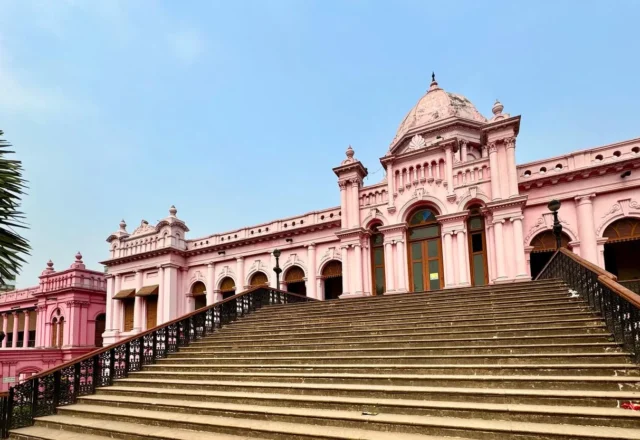

Central Shaheed Minar
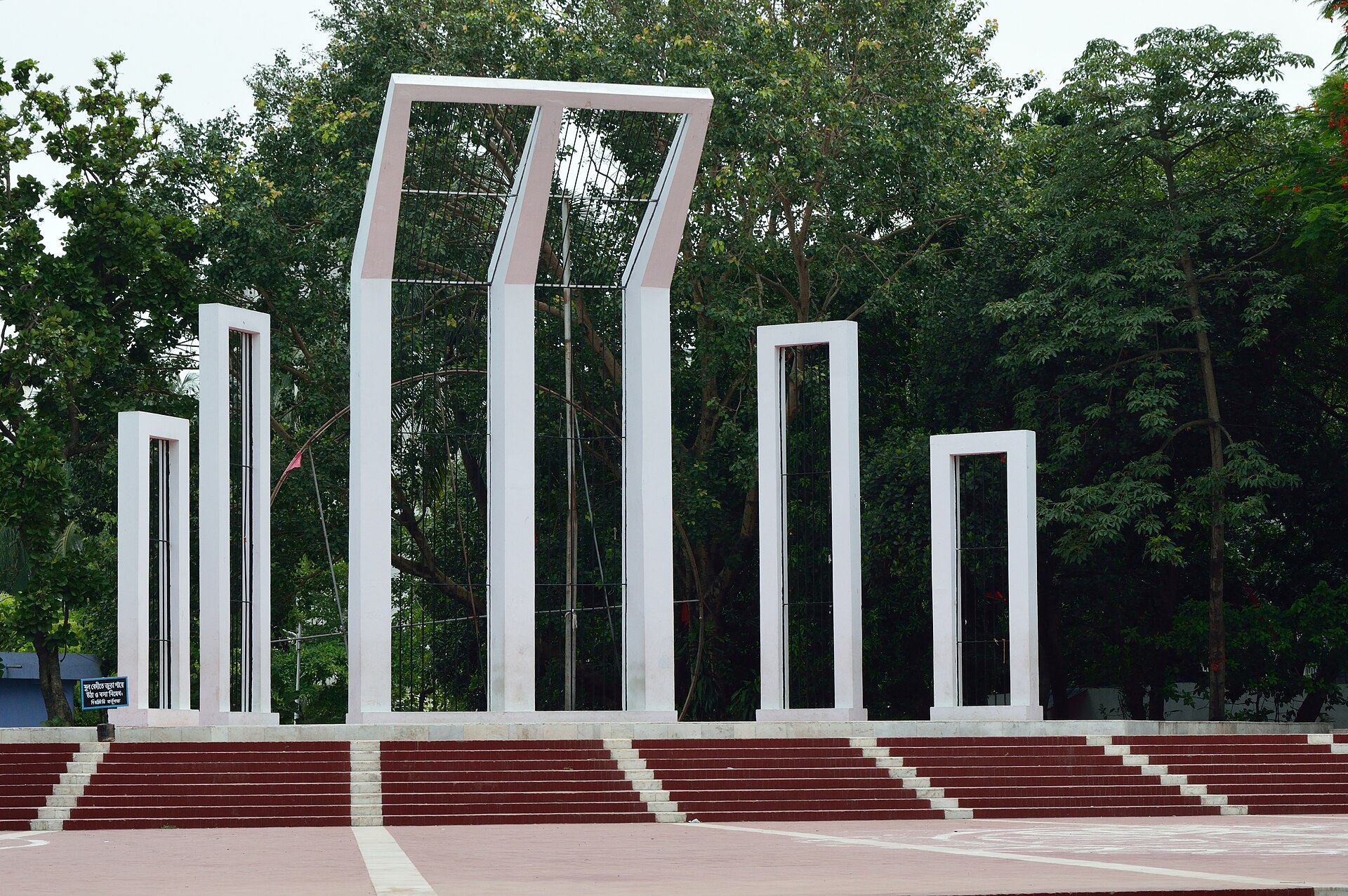
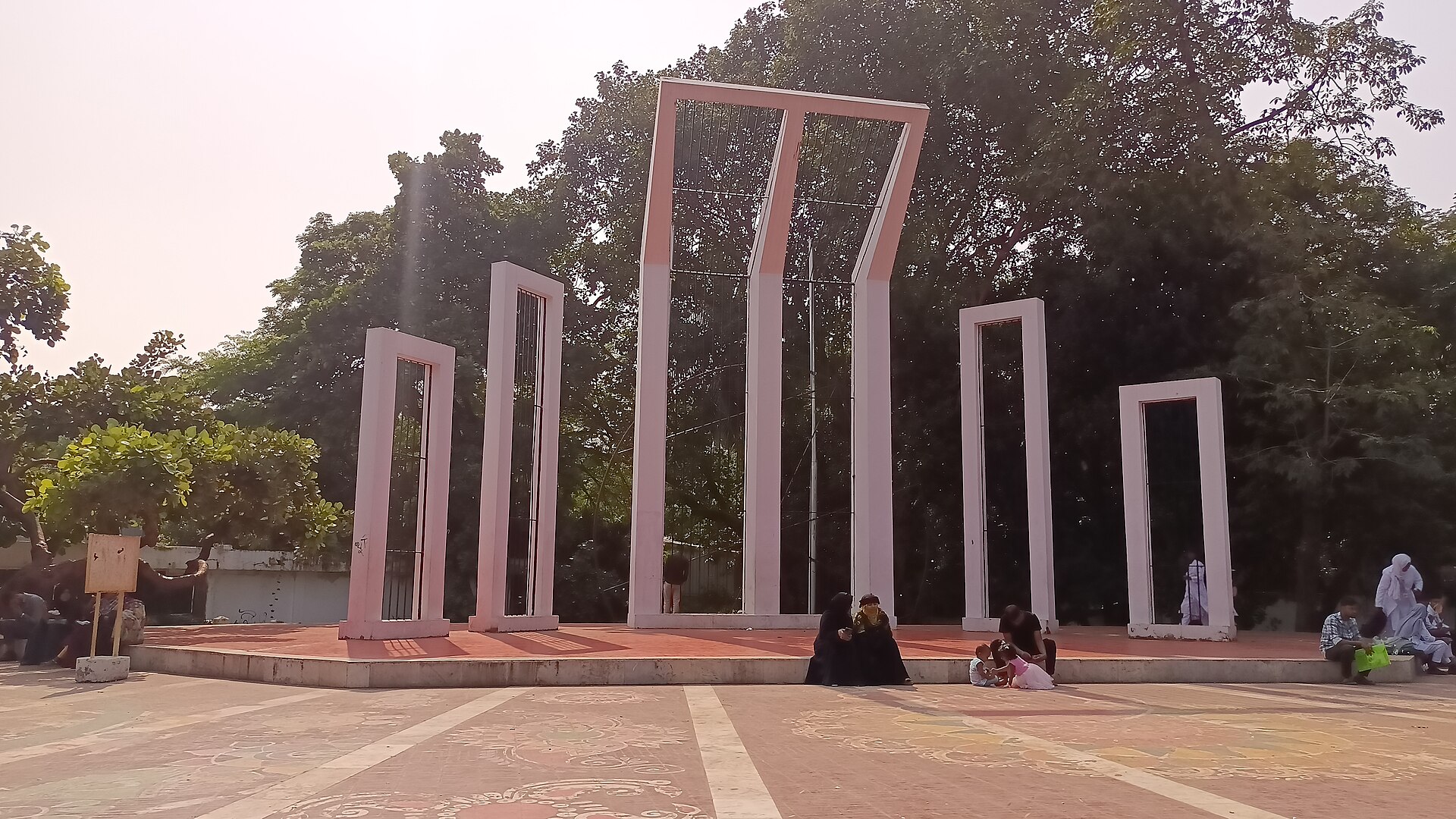
About Central Shaheed Minar
The Central Shaheed Minar (Shaheed Minar means “martyrs’ tower”) is the national monument to those killed in the Bengali Language Movement of 1952. It stands beside Dhaka Medical College Hospital, in the Dhaka University area, a short walk from Shahbagh. Its white columns on a raised red platform are one of the most powerful symbols of Bangladesh, and every year on 21 February the whole country comes here at dawn with flowers.
The Language Movement
After 1947 the government of Pakistan moved to make Urdu the only state language, although most people in its eastern wing, today’s Bangladesh, spoke Bangla. Students and others in Dhaka campaigned for Bangla to be recognised too. On 21 and 22 February 1952, police opened fire on protesters near Dhaka Medical College and Ramna, and students and others were killed. The movement continued, and Bangla became an official language of Pakistan, alongside Urdu, in 1956. The day is remembered as Ekushey February (“the twenty-first of February”) and Shaheed Dibas, Martyrs’ Day.
A monument built four times
Students of Dhaka Medical College built the first memorial overnight on 23 February 1952, at the place of the shootings; the police demolished it three days later. A new one was raised in 1954. The present design, by the artists Hamidur Rahman and Novera Ahmed, was begun in the late 1950s and completed in 1963. The monument was destroyed in March 1971 at the start of the Liberation War, rebuilt after independence, and enlarged in 1983 to the form you see today.
The design
The monument is a group of white columns on a stepped platform: a tall central frame that bends forward at the top, with two shorter columns on each side. It is commonly read as a mother with her children, the mother bowing over her martyred sons, and a red circle behind the columns stands for the rising sun and the blood of the martyrs. The open plaza in front gives space for the huge crowds of 21 February.
21 February and International Mother Language Day
At midnight on 20 to 21 February, the President and Prime Minister lay the first wreaths, and through the night and morning hundreds of thousands of people walk barefoot to the Minar with flowers, singing the song Amar bhaier rokte rangano Ekushey February (“My brother’s blood-stained twenty-first of February”). Since 2000, 21 February has also been observed around the world as UNESCO’s International Mother Language Day. See our page on International Mother Language Day for the programme and tips. In February the Ekushey Book Fair runs nearby.
Etiquette and photography
The Shaheed Minar is a memorial, not a stage. Take off your shoes before you step onto the platform, do not climb on the columns or sit on the altar steps, and keep your voice down. Photos of the monument are fine at any time; on 21 February ask before photographing mourners close up, and do not block the procession. Flowers are laid at the foot of the central column, and people often stand for a moment in silence.
Shaheed Minars across Bangladesh
Almost every town, school and university in Bangladesh has its own Shaheed Minar, many modelled on this one, and on 21 February each becomes the centre of local ceremonies. The Central Shaheed Minar in Dhaka is the original and the focus of the national observance.
Visiting today
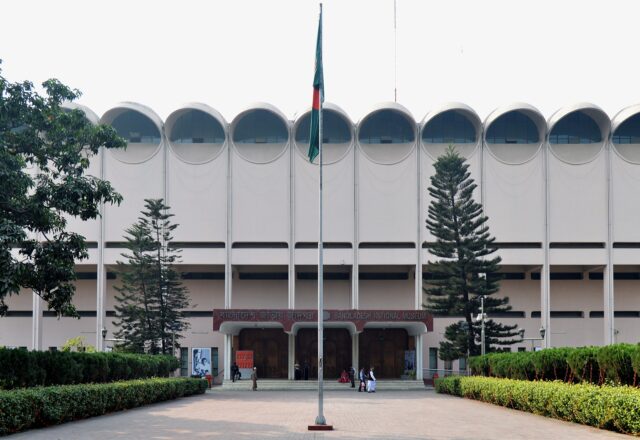
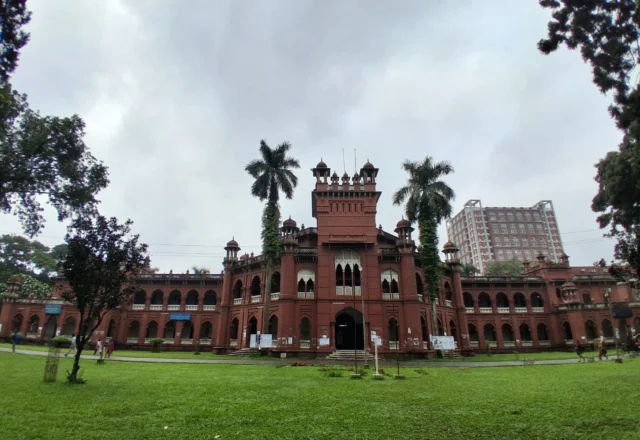
On other days the Shaheed Minar is a quiet public space where students study, friends meet and families stop to look. It is open to everyone, with no ticket. The platform is treated as a place of respect: people take off their shoes before stepping onto it. Combine it with a walk through the Dhaka University campus, Curzon Hall and the Bangladesh National Museum at Shahbagh.
Central Shaheed Minar opening hours and tickets
The Central Shaheed Minar is an open public monument, free and open every day. On 21 February crowds gather from midnight; on other days, visit in daylight and take off your shoes before stepping onto the platform.
- Closed
- Open every day; the area is very crowded on 20 to 21 February
- Entry fee
- Free: an open public monument
Where is Central Shaheed Minar?
- Where
- Dhaka Medical College area, Shahbagh, Dhaka, Dhaka Division, Bangladesh
- Also known as
- Shaheed Minar, Kendriya Shaheed Minar

Getting to Central Shaheed Minar on your own is hard work. We can send a private car with driver and guide from Dhaka or anywhere in Bangladesh.
Things to do at Central Shaheed Minar
-
Stand before the columns
Look at the bowing mother and her sons against the red sun, and read the story of 1952 on the panels nearby.
-
Come on 21 February
Join the barefoot procession with flowers from midnight into the morning of Ekushey February, Martyrs’ Day.
-
Walk the Dhaka University area
Continue to Curzon Hall, the campus lawns and the Teacher-Student Centre a few minutes away.
-
Visit the National Museum
The Bangladesh National Museum at Shahbagh tells the story of the Language Movement and the Liberation War.
-
See the Ekushey Book Fair
Through February, the city’s great book fair fills the grounds nearby.
How to get to Central Shaheed Minar
The Central Shaheed Minar is beside Dhaka Medical College in the Dhaka University area, a short walk from Shahbagh and from the Dhaka University metro station; 30 to 60 minutes by car from Gulshan.
By car or ride-share: 30 to 60 minutes from Gulshan or Banani, depending on traffic. Ask for “Shaheed Minar”, near Dhaka Medical College.
By metro: MRT Line 6 stops at Dhaka University and Shahbagh; the Minar is a short walk or rickshaw ride from either.
Nearby: Curzon Hall (a few minutes’ walk), the National Museum at Shahbagh (about 0.5 km) and Ramna Park.
Where to stay near Central Shaheed Minar
Most visitors stay in Gulshan, Banani or Dhanmondi; Dhanmondi and the Shahbagh area are the closest. Hotels near Shahbagh and Kawran Bazar are 10 to 20 minutes away.

Tours that visit Central Shaheed Minar
None of our set tours stop here yet, but we can add it to a tailor-made trip.
Questions about Central Shaheed Minar
What is the Shaheed Minar?
A national monument in Dhaka to those killed in the Bengali Language Movement of 1952, when students and others were shot while demanding official status for Bangla.
Where is the Central Shaheed Minar?
Beside Dhaka Medical College Hospital in the Dhaka University area, about 0.5 km from Shahbagh.
Who designed the Shaheed Minar?
The artists Hamidur Rahman and Novera Ahmed. Their design was completed in 1963, rebuilt after 1971 and enlarged in 1983.
What do the columns mean?
They are commonly read as a mother and her children, the mother bowing over her martyred sons, with a red circle behind them for the rising sun and the martyrs' blood.
What happens on 21 February?
From midnight, the country's leaders and then hundreds of thousands of people walk barefoot to the Minar with flowers, singing Amar bhaier rokte rangano. It is a national holiday.
What is International Mother Language Day?
UNESCO's day for linguistic diversity, observed on 21 February around the world since 2000 in honour of the Language Movement.
Is there an entry fee?
No. It is an open public monument, free to visit.
Do I need to take off my shoes?
Yes, before stepping onto the platform, as everyone does. You can keep them on in the plaza.
Can tourists join the 21 February ceremony?
Yes, respectfully. Arrive before dawn, dress modestly, bring a few flowers and follow the crowd; expect long queues and tight security.
Why was the monument rebuilt so many times?
The first memorial of 1952 was demolished by the police, and the 1963 monument was destroyed in 1971 at the start of the Liberation War. It was rebuilt after independence and enlarged in 1983.