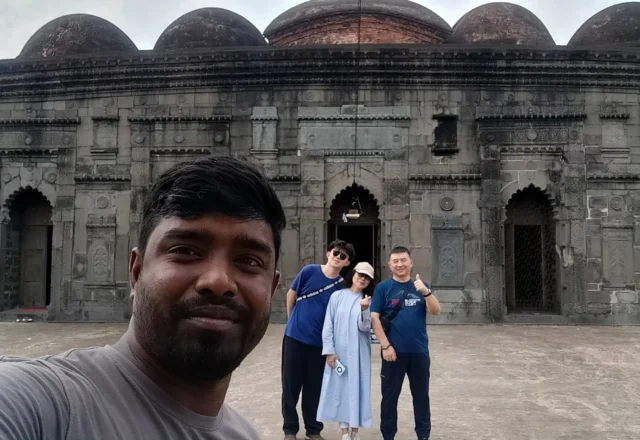

Darashbari Mosque
About Darashbari Mosque
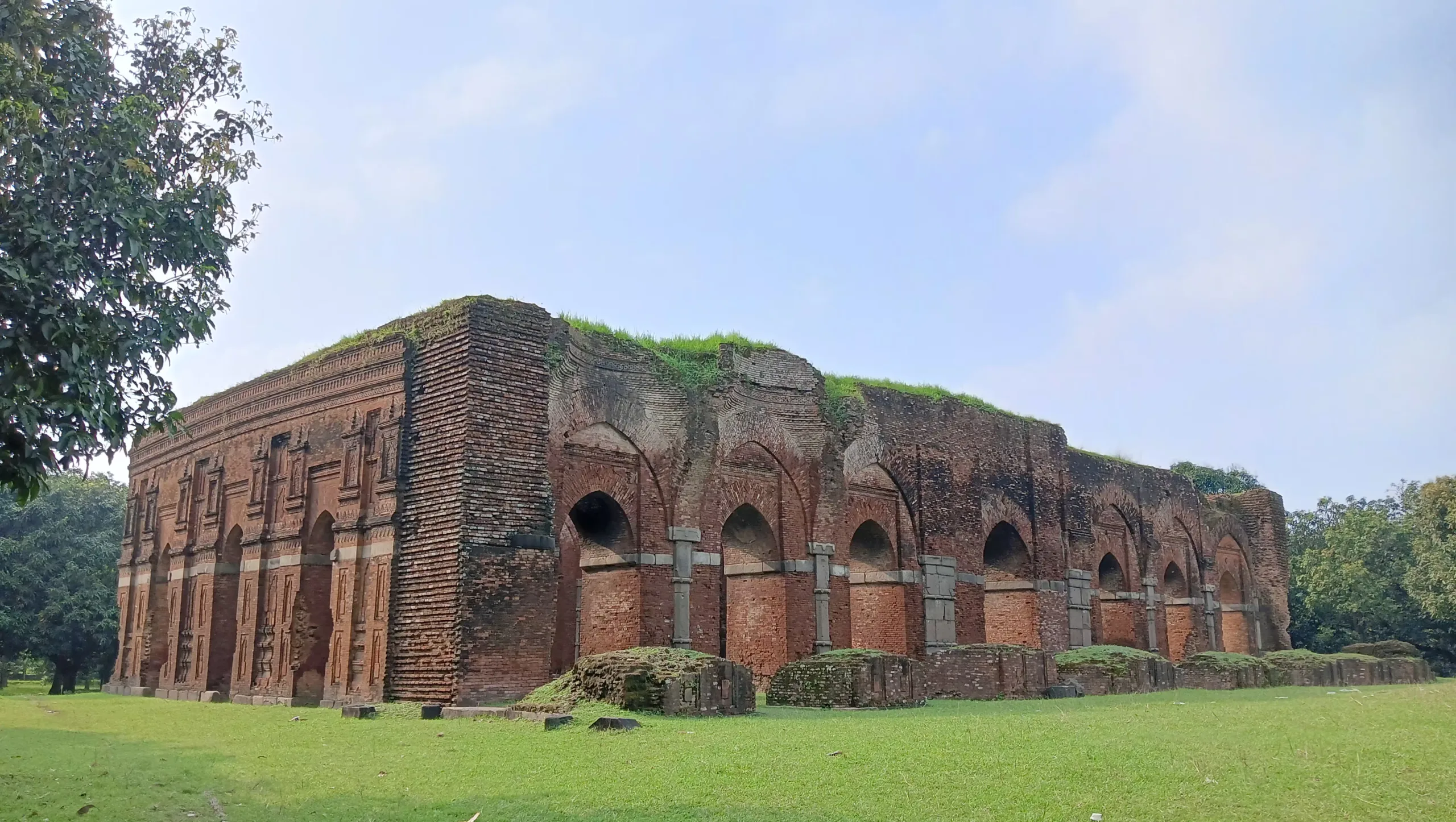
Darashbari Mosque, also spelt Darasbari, was built in 1479 under Sultan Shamsuddin Yusuf Shah, according to an inscription found at the site. It is one of the larger Sultanate mosques in the Bangladeshi part of Gaur.
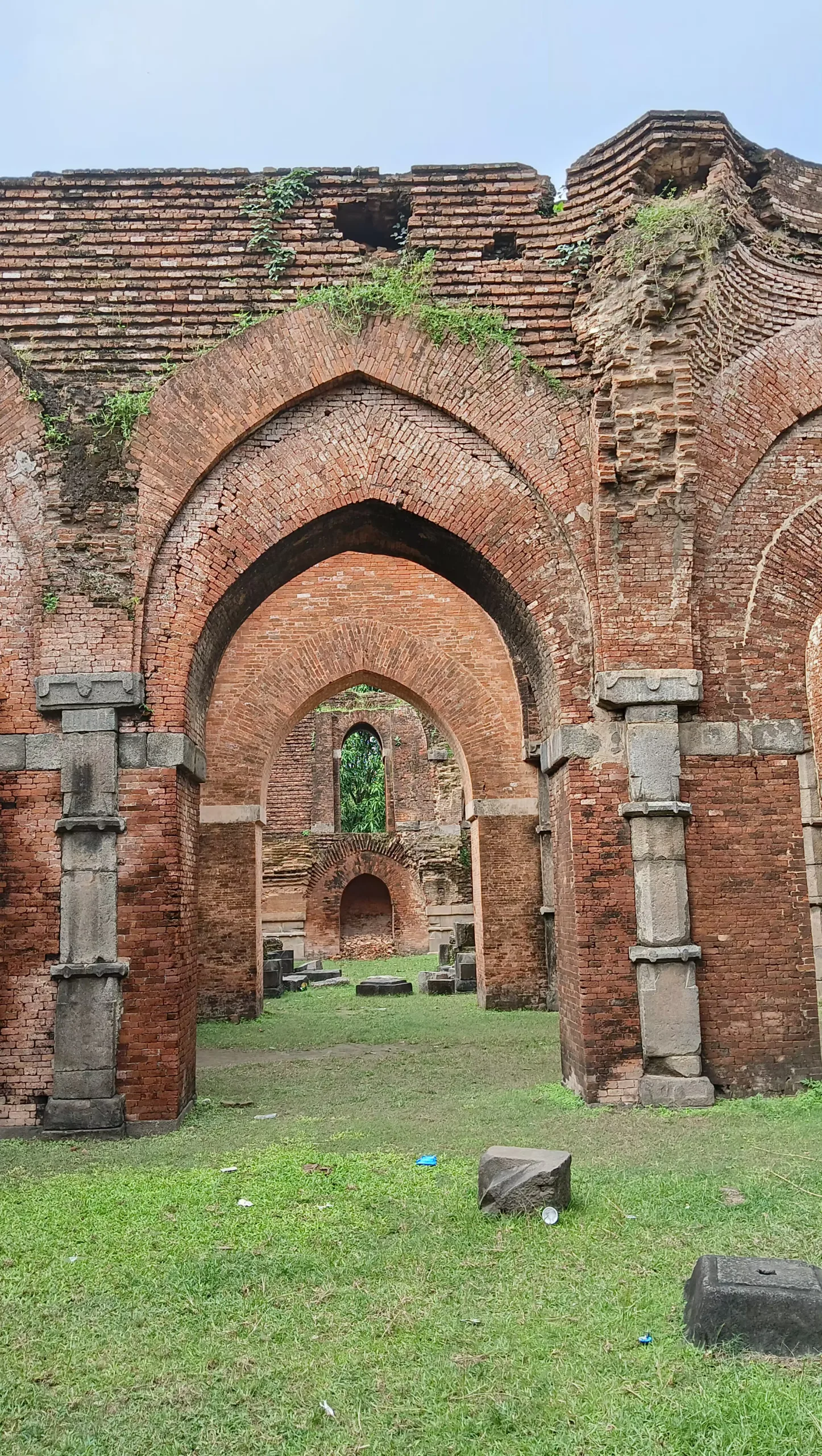
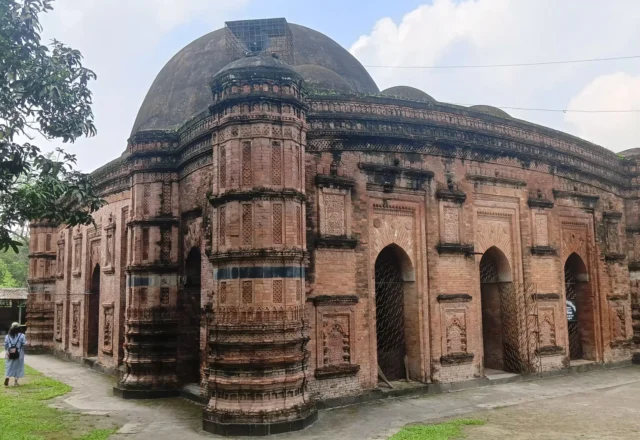
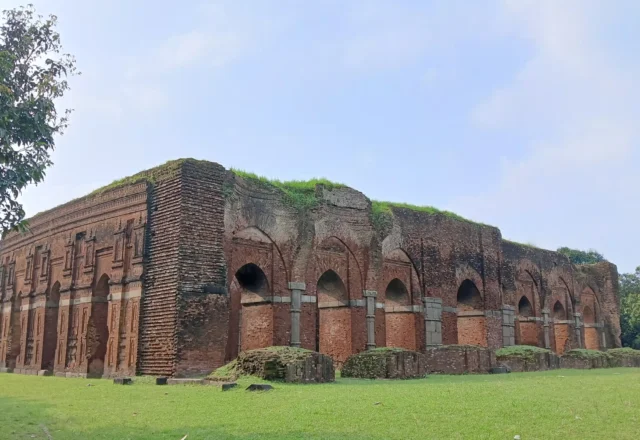
The roof and domes have long gone, which leaves a striking hall of brick piers and pointed arches standing among trees. Panels of terracotta decoration survive on the walls and mihrabs, and you can still read the plan of the prayer hall and verandah.
Nearby, excavations have exposed the foundations of the Darasbari Madrasa, a large teaching complex of cells around a courtyard, which helps explain the name: dars means lesson. Together they show Gaur as a place of learning as well as a royal seat.
Combine it with Choto Sona Mosque, Khania Dighi Mosque and Dhania Chalk Mosque on a day in Chapai Nawabganj. Evergreen Bangladesh Tours plans this loop with a local guide on private trips.
Things to do
-
Walk the open prayer hall
Stand among the roofless brick arches and imagine the domes that once covered them.
-
Spot terracotta details
Look for the surviving terracotta panels on the walls and mihrabs.
-
See the madrasa ruins
Visit the excavated foundations of the nearby madrasa, one of the few known medieval teaching complexes in Bengal.
Getting there
From Rajshahi: the Bangladeshi side of Gaur, near the Sona Masjid border crossing in Shibganj, is roughly 80 km away, about two hours by car.
From Dhaka: fly or take the train to Rajshahi, or drive about seven to eight hours. Trains also run to Chapai Nawabganj town.
Where to stay
Rajshahi city has the widest choice of comfortable hotels and makes a good base for a day in Gaur. Chapai Nawabganj town has simpler options closer to the sites.
More to see in Chapai Nawabganj
Tours that visit Darashbari Mosque
 Short Tours
Heritage Treasures of North Bengal
from $550 per person
Questions
When was Darashbari Mosque built?
In 1479, under Sultan Shamsuddin Yusuf Shah, according to its inscription.
Why has it no roof?
The domes and roof collapsed over the centuries. What you see today are the walls, piers and arches.
How long do I need?
About 30 to 45 minutes, including the madrasa ruins.
Is it still used for prayer?
It is a protected monument rather than a working mosque, but treat it with the same respect.