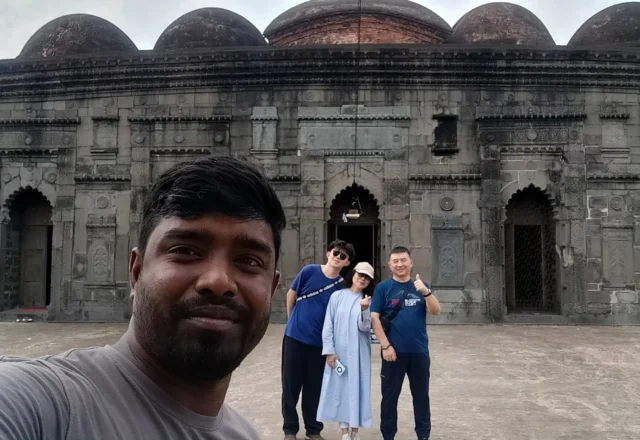

Khania Dighi Mosque
About Khania Dighi Mosque
Khania Dighi Mosque takes its name from the Khania Dighi, a big rectangular pond dug beside it. Locally it is also known as the Rajbibi Mosque. It dates from the late 15th or early 16th century, the high point of the Bengal Sultanate at Gaur.
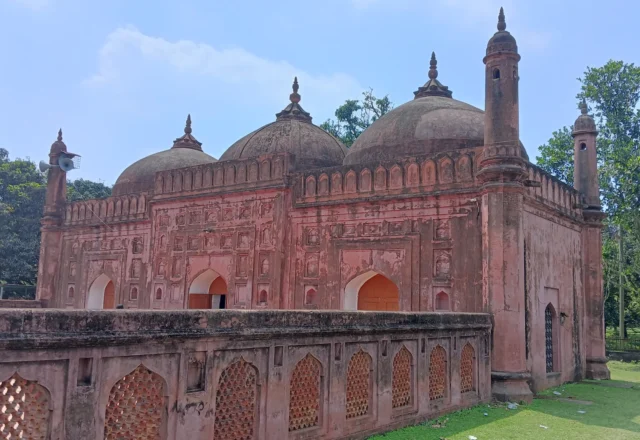
The plan is simple and satisfying: a square brick prayer hall under one large dome, with a verandah in front. What makes it special is the surface: the brick walls are covered in terracotta ornament, with floral scrolls and hanging-lamp designs that have survived surprisingly well.
Shaded by trees and with the water beside it, it is one of the calmest corners of Gaur and a good place to pause between the bigger monuments. It is a short drive from Choto Sona Mosque and Darashbari Mosque, and pairs well with the smaller Dhania Chalk Mosque.
Evergreen Bangladesh Tours includes it on private Gaur days from Rajshahi and Chapai Nawabganj.
Things to do
-
Admire the terracotta
Get close to the walls to see the carved brick vines and lamp motifs, some of the best preserved in Gaur.
-
Sit by the dighi
Take a few quiet minutes by the old tank that gives the mosque its name.
-
Photography
The single dome reflected in the pond makes a classic picture in calm morning light.
Getting there
From Rajshahi: the Bangladeshi side of Gaur, around Shibganj and the Sona Masjid border crossing, is roughly 80 km away, about two hours by car.
From Dhaka: fly or take the train to Rajshahi, or drive about seven to eight hours. Trains also run to Chapai Nawabganj town.
Where to stay
Rajshahi city has the widest choice of comfortable hotels and makes a good base for a day in Gaur. Chapai Nawabganj town has simpler options closer to the sites.
More to see in Chapai Nawabganj
Tours that visit Khania Dighi Mosque
 Short Tours
Heritage Treasures of North Bengal
from $550 per person
Questions
Why is it called Khania Dighi Mosque?
It is named after the Khania Dighi, the large pond beside it. It is also known locally as Rajbibi Mosque.
How old is it?
It is usually dated to the late 15th or early 16th century, in the Bengal Sultanate period.
How long should I stay?
Around 30 minutes is enough for most visitors.
What should I wear?
Modest clothing that covers shoulders and knees. Remove shoes if you enter the prayer hall.